Modern B2B leaders are navigating a market where buying committees are larger, product categories feel crowded, and algorithms shape which stories get heard. In this environment, clarity is competitive. A brand messaging agency gives organizations the frameworks, language, and proof needed to translate complex value into a narrative that wins attention and revenue. For CMOs, CROs, and CEOs who need measurable impact now and long-term brand equity later, this is the fastest path to alignment across marketing, sales, and product.
What a Brand Messaging Agency Actually Does
A brand messaging agency builds the strategic backbone of your story. It is not just copywriting. It is disciplined positioning rooted in research, clear value propositions tailored to real buyer pain, and a system for how your company communicates across every channel and touchpoint. The work spans executive workshops, customer and analyst interviews, competitive audits, and message testing to ensure the language resonates with each decision maker on the buying committee.
Unlike fragmented internal efforts, a brand messaging agency brings unbiased perspective and repeatable methods. The result is a message architecture that informs go-to-market planning, website content, demand programs, PR, sales enablement, and partner communications. It also becomes a governance tool that keeps every team on brand without slowing execution.
- Define category, competitive frame, and market context
- Clarify your company, solution, and product value propositions
- Codify proof points and customer outcomes by persona
- Establish tone, voice, and naming conventions
- Provide activation guidelines for web, content, sales, and PR
Why B2B Companies Need This Capability Now
Buyer behavior has shifted. Decision cycles are longer, more collaborative, and more digital. AI has increased the volume of average content, which means only the sharpest stories stand out. A brand messaging agency helps you cut through sameness by anchoring your differentiation in problems executives must solve and outcomes they can measure.
At the same time, performance marketing is evolving. Cookie deprecation and search algorithm updates reward substance and signal over clickbait. A clear narrative improves engagement quality, inbound conversion, and sales velocity. Partnering with a specialized B2B marketing agency that excels at message development ensures the story aligns with the realities of today’s demand channels and enterprise buying journeys.
The Strategic Outcomes You Should Expect
The right brand messaging agency delivers outcomes that ladder to revenue. Expect stronger differentiation, more consistent storytelling across regions and business units, and better handoffs from marketing to sales. Expect proposals and presentations that advance deals by reframing customer problems in your terms and demonstrating credible value creation.
It also accelerates internal alignment. A single source of truth reduces debate over taglines and talking points, frees creative teams to move faster, and shortens onboarding for new sellers and partners. With a tested master narrative and modular proof points, your organization can pivot messaging for verticals, roles, and stages without reinventing the wheel.

Find out we created a unique brand mascot for Chainguard
The Anatomy of a Modern Messaging Architecture
A brand messaging agency will translate your strategy into a hierarchy that is simple enough to remember and strong enough to scale. While the exact structure varies by company, the following components are common:
- Positioning statement that defines the category, audience, and unique advantage
- Company value proposition focused on executive outcomes
- Solution and product value propositions mapped to pain, proof, and payoff
- Persona narratives for business, technical, and procurement stakeholders
- Competitive message guardrails and landmine responses
- Proof library with customer stories, benchmarks, and ROI frameworks
- Voice and tone guidelines with examples for web, email, social, and sales
This system lets teams compose channel-specific content without diluting the core. It is the difference between disconnected campaigns and a sustained message that compounds brand equity over time, which is the signature of a skilled brand messaging agency.
Connecting Messaging to Go-to-Market Execution
Messaging only creates value when activated. Strong narratives inform content pillars, editorial calendars, and campaign themes. They shape product pages and pricing narratives so visitors understand value fast. They give sales the talk tracks and objection handling they need for consensus buying. A brand messaging agency will also align with your measurement plan so you can test and optimize language across paid, web, email, and ABM workflows.
Clear messaging is an SEO advantage as well. Intent-aligned copy, scannable structure, and semantic relevance help your content earn qualified traffic and engagement. Coordinating message strategy with search engine optimization ensures that the phrases you own in the market also earn visibility in search, which gives your narrative durable reach beyond paid media windows.
Moments When Hiring Makes the Biggest Impact
There are predictable inflection points where a brand messaging agency is a force multiplier. New category creation, platform pivots, international expansion, pricing changes, and major product launches all require precise narrative work. Leadership changes often signal a strategic shift that deserves a fresh message. Mergers, acquisitions, and divestitures demand a clear story that unifies portfolios, resets positioning, and equips sellers to answer tough questions. If your company is moving into regulated markets or selling to the public sector, a partner with B2G fluency can de-risk the process and increase traction quickly.

Dive into the new visual identity that we crafted for Paya
How Bluetext Approaches Messaging
Bluetext pairs rigorous research with creative clarity to deliver messaging that wins executive attention and pipeline. Our team interviews customers and frontline sellers, conducts win-loss and competitive analysis, and facilitates alignment workshops that surface the truths your buyers actually care about. Then we build a message architecture that is both strategic and practical. Our messaging and positioning engagements culminate in playbooks, proof libraries, and activation plans that teams can adopt immediately.
Activation is where we separate theory from impact. Our creative, content, and web teams translate your narrative into campaigns and digital experiences that convert. Whether you are refreshing your brand system or orchestrating a full go-to-market relaunch, our branding and digital practices ensure continuity from boardroom to browser. For organizations targeting agencies and integrators or entering government markets, our public sector marketing experience brings the credibility and compliance-aware language required to engage procurement and program leaders. The outcome is a message you can scale with confidence, delivered by a brand messaging agency that understands B2B and B2G realities.
A Practical 90-Day Messaging Roadmap
The fastest path from strategy to revenue is a focused plan. A brand messaging agency should be able to deliver a full architecture and activation baseline within 90 days. A typical cadence looks like this:
- Weeks 1 to 3: Discovery and diagnostics. Executive alignment, stakeholder and customer interviews, competitive and content audits, and analytics review.
- Weeks 4 to 6: Narrative development. Positioning options, value proposition drafts, proof mapping, and persona narratives. Iterative reviews and message testing.
- Weeks 7 to 9: System build. Final messaging architecture, voice and tone guidelines, proof library, and sales enablement starter kit.
- Weeks 10 to 12: Activation pilots. Website and campaign copy, ABM templates, PR angles, and enablement training. Measurement plan set and optimization loop defined.
Metrics to Track From Day One
- Leading indicators: time on page, scroll depth, email reply rate, demo request conversion, sales meeting acceptance
- Sales health: stage-to-stage conversion, opportunity age, objection patterns, attach rates for strategic products
- Growth outcomes: pipeline coverage, win rate, ACV, and payback period
How Executives Can Prepare for Success
Clarity starts at the top. Before engaging a brand messaging agency, define the business outcomes you expect to influence in the next two to four quarters. Align your leadership team on target markets, customer priorities, and strategic bets. Bring recent win-loss insights and competitive intelligence to the table. Identify internal champions across marketing, sales, and product who can make fast decisions. Finally, commit to activation. Messaging that lives only in a slide deck will not move the forecast.

Unpack the new name and logo that we delivered for Kentro
Avoiding Common Pitfalls and Sustaining Momentum
The most common trap is inside-out language that mirrors your org chart instead of buyer priorities. Another risk is skipping proof. Every bold claim needs sources, benchmarks, and customer outcomes. Finally, do not treat messaging as a one-time exercise. Establish governance, a cadence for field feedback, and a plan to refresh proof points quarterly. A seasoned brand messaging agency will help you operationalize this muscle so momentum compounds rather than resets with each campaign or leadership change.
Brief Illustrations of Impact
Consider three common scenarios. A cybersecurity company struggling with a crowded market reframed its value around measurable risk reduction for CFOs and Boards. The new narrative and proof raised inbound demo conversion and shortened late-stage cycles. A logistics platform entering the public sector shifted from feature talk to mission outcomes tied to readiness and cost avoidance. The story gained traction with program managers and procurement. A software firm consolidating multiple acquisitions unified messaging under a platform value proposition and modular product narratives. Cross-sell attach rates rose, and partner enablement accelerated. In each case, the catalyst was a focused engagement with a brand messaging agency that understood how to turn business strategy into buyer-centered language.
Why Bluetext, and Why Now
If your team is wrestling with sameness in the market, inconsistent sales stories, or campaigns that underperform despite solid targeting, it is time to recalibrate your narrative. Bluetext is built for this moment. We combine deep category experience with creative craft to deliver message architectures that stand up to C-suite scrutiny and move numbers in the field. From enterprise software and cybersecurity to industrial technology and the public sector, we have helped clients codify market leadership and turn positioning into pipeline as a brand messaging agency that delivers end-to-end activation.
Take the Next Step
Clarity is a growth lever you control. If you need a partner to build the message that earns attention, accelerates deals, and scales across channels, connect with Bluetext. Explore our approach to narrative development, or move directly into a discovery workshop that turns insights into action. To start the conversation, contact Bluetext and see how a brand messaging agency can elevate your next quarter and your next chapter.
The pace of change in digital channels, privacy policy, and federal procurement is reshaping how marketing supports growth in the public sector. For leaders who own pipeline and brand outcomes, the next era will reward organizations that combine compliant-first data practices with content, UX, and media that meet decision makers where they research and shortlist. Government contractor digital marketing is no longer a support function to capture. It is the front door to trust, differentiation, and measurable influence on RFI, RFP, and sole-source opportunities. This article outlines where the market is going, what capabilities are becoming decisive, and how to build a program that scales with mission-critical rigor.
Why the next buying cycle will be won online
Program managers, contracting officers, and technical evaluators now self-educate before ever agreeing to a briefing. That shift makes government contractor digital marketing a primary driver of awareness and preference. The firms that clarify needs early with credible content, accessible websites, and targeted visibility will shape the problem definition long before the RFP is released.
Inbound visibility that meets the mission
Search is the most reliable signal of intent across the public sector. Build topic clusters around mission outcomes, not just product features. Center pages on problems that federal and state buyers must solve, and map them to contract vehicles and use cases. Pair these pages with a disciplined search engine optimization program that focuses on authoritative interlinking, schema, and Section 508 accessible content. Done well, government contractor digital marketing captures qualified attention weeks or months before the capture team engages.
Paid media that respects compliance and attention
Digital media still works, but precision beats volume. Use first-party insights to build tighter audience definitions on platforms that reach public-sector professionals without violating targeting policies. Emphasize high-value formats like white papers, calculators, and workshop invitations. Create short campaign cycles with hypothesis-driven tests, then scale what converts. This approach turns government contractor digital marketing into a repeatable engine that balances air cover with measurable lead quality.
Websites built for buyers and evaluators
Your site should function like a briefing room. Organize content by mission area and buyer role. Publish structured proof, including case studies, accreditations, and security posture. Prioritize performance, ADA and Section 508 accessibility, and crystal-clear calls to action. A modern IA helps procurement stakeholders find NAICS codes, contract vehicles, and teaming information fast. This practical focus elevates government contractor digital marketing from a brochure to an always-on sales enablement tool.
What capabilities will define high-performing teams
Modern programs share a familiar backbone. The following capabilities separate incremental improvements from category leaders in government contractor digital marketing.
- First-party data stewardship. Establish explicit consent, clear value exchanges, and segment-level insights that guide creative and offers.
- Agency-centric ABM. Prioritize specific agencies, labs, and commands. Build nurture tracks that reflect their mandates and procurement paths.
- Content operations. Publish weekly, not quarterly. Blend thought leadership, product education, and proof assets such as demo videos and deployment stories.
- Channel orchestration. Sequence search, paid, social, email, and events so each touch builds credibility and reduces friction to the next.
- Analytics that tell a pipeline story. Tie engagement to opportunity creation, RFI participation, and stage conversion. Measure influence, not just form fills.
- AI-enabled efficiency with guardrails. Use AI for drafting, QA, and insights, with approval workflows that protect accuracy, security, and brand.
When these capabilities align, government contractor digital marketing delivers compound returns. Every new asset strengthens your authority, improves conversion, and reduces the cost to win the next opportunity.
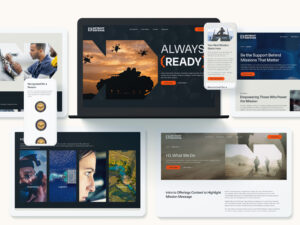
Discover how Detroit Defense’s rebrand helped them win in a crowded market
How to build a compliant-first data foundation
Trust is nonnegotiable. That begins with transparent consent, clear data retention policies, and accessible privacy documentation. Establish cookie consent and preference centers that are simple to use. Train teams on PII handling and integrate compliance checks into every campaign workflow. Map your CRM and marketing automation to the capture process, then build lead and account scoring that accounts for agency signals, offer type, and buying center engagement. Compliant data practices make government contractor digital marketing both safer and smarter, because you can personalize confidently without risking reputational or regulatory issues.
The channel mix that will matter most in the next three years
Budgets are shifting toward programs that convert attention into qualified access. A balanced plan keeps the flywheel turning across three horizons: immediate demand, midterm consideration, and long-term brand preference. Government contractor digital marketing thrives when each channel is assigned a clear job to do and a consistent metric to own.
Search and content as your always-on engine
Develop cornerstone pages that align to priority contracts and mission threads. Surround them with briefs, explainers, and checklists that answer the exact questions evaluators ask during market research. Use structured data to help engines interpret the context. Government contractor digital marketing performs best when content eliminates ambiguity and reduces the risk in selecting your solution.
Social proof and subject-matter leadership
Executives and engineers in the public sector reward clarity and credibility. Elevate SME voices through short videos, annotated diagrams, and opinion pieces. Encourage leaders to engage on the right social channels with consistent, mission-first messaging. This is a low-cost way to compound the reach of government contractor digital marketing while reinforcing authenticity.
Email and nurture with value at every click
Design nurtures for specific buying centers and maturity stages. Replace generic newsletters with mission briefings, architecture notes, and short, focused invitations. Make opt-out easy and frequency predictable. The goal is to treat inbox access as a privilege. In a well-run system, email becomes the connective tissue of government contractor digital marketing.
Account-based advertising at a sensible scale
Use account lists carefully, and keep creative aligned to agency outcomes rather than product lingo. Rotate formats to prevent fatigue and cap frequency to protect brand goodwill. Above all, make every ad lead to a landing experience that pays off the promise. ABM supports government contractor digital marketing when it is tightly integrated with field, events, and sales development.

Get the inside story on how we developed a new visual identity for Vitesse Systems
Measurement that aligns to capture and revenue
Vanity metrics hide underperformance. Build an attribution and reporting framework that mirrors the capture journey. Focus on outcomes such as influenced pipeline, RFI participation, SAL creation, stage-to-stage conversion, meeting quality, and win-rate lift in target segments. Consolidate dashboards to show performance by agency, mission thread, and contract vehicle. Mature government contractor digital marketing programs invest in research and analytics that translate channel data into revenue language executives can act on.
Brand differentiation as a growth multiplier
Content and media spend less efficiently when your story looks like everyone else’s. Build a point of view that connects your capabilities to mission success and risk reduction. Codify that POV in messaging frameworks and a modern visual identity. Then deploy it consistently across web, sales enablement, and events. To see how a distinctive narrative and design system perform in the field, explore our work in the public sector. A strong brand makes every aspect of government contractor digital marketing work harder by increasing recall, clarity, and trust.
The website as the center of gravity
For many buyers, the website is the first and last touch before a down-select. Prioritize four pillars. First, experience. Fast, accessible, and navigable on any device. Second, clarity. Plain-language descriptions of offerings, contract vehicles, and teaming options. Third, proof. Case studies with outcomes, security certifications, and relevant past performance. Fourth, conversion. Multiple low-friction paths to value, including capability statements, demo requests, and workshop sign-ups. A buyer-ready site is the single best investment in government contractor digital marketing that most firms can make this year.
Orchestrating field, events, and digital
Events still create momentum, especially when paired with rigorous pre- and post-campaigns. Before an event, use targeted emails, paid social, and personal outreach to schedule meetings and drive session attendance. During the event, capture content in real time that can be repurposed across channels. Afterward, launch follow-up sequences by role and topic. When you apply this cadence consistently, government contractor digital marketing extends the life and value of every sponsorship and speaking slot.
A practical 90-day roadmap
Leaders often ask where to start. The answer is to ship value fast while laying foundations that scale. Use this phased plan to upgrade government contractor digital marketing without pausing growth.
Days 1 to 30: Diagnose and focus
- Audit content against priority agencies, missions, and vehicles. Identify gaps that block consideration.
- Run a technical and content SEO scan. Fix critical issues and quick wins first.
- Map the capture workflow from first touch to award. Align CRM and marketing automation with that journey.
- Define a test plan for paid and social with tight hypotheses and success criteria.
Days 31 to 60: Build and launch
- Publish three to five cornerstone pages and a set of conversion assets tied to each.
- Activate two targeted paid campaigns with tailored landing experiences.
- Enable SDR and capture teams with refreshed outreach templates and a resource hub.
- Instrument dashboards that show response by agency and buying center.
Days 61 to 90: Optimize and scale
- Double down on content that attracts the right readers and triggers quality conversations.
- Iterate creative and offers based on early conversion patterns.
- Expand nurture programs with new tracks for technical evaluators and contracting officers.
- Roll insights into Q2 and Q3 plans so government contractor digital marketing compounds quarter over quarter.

Dive into how we reimagined Axonis’s entire brand platform
Common pitfalls and how to avoid them
Several traps derail otherwise strong plans. Avoid talking only about features when buyers want mission outcomes. Do not spread media thinly across too many channels. Resist launching ABM without sales and capture alignment. Prevent privacy risks by limiting data collection to what you can explain and secure. Finally, do not let the website lag behind the rest of the stack. Consistent, buyer-centered execution keeps government contractor digital marketing on course and defensible.
When to bring in an experienced partner
Internal teams often juggle proposals, partner marketing, and on-contract priorities. A specialized partner accelerates impact by standardizing processes, strengthening brand, and running multi-channel programs that map to capture. If you need a team that understands how to connect creative, content, media, and analytics with procurement realities, consider working with a public sector digital marketing agency that has done it at scale. The right support structure turns government contractor digital marketing from a set of campaigns into a durable advantage.
Why Bluetext for the next stage of growth
Bluetext helps enterprise and growth-stage firms build brands, win mindshare, and grow pipeline across the public sector. Our integrated teams bring strategy, creative, and demand generation together under one roof. From message architecture and content systems to media optimization and analytics, we align every deliverable to the metrics executives care about. This approach has helped clients modernize their government contractor digital marketing while strengthening the core foundations that drive sustainable growth.
Next steps
The organizations that win the next cycle will treat digital as an organized system, not a set of disconnected tactics. Prioritize first-party data, agency-centric content, an accessible and fast website, and a measurement model that mirrors capture. Pair those fundamentals with disciplined testing and a clear brand point of view. If you are ready to elevate government contractor digital marketing with a program built for measurable impact, explore how Bluetext partners with public sector leaders across branding, content, web, and campaigns, and then contact Bluetext to discuss your goals.
Washington DC is not just the nation’s capital. It is a nexus of federal procurement, policy debate, global organizations, and tech-driven enterprise. That unique mix is reshaping how brands build awareness, generate demand, and earn trust. For executives evaluating how to allocate budgets and design go-to-market programs, understanding the digital marketing trends influencing DC’s B2B and B2G ecosystem is now essential. Whether you lead a growth-stage disruptor or a Fortune 500 division, the right digital marketing agency Washington DC can accelerate reputation, pipeline, and revenue in a market where timing, credibility, and compliance set the winners apart.
Why Washington DC sets a different standard for digital performance
DC marketing is governed by the rhythm of the federal fiscal year, agency priorities, Congressional cycles, and the procurement process. Enterprise sales teams compete alongside government affairs and public policy teams for executive attention. The best campaigns insert your brand into this reality with precision. A digital marketing agency Washington DC will factor mission needs, regulatory sensitivities, and influencer networks into channel planning, messaging, and measurement frameworks from day one.
Audience composition is also distinct. Decision makers often include program managers, contracting officers, integrators, and systems engineers, plus the policy and risk stakeholders who influence enterprise buying committees. This means your content must inform technical use cases while reinforcing compliance, security, and ROI. Partnering with a Washington DC digital marketing agency that understands these stakeholder maps yields more efficient spend and faster time to relevance.
What trends are redefining B2B and B2G buyer journeys in DC
Executive buyers in the region are busy and skeptical. They value authoritative content, credible third-party validation, and clear proof of impact. Several shifts are changing how they discover and evaluate solutions.
Account-based go-to-market aligned to federal buying cycles
Account-based strategies now dominate high-consideration sales motions. The most effective playbooks map spending forecasts, contract vehicles, and mission mandates to content sequences and outreach timelines. A digital marketing agency Washington DC that synchronizes campaigns to agencies’ budget cycles, events, and RFP windows will deliver better qualification and higher conversion rates. The insight is simple. If your message is not contextualized to the mission and delivered when teams plan funding, it is noise.
First-party data and privacy-respectful growth
With privacy requirements tightening and third-party cookies fading, brands are investing in first-party data capture through value exchanges such as calculators, gated research, and virtual demo experiences. This enables targeted nurture while protecting user privacy and respecting federal standards. A digital marketing agency Washington DC can architect data models, consent frameworks, and marketing automation journeys that satisfy legal, IT, and security teams while still propelling growth.
Thought leadership with a policy lens
The most shared assets in DC are not product sheets. They are timely insights that help stakeholders interpret policy changes, funding streams, and technology implications. Executive op-eds, mission briefings, and explainer videos that translate complex concepts for non-technical leaders are outperforming generic content hubs. The difference comes from editorial rigor. The right partner transforms SMEs into public-minded educators and uses that authority to guide buyers toward your solution.
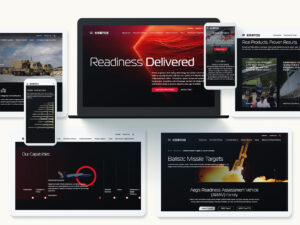
Discover what we built for Kratos Defense
How AI is changing campaign strategy and execution in the capital region
AI has moved from pilot experiments to mainstream enabler. It is improving planning, content velocity, and channel optimization, especially for complex DC buying paths.
Predictive intelligence and creative iteration
Brands are using machine learning to forecast likely responders, choose offers by persona, and automate creative testing. The advantage is iterative speed at lower cost. A digital marketing agency Washington DC that combines predictive models with editorial oversight can scale content while preserving accuracy on sensitive topics such as cybersecurity, health data, and critical infrastructure. Executive teams should insist on strong human governance, robust data provenance, and clear brand voice controls.
Media mix and budget reallocation at the speed of signals
AI-powered incrementality testing and budget allocation are improving media efficiency across paid search, paid social, and programmatic. With near real-time performance feedback, marketers can pivot spend toward channels that influence target agencies or capture emerging demand tied to policy announcements. The result is fewer wasted impressions and measurable lift in qualified opportunity creation.
What executives need to know about SEO in a policy-driven market
Search remains the backbone of B2B and B2G discovery. In Washington DC, success requires more than ranking on product keywords. It requires authority on policy topics, structured data mastery, and local nuance. A digital marketing agency Washington DC will build an SEO strategy that aligns product narratives to mission outcomes, integrates schema for events, FAQs, and how-to content, and optimizes for executive snippets that dominate results pages.
Brands that pair technical SEO with high-trust content outperform peers. That means authoritative bylines, proprietary research, and resource centers optimized for E-E-A-T signals. If your team needs a specialized partner, explore Bluetext’s approach to search engine optimization to understand how on-page structure meets editorial excellence.
Which channels are delivering ROI for enterprise and public sector marketers
With budgets under scrutiny, leaders want clarity on which channels work in DC now. A digital marketing agency Washington DC can benchmark performance across industries and missions, then tailor the mix to your goals. Several channels continue to deliver outsized value.
LinkedIn and targeted paid social
LinkedIn remains the highest-performing paid social channel for professional audiences. Targeting by function, seniority, skills, and group membership allows precision without sacrificing scale. Creative should lead with mission value and concrete outcomes. Retargeting and conversation ads, paired with sales enablement, accelerate qualified meetings and webinar registrations.
Programmatic and connected TV for policy-aware reach
Programmatic media using curated allow lists and context filters accesses premium inventory on news and industry properties frequented by DC influencers. Connected TV is growing as a reach vehicle for leadership audiences, especially when combined with IP targeting at agency campuses and beltway enterprises. Frequency capping and creative rotation are essential for message freshness.
Live events, virtual briefings, and hybrid experiences
Nothing replaces a compelling in-person conversation in DC. But hybrid models let you scale. Executive breakfasts, roundtables with policy experts, and virtual mission briefings perform best when supported by nurture tracks and post-event content recaps. The brands that win treat event content as evergreen assets, not one-off moments.
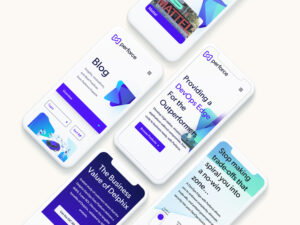
Check out how we reimagined Perforce’s branding
Why website experience and accessibility are now mission-critical
Your website is the control room for all campaigns. It must load fast, guide by role and mission outcome, and meet accessibility standards that reflect public-sector expectations. A Washington DC digital marketing agency will push for modular design systems, robust content governance, and analytics instrumentation that maps journeys to pipeline. If your team is planning a refresh, examine modern approaches to website design and development that connect UX to measurable impact.
Accessibility is not optional. Section 508, WCAG, and inclusive writing standards shape the perception of trust. Embedding accessibility into design and content workflows reduces retrofitting and legal risk while expanding reach to critical stakeholders.
Reputation, trust, and issues management online
In DC, reputation risks propagate quickly across media, Hill conversations, and industry communities. Preparedness is a competitive advantage. A digital marketing agency Washington DC that offers issues monitoring, rapid-response protocols, and stakeholder mapping helps brands navigate sensitive moments. Establish a clear escalation path, train spokespeople, and stage tabletop exercises. For specialized support, review Bluetext’s experience in crisis communications to protect and reinforce trust.
Measurement that matters to boards and contracting officers
Leaders want to see how marketing accelerates sales cycles, improves win rates, and advances capture objectives. That requires full-funnel measurement, from anonymous engagement to influenced and sourced revenue. A digital marketing agency Washington DC will integrate CRM, MAP, and web analytics, then create executive dashboards that connect channel performance to opportunity health by account, program, and mission area.
If you are building this capability, consider partnering with a DC digital marketing analytics company to establish data hygiene, attribution models, and board-ready reporting. The right view of performance informs investments, de-risks bets, and galvanizes alignment between marketing, sales, and capture teams.
How to evaluate and choose a digital marketing agency in Washington DC
Vendor selection decisions carry strategic weight. The partner you choose will shape your brand narrative, channel mix, and growth trajectory. Here are the criteria that matter when assessing a digital marketing agency Washington DC.
- Proven B2B and B2G credibility. Ask for case studies tied to federal, state, and regulated industries, including campaign performance and sales impact.
- Audience fluency. The team should understand government buyers, integrators, and compliance requirements, and how policy cycles influence demand.
- Integrated capability. Strategy, brand, content, media, web, and analytics must work in one operating rhythm to eliminate silos.
- AI and data maturity. Request their governance model, proprietary tools, and how they validate data and creative outputs for accuracy.
- Executive communication. Your agency should translate complex tactics into board-level narratives with clear KPIs and risk mitigation.
For brands selling into agencies or contracting ecosystems, partnering with a public sector digital marketing agency brings alignment from messaging through capture support. This is where a digital marketing agency Washington DC can deliver immediate value by bridging marketing, sales engineering, and proposal teams.

Explore how we gave LMI a cutting-edge brand refresh
Content strategies that earn attention in a crowded DC conversation
Content that performs in the capital region prioritizes clarity, credibility, and timeliness. The format and distribution plan are as important as the message itself.
Editorial products built around mission outcomes
Reframe features as outcomes. Show how your solution reduces backlog for a benefits program, accelerates risk scoring for cyber defense, or improves data interoperability across agencies. A digital marketing agency Washington DC can facilitate SME interviews and translate technical capabilities into simple stories with measurable KPIs.
Owned media hubs and executive explainers
Centralize thought leadership into a resource hub with crisp navigation by topic, mission, and role. Summarize complex policies into explainers and briefs, then promote with targeted snippets on LinkedIn and programmatic. Anchor every piece with calls to action that offer demos, ROI tools, or event invitations.
Video, webinars, and virtual briefings
Short-form video and webinar series outperform static PDFs for busy executives. Use chapters, transcripts, and clips to extend reach across channels. Track engagement depth and forward shares to identify which agencies or accounts are heating up, then enable sales with conversation guides.
SEM, social, and the art of coordinated capture support
High-intent search campaigns remain foundational, but the winners coordinate paid search, paid social, and ABM to surround priority accounts. A Washington DC digital marketing agency will synchronize RFP watchlists with keyword portfolios and message maps, then run agile sprints that adapt to shifts in competitor activity or policy news. Rapid creative updates based on new guidance or budget releases keep ads relevant and authoritative.
On social, executives respond to concise, statistic-backed messages that lead to deeper resources. Use social proof such as case highlights, certifications, and security attestations. Align community management to ensure swift, accurate responses to questions that appear in comments, and route complex inquiries to SMEs the same day.
Brand and UX decisions that accelerate enterprise trust
In DC, strong brand systems and user-centric UX reduce friction in complex sales. Visual identity should be modern and authoritative without overpromising. Messaging must reconcile innovation with risk management. A digital marketing agency Washington DC will pressure test your narrative against common objections from legal, security, and procurement teams, then refine proof points and compliance language to speed approvals and shorten sales cycles.
On the UX front, simplify journeys for distinct roles. Create quick paths for CIOs, CISOs, program managers, and acquisition teams. Use calculators and architecture diagrams for technical buyers and policy briefs for executives. Instrument everything with event tracking so you can attribute engagement to opportunities and inform content gaps.
Practical first steps for leaders ready to modernize
Executives do not need to overhaul everything at once. Start with a 90-day plan to unlock quick wins and inform bigger moves. A digital marketing agency Washington DC will often recommend the following sequence.
- Audit the funnel. Identify the biggest friction points from search to sales handoff. Prioritize two to three issues that unlock measurable lift.
- Reposition the story. Refresh messaging to lead with mission outcomes and proof. Align paid media and web to the new narrative.
- Tighten targeting. Stand up or refine ABM around a focused list of programs or agencies. Sync with capture priorities.
- Instrument measurement. Implement dashboards that show channel influence on qualified pipeline and win rate, not just clicks.
- Scale content. Produce one flagship explainer and several modular derivatives to fuel search, social, and email for a quarter.
Within a quarter, leadership should see clearer attribution, higher engagement from priority accounts, and early signals of pipeline acceleration. Use those results to justify deeper investments in web modernization, analytics sophistication, and creative expansion.
Partner with a team built for DC’s complexity
Washington’s business landscape rewards precision, speed, and credibility. It punishes generic campaigns and slow responses. Bluetext operates at the intersection of brand, demand, and policy-aware storytelling. As a digital marketing agency Washington DC, our team builds integrated programs that earn attention, move stakeholders, and drive revenue for complex B2B and B2G organizations. From technical SEO and content strategy to media orchestration and analytics, we deliver the orchestration needed to scale growth with confidence.
If you are ready to elevate your brand, sharpen your demand engine, or prepare for a major announcement, contact Bluetext. Speak with a digital marketing agency Washington DC that understands the stakes and can turn strategy into measurable outcomes. Start the conversation today by visiting our contact page and let us help you build a strategy that stands out in the nation’s most competitive market.
In a digital-first world, the difference between growth and stagnation often comes down to how clearly and quickly your ads communicate value. Buyers skim, compare, and shortlist before they ever speak to sales. That is why B2B ad design experts are now central to marketing performance. They combine brand strategy, data, and channel-specific creative to stop the scroll, earn attention, and convert qualified demand. For executive marketers managing complex portfolios, government audiences, or high-stakes categories, expert ad design is no longer an optional capability. It is the connective tissue between positioning, pipeline, and revenue.
Why Creative Is the New Performance Multiplier in B2B
As performance channels mature, the media edge narrows. Targeting looks similar across competitors. Budgets face constant scrutiny. In this environment, creative quality has become the largest variable that teams can control. B2B ad design experts maximize that variable. They build ideas and visual systems that clarify the offer, resolve buyer uncertainty, and accelerate action across the funnel. Strong creative can lift click-through and conversion rates even when the audience and bids remain unchanged. Better still, it compounds. Once a winning concept is identified, variants extend performance across formats and segments without diluting message clarity.
Executives often ask if brand and demand are in conflict. B2B ad design experts align them. They use brand assets as performance levers and ensure that the first impression of your company is consistent from display to landing page to sales follow up. This coherence reduces friction for buyers and raises marginal ROI on every subsequent impression.

Explore how we deployed our full creative suite for CBIZ
What Do B2B Ad Design Experts Actually Do?
These specialists operate at the intersection of creative strategy and modern media. Their work spans research, ideation, design, testing, and optimization, all tuned to B2B and B2G realities. Typical responsibilities include:
- Translating complex value propositions into simple, high-contrast creative that can be understood in two seconds.
- Designing channel-native assets for LinkedIn, programmatic display, paid social, CTV, and ABM activation.
- Developing modular ad systems with reusable elements, so campaigns can scale without sacrificing quality.
- Running structured creative tests and folding the results back into concept development.
- Partnering with demand generation and sales to ensure creative aligns with ICPs, offers, and pipeline goals.
B2B ad design experts also understand the nuance of selling into regulated industries and the public sector. They design within compliance constraints while preserving stopping power, which is especially critical in categories like cybersecurity, aerospace, healthcare, and government technology.
How Experts Turn Complex Offers Into Clear, High-Impact Ads
Many B2B and B2G products are technical and multi-layered. The temptation is to jam too much into the ad. B2B ad design experts do the opposite. They reduce the message to a single promise and a single action. They prioritize the most credible proof point. They select imagery that expresses outcomes rather than features. The goal is pre-qualification at speed. If the viewer is the right buyer, the ad should create instant relevance and invite a next step. If not, it should politely filter out the rest.
They also map creative to buying stage. Early-funnel units raise a problem or open a curiosity gap. Mid-funnel assets frame a choice and show contrast with competitors. Late-stage ads reinforce urgency and use social proof or risk mitigation to help buyers finalize.
Channel-Specific Design Principles That Raise Response
One-size-fits-all creative is an expensive myth. B2B ad design experts treat each channel as a different medium with different grammar.
- LinkedIn: Design for professional scanning patterns. Use bold value statements, a visible brand mark, and copy blocks that read well on mobile. Incorporate dynamic offers like webinars or reports to drive lead capture with minimal friction.
- Programmatic Display: Maximize legibility at small sizes. Focus on high-contrast color, short copy, and a repeatable headline structure so sequential frames tell a clear story.
- Connected TV: Lead with brand and problem framing in the first three seconds. Use supers and simple visuals to accommodate sound-off viewing. Close with a memorable line and URL.
- ABM: Personalization is more than a name. Tailor creative to the account’s current initiative or tech stack. Build variant sets that speak to roles within buying committees.
- Paid Social: Design for movement. Subtle animations and micro-interactions increase thumb-stopping power, but only when they reinforce the message rather than distract.
To see how ideas translate into breakthrough campaigns, review our advertising work for advanced B2B and public sector brands.
Why Motion, Sound, and 3D Matter More Than Ever
Static images still play a role, but the attention economy increasingly rewards motion and sound. B2B ad design experts integrate lightweight animations and short-form video to deliver more meaning in less time. A quick parallax effect can dramatize a transformation. A sonic logo can make an impression before a viewer looks up. 3D elements can explain a system architecture within seconds. The key is not flair for its own sake. Motion earns its place when it clarifies the value proposition or accelerates comprehension, especially in technology and industrial categories.
Creative Testing That Actually Produces Answers
Testing without a hypothesis wastes spend. B2B ad design experts plan experiments around a creative ladder. They test big things first, like core message or visual metaphor, before refining smaller elements. They also protect test integrity with even budget allocation and consistent audience definitions. Once a winner emerges, they scale it across channels with channel-specific adaptations, rather than simply resizing a single file. This approach builds cumulative learning, so every campaign starts smarter than the last.
Data Signals That Guide Continuous Improvement
Executives need to know which creative decisions are driving returns. B2B ad design experts create a feedback loop that connects creative variables to performance metrics. They tag assets by concept, offer, and design choice. They pair CTR and engagement with lead quality and pipeline contribution. They compare scroll depth and dwell time on the landing page to isolate friction. Over time, patterns emerge. Certain metaphors resonate with CISOs. Certain proof points move operations leaders. This pattern recognition shapes the next campaign brief and speeds the path to scale.

Inside our comprehensive creative approach for Intelsat’s website redesign
Accessibility, Compliance, and Brand Safety in B2G Environments
Public sector advertising introduces additional requirements. Accessibility standards like color contrast and readable type sizes are non-negotiable. Claims must be accurate and defensible. Media placements must align with brand safety thresholds. B2B ad design experts bake these constraints into creative templates and review workflows so campaigns stay compliant without losing impact. For organizations targeting federal, state, and local buyers, expert alignment with procurement cycles and policy language is an advantage, not a barrier. Explore our public sector work to see how creative excellence and compliance can co-exist.
Integrating Creative and Demand Generation for Pipeline Growth
Isolated creative wins rarely translate into revenue. B2B ad design experts collaborate tightly with demand generation to align ICP definitions, content strategy, and lead capture flows. They design ad units as part of a system that includes landing page modules, interactive tools, and nurture sequences. They ensure continuity of message so prospects never feel a disconnect between the ad they clicked and the page they land on. This integration increases conversion rates and reduces cost per opportunity.
When growth targets depend on sustained performance, it helps to have partners that have built programs end-to-end. See our approach to demand and lead generation to understand how creative and pipeline work together.
Creative Architecture for Enterprise and Portfolio Brands
Many enterprise marketers manage multiple products, regions, or sub-brands. B2B ad design experts architect creative systems that scale. They establish a hierarchy of messaging so that corporate brand, solution category, and product-level claims do not collide. They define flexible templates that local teams can adapt without diluting core identity. They build asset libraries with modular blocks, which reduces production time and helps media teams move faster when market conditions change.
Measurement That Proves the Value of Better Design
Leaders do not just want incremental metrics. They want to see the contribution to sales cycles and bookings. B2B ad design experts capture both top-of-funnel and down-funnel impact. They benchmark creative lift against prior campaigns. They measure the velocity of opportunities touched by the campaign. They attribute content downloads and webinar registrations to specific creative concepts. They look at multi-touch paths to understand when and where creative moved a buyer closer to a decision. With this level of clarity, it is easier to justify increased investment in the ideas that are moving markets.
How to Choose the Right B2B Ad Design Experts
Not all creative partners are built for complex B2B and B2G needs. As you evaluate options, look for:
- Evidence of results in your category and buyer audience.
- Demonstrated collaboration between creative and performance teams.
- Comfort with compliance, accessibility, and security requirements.
- Ability to scale concepts across formats, languages, and regions.
- A rigorous testing methodology with clear documentation.
Ask to see concept boards, testing frameworks, and post-mortem analyses. Review channel-native work, not just brand campaigns. Confirm that the team can handle both the vision and the velocity required by modern media calendars.

Walk through how our full funnel video campaign for nShift helped grow their pipeline
The Rising Role of AI in Ad Design, Without Losing the Human Edge
Generative tools can accelerate storyboard drafts, image exploration, and copy variants. B2B ad design experts use AI as a creative co-pilot while maintaining human judgment on narrative, taste, and brand fit. They also set governance norms to protect IP and ensure ethical data use. The best results occur when AI expands the option space early in concepting and when experts decide which ideas deserve investment, polish, and testing.
Avoiding Common Pitfalls That Kill Performance
Even strong teams fall into traps that blunt results. B2B ad design experts help you avoid:
- Feature overload: Ads try to explain everything and end up convincing no one.
- Visual noise: Fancy effects make the ad look impressive but slow comprehension.
- Copy bloat: Long subheads that wrap on mobile and reduce click clarity.
- Landing page mismatch: The page fails to deliver the promise of the ad.
- Testing drift: Simultaneous changes to too many variables obscure learnings.
By standardizing creative briefs, concept reviews, and QA protocols, expert teams keep campaigns aligned and outcomes predictable.
From Messaging to Market Momentum
Great ads do more than drive clicks. They shift how your market talks about a category. B2B ad design experts craft narratives that position your company as an authority and simplify key distinctions. Over the course of a quarter, the right concept library can redefine the choice set for buyers, influence peer conversations, and set up sales with stronger inbound intent. Creative becomes a strategy instrument, not just a production task.
Why Bluetext for Executive-Grade Creative and Performance
Bluetext brings senior strategic leadership together with hands-on creative execution for organizations that expect measurable growth. As a full-service B2B marketing agency, we align brand, messaging, media, and analytics so each campaign builds on the last. Our B2B ad design experts create work that is crisp, compliant, and conversion minded across enterprise technology, cybersecurity, industrial, healthcare, and government sectors. We design to win attention and to win deals.
A Practical Framework to Launch Your Next Campaign
If you need to move quickly, use this simple framework. It reflects how B2B ad design experts approach high-stakes campaigns:
- Define a single buyer action per campaign and a single promise that leads to it.
- Craft three distinct creative concepts that express the promise through different metaphors.
- Design channel-native variants for two priority media placements to start.
- Launch a controlled A/B test that isolates the concept as the primary variable.
- Scale the winner across additional formats with tailored adaptations, not simple resizes.
- Refresh the concept with motion and copy variants at week three to counter fatigue.
- Roll learnings into the next campaign brief and repeat the cycle.
This approach keeps teams focused on decisions that matter and compresses time to insight. It also produces a growing library of proven creative that can be repurposed for events, sales enablement, and product launches.
Bring Your Story to Life With Expert Ad Design
Digital-first buyers move fast and reward clarity. The brands that rise above the noise will be those that invest in expert creative and connect it to performance with discipline. B2B ad design experts deliver that edge. They turn strategy into market momentum, translate complexity into compelling narratives, and meet buyers with the right message in the right format at the right time. If your vision for growth requires both breakthrough ideas and measurable outcomes, Bluetext is ready to help. Explore our integrated capabilities, see how we build campaigns that convert, and connect with our team to put expert creative to work for your pipeline. Contact us to get started on a strategy, branding, or campaign program built for a digital-first world.
Resilience has become the defining advantage for modern brands. Disruption is constant, buyers are discerning, and expectations shift by the quarter. Surviving is not the goal. Growth requires a brand that can flex with market conditions without losing its core. That is why executive teams are increasingly partnering with brand strategy agencies to set stronger foundations, make sharper positioning choices, and operationalize brand systems that hold up under pressure. The right partner blends research, creativity, and activation rigor to future-proof identity, messaging, and experiences across every stakeholder touchpoint.
What makes a brand resilient today?
Resilience is not a slogan. It is a set of behaviors and systems that allow a company to adapt quickly while protecting equity and trust. Top brand strategy agencies define resilience through five practical capabilities that leaders can measure and manage.
- Clear, defensible positioning that stands up in crowded or volatile categories
- Audience clarity down to segments and roles, informed by decision journeys and pain points
- Experience consistency across digital and physical channels, from first touch to renewal
- Governance that scales brand adoption inside the organization and across partners
- Proactive risk management, with protocols for issues and crisis response
Resilience is built before it is needed. The most effective brand strategy agencies guide decisions on where to play, how to win, and how to scale repeatable growth. The goal is simple: create a brand that absorbs shocks, capitalizes on inflection points, and converts uncertainty into momentum.
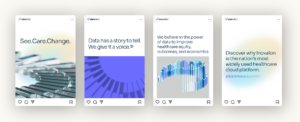
Inovalon trusted us with reimagining their brand. See why.
How do brand strategy agencies create durable positioning?
Durable positioning starts with clarity and ends with proof. Leading brand strategy agencies run disciplined programs that move from research to distinctive narratives and then to visible, verifiable proof points across campaigns, content, and sales enablement.
Data-driven discovery that reduces guesswork
Resilient brands do not bet on opinions. They invest in insight. Sophisticated brand strategy agencies use quantitative and qualitative research to clarify market structure, growth pockets, and category codes. They audit competitors and adjacent categories to identify white space and to determine where differentiation can be both credible and sustainable. This work often includes an internal diagnostic to align leadership, product, and go-to-market teams around a common reality before any creative decisions are made.
A category point of view that buyers can follow
Positioning that lasts gives buyers a mental model for why the category exists, where it is going, and why a specific solution set matters. Seasoned brand strategy agencies help executives articulate a point of view that reframes the market on favorable terms. This often means naming emerging pain points, setting new evaluation criteria, and linking product innovation to measurable outcomes that chief decision makers recognize.
Message architecture that scales across teams
Resilient brands communicate with precision. The best brand strategy agencies build message architectures that cascade from corporate narrative to segment and solution proof, supported by customer evidence and ROI quantification. The output gives sales, marketing, product, and HR the same core language so that the brand speaks consistently across regions, roles, and channels, even as campaigns change.
Governance that protects integrity at speed
Growth adds complexity. Without governance, complexity erodes brand value. Experienced brand strategy agencies design brand systems, usage rules, and training that enable fast, accurate adoption. From templates and asset libraries to field guidance and partner toolkits, governance empowers people to execute across time zones and functions without creating fragmentation.
Why B2B and B2G brands benefit most from this approach
Multi-stakeholder buying and lengthy procurement cycles amplify the value of a resilient brand. Enterprise deals require consensus across technical, financial, and operational leaders. Public sector contracts introduce compliance, security, and mission requirements that exceed commercial norms. Brand strategy agencies that focus on complex markets understand how to translate differentiation into credibility for each persona and stage.
Winning complex buying committees
Brand credibility is cumulative across touchpoints. Technical buyers look for architectural fit and peer validation. Economic buyers look for risk mitigation and quantifiable value. Users look for ease and support. Leading brand strategy agencies map each requirement to the message and content strategy so that the brand advances the deal even when no salesperson is in the room. That is resilience applied to revenue, not just reputation.
Navigating public sector priorities
Public sector marketing requires fluency in mission outcomes and the realities of acquisition. Brand claims must align with policy goals and security expectations. Experienced brand strategy agencies calibrate language and evidence so that positioning resonates with program managers, contracting officers, and integrators. Teams that speak both brand and mission accelerate trust without overpromising, which is essential for long-term contract performance.
Where experience design meets resilience
Consistency across channels is a stress test for every brand. As go-to-market models prioritize digital, strategy must inform experience design across websites, content ecosystems, social, events, and sales enablement. Top brand strategy agencies connect the dots between narrative and UX so that value is obvious, navigation is intuitive, and calls to action align with buyer intent. When experiences match expectations, conversion improves and goodwill accumulates, which cushions performance during macro shocks.
Risk, issues, and crisis planning as a brand advantage
Reputations are fragile if risk is treated as an afterthought. The most future-ready brand strategy agencies include scenario planning and response protocols within the core brand program. That includes defining who speaks for the brand, what approval paths exist, and what evidence is ready for immediate publication. For leaders building resilience into communications, explore how specialized crisis communications frameworks reinforce trust before, during, and after an event.
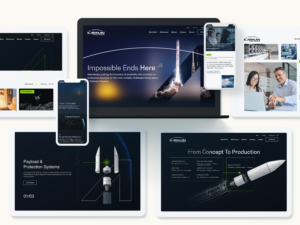
Karman needed a brand that customers could trust. See how we built them one.
What to measure to track brand resilience
Executives need indicators that are both leading and lagging. A well-designed measurement framework helps leadership see whether the brand is gaining strength or masking vulnerabilities. Strong brand strategy agencies create dashboards that blend perception, performance, and pipeline metrics so the team can act early.
- Brand relevance and consideration across priority segments
- Share of voice and quality of coverage in earned and owned channels
- Search demand for branded and category terms, along with click-through performance
- Pricing power signals and win rates against primary competitors
- Sales velocity by stage and renewal health, linked to brand-influenced touchpoints
Measurement starts with clean baselines and clear hypotheses. Sustained improvement requires ongoing insight. Robust programs rely on research and analytics to identify the next best optimization rather than waiting for quarters of underperformance to reveal a problem.
When should executives engage brand strategy agencies?
Timing matters. The most successful engagements start before pain is visible to the market. There are clear triggers that signal value in bringing on experienced brand strategy agencies.
- Strategic shifts such as category entry, exit, or reframing
- Market expansions across geographies or into regulated sectors
- Transformation of the portfolio through innovation, partnerships, or platform moves
- Mergers, acquisitions, or carve-outs that require narrative clarity and identity alignment
- Performance plateaus where awareness and demand diverge
- Significant reputational risk that demands structural change in communications
Brand fundamentals age faster than leaders expect. Proactive alignment with seasoned brand strategy agencies reduces execution drag and eliminates the hidden tax of inconsistency across teams.
What should leaders expect from a proven process?
A resilient brand is the product of a disciplined program. While every engagement adapts to context, top brand strategy agencies typically run a process executives can preview and govern.
- Discovery and alignment. Stakeholder interviews, market scans, brand audits, and goal setting create a shared starting point.
- Insight and opportunity mapping. Research clarifies where to focus, how to differentiate, and which messages will resonate with priority segments.
- Strategy development. Positioning, message architecture, and naming frameworks take shape, along with a point of view that reframes the category.
- Identity and system design. Visual identity, voice, and design systems translate the strategy into executable assets and guidelines.
- Activation planning. Campaign strategy, content roadmaps, website and sales enablement plans connect brand to pipeline and revenue.
- Enablement and governance. Toolkits, training, and operating models drive adoption throughout the organization.
- Optimization. Measurement and iteration lock in gains and prepare the brand to evolve with the market.
Executives should ask for transparency at each stage and measurable outcomes tied to commercial objectives. The best brand strategy agencies make the process as valuable as the deliverables by building internal alignment and capability.

SonicWall needed clarity. Here’s how Bluetext helped them deliver it.
How to evaluate and select the right partner
Not all expertise is equal. Selecting among brand strategy agencies should center on fit for your market, the rigor of the firm’s process, and proof that the work drives outcomes beyond aesthetics. Use criteria that reflect your risk and growth profile.
- Category fluency in your sector or adjacent spaces with similar complexity
- A research-first approach that reduces bias and accelerates consensus
- Demonstrated link between brand decisions and measurable business results
- Activation capability across digital, content, and sales enablement
- Governance and change management experience for fast global adoption
- Executive-caliber communication and stakeholder management
Ask to see how the team turned strategy into results, not just visuals. Review whether past programs survived leadership changes, market swings, or product pivots. That is the clearest signal you are talking to brand strategy agencies that truly build resilience.
From boardroom strategy to brand in market
A strategy on paper is not resilience. Execution is. Effective brand strategy agencies connect boardroom intent to front-line behavior and market-facing experiences. That means strong collaboration between strategists, creatives, and digital activation teams as well as a laser focus on handoffs to sales and customer success. When strategy becomes a living system, every interaction reinforces value and signals reliability to buyers and stakeholders.
Proof that resilience scales across use cases
Whether launching a new category story, modernizing a legacy brand, or unifying a portfolio after acquisition, outcomes matter more than outputs. Explore Bluetext’s breadth of impact by reviewing our branding work to see how strategy translates into identity, messaging, and campaigns that move markets. Patterns emerge across industries: clarity speeds growth, governance reduces waste, and disciplined activation compounds brand equity over time.
Brand strategy for B2G: aligning mission, security, and outcomes
Public sector engagement elevates the stakes for credibility and compliance. The partners that thrive here are brand strategy agencies that align mission language to technical truth without diluting differentiation. The work spans FedRAMP or cyber postures, supply chain assurance, and partner ecosystems, but the core remains the same. Resilient brands tell the truth well, document their claims, and earn the right to scale across programs and agencies by delivering measurable mission impact.
Avoiding common pitfalls that erode resilience
Most brand erosion is self-inflicted. Recognizing the traps helps leaders avoid expensive rework. Brand strategy agencies consistently warn against a handful of missteps.
- Jumping to visuals before agreement on positioning and message architecture
- Confusing internal alignment with market validation
- Underestimating the governance and training required for adoption
- Failing to link brand KPIs to pipeline and renewal metrics
- Treating risk and issues management as a separate discipline rather than core brand work
Each pitfall saps energy and fragments experiences. The remedy is a disciplined partnership with brand strategy agencies that address strategy, design, activation, and change management as a unified program with shared accountability.
Why Bluetext is built for brand resilience
Bluetext partners with growth-minded leaders to create brands that withstand volatility and outperform peers. Our approach integrates research, positioning, identity systems, content, and activation into a cohesive plan that turns strategy into momentum. For a deeper view on how leading brand strategy agencies operate, start with our perspective on the choices that drive durability. Then align your leadership team around a roadmap that connects brand decisions to commercial outcomes and risk mitigation.
Next step: build your resilient brand
If your organization faces a category shift, evolving buyer expectations, or the need to unify a complex portfolio, the moment to act is now. Engage a partner that treats resilience as a system, not a slogan. Bluetext can assess where your brand stands today, identify the highest-impact levers to strengthen positioning and experience, and build an operating model that equips your teams to scale. To discuss your goals and define a path forward, contact Bluetext for strategy, branding, or campaign support that is built to last.
Public sector leaders face an expectations gap. Constituents, businesses, and partner agencies expect personalized, transparent, and secure experiences that match the best of the private sector. Budgets, procurement, and regulatory constraints rarely make that simple. This is where brand strategy agencies step in. By fusing research, policy awareness, design systems, and measurable activation, these partners are redefining how agencies, authorities, and government contractors express mission, build trust, and drive engagement. For executive teams tasked with modernizing programs and attracting talent or investment, understanding what brand strategy agencies do and how they do it can be the difference between incremental change and meaningful transformation.
Why Public Sector Branding Demands a Different Playbook
Brand strategy agencies that work in the public sector understand that reputations are earned over long cycles, in complex stakeholder environments, and under constant public scrutiny. The brand is not only a promise but an operational framework for delivering equitable, accessible, and secure services. Unlike commercial rebrands that prioritize rapid market share, public sector branding must reconcile policy, mission, and accountability with modern usability and credible storytelling.
Brand strategy agencies navigate requirements like Section 508 accessibility, records retention, and chain-of-custody communications while still producing compelling creative. They translate legislation and program charters into simple narratives that a resident, a Hill staffer, and a systems integrator can each understand. That is not a cosmetic exercise. It is a strategic discipline that moves a mission forward.
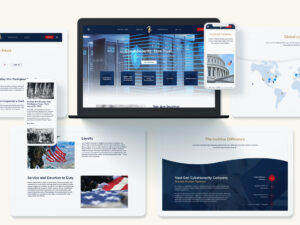
Invictus needed a brand that could scale. We built it.
What Do Brand Strategy Agencies Bring to Government and Quasi-Government Brands?
Brand strategy agencies bring the rigor of management consulting together with the agility of modern design and content practices. The result is a brand system that works from policy memo to website hero, from community briefing to trade show booth. The value shows up in four core areas.
Research That Reflects Reality and Builds Alignment
Brand strategy agencies invest in interviews, listening sessions, message testing, and competitive audits that respect the public record. By combining stakeholder interviews with sentiment analysis, they ensure the brand is grounded in facts and real-world perceptions. This creates alignment across political leadership, career civil servants, and external partners before creative decisions even start.
Messaging Architecture That Balances Mission and Outcomes
Brand strategy agencies craft narrative frameworks that connect mission, program outcomes, and citizen benefits in a hierarchy that works across channels. A strong messaging backbone clarifies what to say in a grant announcement, how to position a research program, or how to explain a cross-agency initiative in one page. For a deeper look at how this comes together in practice, explore Bluetext’s approach to messaging and positioning.
Visual Systems Built for Accessibility and Scale
Brand strategy agencies create visual identities that scale to thousands of pages, dozens of social channels, and many field teams. Color, typography, iconography, and photography choices must pass accessibility checks while remaining distinct and memorable. Templates and component libraries enable consistent execution whether a designer is in-house, at a contractor, or within an affiliated authority.
How Digital Trust and Cybersecurity Influence Brand Architecture
Trust is now the primary economic currency of public sector engagement. Brand strategy agencies integrate digital trust principles into brand architecture by aligning identity decisions with privacy policies, cyber posture, and data governance. That integration shows up in how a site handles consent, how a campaign promises data use, and how visual cues signal security without creating fear.
In an era of phishing and misinformation, brand strategy agencies audit the entire digital estate for consistency, appropriate use of seals and marks, and clear calls to action. They equip internal teams with playbooks that reduce risk. The result is a brand that reads as reliable because the experience is coherent, safe, and respectful of citizen data.

View the strategy behind Mantech’s brand transformation
How Brand Strategy Agencies Modernize Legacy Programs Without Losing Mission
Legacy brands often carry deep reservoirs of trust but struggle with fragmented visuals and outdated language. Brand strategy agencies diagnose which signals of continuity to retain and which components to modernize. That could mean preserving a seal while updating a wordmark, or keeping a recognizable tagline while evolving the narrative to emphasize outcomes and inclusion.
For federal contractors and state partners, brand strategy agencies also orchestrate co-branding frameworks that respect procurement rules and align with partner guidelines. The discipline prevents brand dilution and reduces review cycle time. Agencies that get this right shorten the path from idea to impact, especially when legislative or budget windows are tight.
What Metrics Matter for Public Sector Brand Performance
Executives need a pragmatic dashboard that moves beyond vanity metrics. Brand strategy agencies define and track indicators tied to mission and stakeholder behavior. Common metrics include:
- Message comprehension and recall across priority audiences
- Accessibility scores, task completion, and time to information on digital properties
- Trust and favorability measures among constituents and partners
- Application, enrollment, or participation rates for key programs
- Talent pipeline indicators, including qualified applicants for hard-to-fill roles
- Cost per qualified engagement for campaigns that drive public action
Brand strategy agencies use these metrics to calibrate creative, content, and media allocation. They also establish governance so insights flow back to leadership and inform policy communications, not only marketing outputs.
How AI and Data Are Reshaping Public Sector Brand Strategy
AI is changing the cadence of insight and execution. Brand strategy agencies deploy privacy-conscious methods to surface audience questions, simplify content, and test variations at scale. The goal is not automation for its own sake. The goal is clarity, speed to value, and compliance. Modern content operations pair human editorial oversight with AI-enabled taxonomy, entity recognition, and accessibility checks. The result is accurate, readable content that reaches people the first time they look for it.
Data-enabled brand governance also makes it possible to show which narratives drive trust and participation versus those that only generate clicks. Brand strategy agencies operationalize this feedback loop in editorial calendars, asset libraries, and training modules so every team communicates with consistency and purpose.
Procurement-Friendly Ways to Engage an Agency Partner
Working with brand strategy agencies does not require a complex megaphone contract from day one. Many public sector leaders start with a discovery sprint, a messaging workshop, or a visual refresh pilot. From there, they scale into content systems, digital experience design, and campaign activation. Phased scopes mirror the decision-making cadence of public organizations and create value early.
Brand strategy agencies also help structure documentation that supports budget requests and RFP development. A clear current-state analysis and future-state roadmap simplify vendor management and accelerate approvals. This disciplined approach keeps brand modernization on schedule even when leadership or legislative priorities evolve.
Case-Inspired Patterns That Work Across the Public Sector
Brand strategy agencies have seen what works across agencies, authorities, and government-adjacent organizations. Several patterns consistently deliver results:
- Mission-first messaging that translates policy into human outcomes
- Design systems that hard-code accessibility and provide flexible components
- Journey maps that connect awareness to action and reduce friction for citizens
- Training and governance frameworks that build internal capacity and continuity
- Measurement that ties storytelling to service delivery and talent attraction
To see how these elements come together in complex environments, review Bluetext’s public sector work and explore how narrative, visual systems, and digital experiences align to drive adoption and trust.

Pull back the curtain on Kratos’s brand transformation
How Brand Architecture Supports Cross-Agency Collaboration
Shared missions often require shared narratives. Brand strategy agencies build brand architecture that clarifies parent-child relationships, co-sponsorship guidelines, and naming for pilots or working groups. This structure reduces duplication, streamlines approvals, and prevents confusing overlaps when programs migrate or expand.
When a state agency collaborates with a federal initiative or a university consortium, brand strategy agencies create co-branding rules that maintain legal integrity while communicating a unified purpose. The audience sees one mission and one path to action, even if multiple partners are at work behind the scenes.
From Narrative to Experience: Closing the Loop in Digital
Modern constituent journeys begin in search, unfold on mobile, and conclude across channels. Brand strategy agencies align content design, IA, and performance SEO so the brand shows up where people actually look for information. They prioritize plain language, logical pathways, and structured data so that FAQs, forms, and eligibility criteria are easy to find and understand.
That same discipline extends to campaigns. Brand strategy agencies engineer landing pages, onboarding flows, and feedback loops that turn intent into completion. For inspiration on how identity and experience design connect, explore Bluetext’s portfolio of branding programs that integrate strategy with digital execution.
The Role of Storytelling in Policy Communication
Complex policy needs narrative, not spin. Brand strategy agencies transform technical language into stories about community impact, safety, resilience, and opportunity. These narratives help leaders explain trade-offs, invite collaboration, and show progress without overselling. They also equip spokespeople and program managers with consistent talking points that stand up under scrutiny.
When paired with well-designed visuals and data storytelling, these narratives turn dense reports into content people share and reference. That momentum improves the quality of dialogue between agencies, lawmakers, and the public.
Common Pitfalls Brand Strategy Agencies Help Avoid
Public sector transformations rarely fail because of a single decision. They stall when teams attempt to fix everything at once, overlook governance, or confuse internal enthusiasm with external clarity. Brand strategy agencies de-risk change by sequencing work, codifying standards, and validating messages with real audiences early. They also protect teams from scope creep by documenting principles and decision rights that hold up during leadership changes.
Another frequent pitfall is misaligning brand with recruiting. Brand strategy agencies convert mission language into a talent value proposition that appeals to engineers, analysts, and operators who could work anywhere. Clear EVP messaging shortens time to hire and lifts acceptance rates for priority roles.
Selecting the Right Partner for Your Mission
Choosing among brand strategy agencies requires criteria that look beyond portfolios. Evaluate partners on their ability to synthesize research into strategy, their fluency with public sector constraints, and their track record building systems that scale. Ask how they measure brand performance and how they enable your team to sustain the change. Look for a right-sized approach to discovery and a plan for rapid wins that build momentum.
Examine collaboration habits as well. Brand strategy agencies should integrate with policy, legal, IT, and communications, not only with marketing. They should speak the language of procurement and offer artifacts your organization can use immediately, such as message maps, design libraries, and training assets.
Why Bluetext for Public Sector Branding
Bluetext is a partner to leaders who need brand strategy that respects mission and delivers measurable outcomes. Our teams bring cross-disciplinary expertise that blends research, narrative, design, and activation. We understand the realities of government, from accessibility to approval workflows, and we design programs that adapt. Explore our perspective on brand strategy agencies and how the discipline is evolving to meet the needs of public organizations and the contractors that support them.
For agencies, associations, and integrators operating at the intersection of policy and technology, Bluetext develops systems that connect the dots. Our approach integrates strategy and creative with activation across content, search, and media. To understand the breadth of our capabilities in regulated and mission-driven industries, visit our public sector work and see how brand modernization moves from insight to implementation.
Practical Next Steps to Start Your Transformation
Successful change begins with focused action. Brand strategy agencies often recommend one or more of the following starting points:
- Message and narrative audit that clarifies strengths, gaps, and priorities
- Visual system refresh aligned to accessibility and contemporary use cases
- Stakeholder workshop to align leadership on purpose, proof, and priorities
- Content and IA blueprint that improves findability and task completion
- Campaign framework that drives a single, high-impact behavior
Each step generates assets your team can use right away, while building a foundation for a full transformation. Brand strategy agencies structure these initiatives to fit budget cycles and oversight requirements, which keeps momentum strong and measurable.
Connecting Brand Strategy to Growth in the B2G Ecosystem
Government contractors live in a hybrid world of commercial expectations and public accountability. Brand strategy agencies help contractors articulate differentiated value to program managers, contracting officers, and end users. Clear positioning improves win rates and accelerates teaming decisions. For organizations ready to expand their presence, partnering with seasoned public sector experts reduces brand risk and improves capture effectiveness across pursuits.
Brand strategy agencies also align brand with analyst relations, media, and trade show investments. Unified messages and systems create compounding effects across channels, which shows up in pipeline quality and the speed of stakeholder education.
The Path Forward
Public sector expectations are rising. Mission complexity is increasing. Budgets remain under pressure. Brand strategy is no longer a veneer but a core capability that aligns policy, service, and stakeholder experience. Brand strategy agencies provide the frameworks, assets, and training to make that capability operational. When leaders invest in this discipline, they unlock clarity, trust, and measurable progress that endures beyond a single campaign or administration.
If your organization is ready to clarify its mission, modernize its identity, and engage the audiences that matter, the next step is a conversation. Reach out to contact Bluetext to discuss how our team can help you plan, build, and activate a brand platform that advances your goals with speed and certainty.
Email is still the lowest-cost, highest-control channel in a complex B2B and B2G mix, but the difference between a pipeline engine and an ignored inbox often comes down to design. For executives accountable for revenue and reputation, email design is not only about visual polish. It is how your value proposition is packaged, prioritized, and delivered at speed across devices and contexts. The right partner brings UX discipline, data fluency, and creative rigor together to influence every micro-decision a buyer makes. That is why leadership teams increasingly evaluate whether an email marketing design agency can become a growth multiplier for account-based motions, partner ecosystems, and event-driven campaigns that demand precision and scale.
Why email design is a force multiplier for B2B growth
Great design accelerates comprehension. In B2B, where complex offerings span long sales cycles, email must guide attention from headline to call to action in seconds. Clear hierarchy, scannable structure, and credible visual identity build trust and reduce cognitive load. Strategic design also reinforces your differentiation across nurture streams, event follow-ups, and partner updates. When a brand commits to disciplined templates and modular content, it ships more messages with fewer errors and stronger performance. That level of operational consistency is a hallmark of a modern email marketing design agency, and it directly impacts lead quality and conversion velocity.
Design choices influence deliverability as well. Clean code, optimized image-to-text ratios, accessible color contrast, and spam-safe language make it easier for messages to reach the inbox. An email marketing design agency that pairs creative with technical governance can help you avoid the silent cost of soft bounces and junk-folder limbo. This blend of art and engineering supports both brand equity and pipeline growth, which is exactly what senior leaders need from a performance channel.
What design elements most reliably lift open, click, and conversion rates
There is no single magic element, but a consistent set of practices shifts results upward. Executive audiences respond to clarity, authority, and brevity. That starts before the body copy. From preheader to footer, every component should be intentional, testable, and reusable.
- Subject line and preheader pairs that tell a complete, outcome-oriented story
- Above-the-fold messaging that states value first and brand second
- Responsive layouts that prioritize legibility and thumb-friendly interactions
- Actionable CTAs with strong contrast and minimal competing links
- Credibility cues such as logos, certifications, or short proof points
- Dark mode and low-vision accessibility readiness to protect legibility
An experienced email marketing design agency will also calibrate tone and typography for senior buyers. That includes right-sizing headlines, using adequate line spacing, and limiting color usage so critical content stands out. The best teams convert long-form thought leadership into snackable modules that link to owned assets, which compounds SEO and demand capture across channels.

Discover how we reshaped Trawick’s visual identity
How modular design systems scale campaigns without sacrificing quality
Speed and scale do not need to dilute brand integrity. A modular email design system creates a library of on-brand blocks that can be mixed and matched to support launches, nurture, webinars, and ABM one-to-few programs. Each module is pre-tested for responsiveness, accessibility, and performance benchmarks. By separating content from layout, you allow marketers to assemble campaigns in hours instead of days. That agility is where an email marketing design agency proves its value, because governance is built into the components rather than enforced after the fact.
With a component library in place, your team can document usage rules: how many CTAs per scroll, image dimensions, hero copy limits, and approved variations. The playbook reduces rework and enables distributed teams to contribute without risking brand drift. As you add new modules, a mature email marketing design agency will evaluate them against KPIs and retire underperformers so the system gets sharper over time.
Designing for accessibility and compliance without slowing velocity
Accessibility is both a legal and commercial imperative. Buyers expect inclusive experiences that work for all users. Meaningful alt text, semantic code structure, high-contrast palettes, and clear focus states make your emails usable across assistive technologies. Government audiences often view emails through strict IT constraints, which magnifies the importance of lightweight code and minimal external calls. An email marketing design agency versed in public sector requirements can help you build accessible templates that pass automated checks and real-world testing.
Compliance also includes data privacy, consent management, and brand approval workflows. The right partner designs footers, preference centers, and progressive profiling elements that reduce friction while meeting regulatory requirements. By solving these constraints in the template, an email marketing design agency protects velocity for the campaign team and reduces legal review cycles.
Personalization that respects the buyer and protects your brand
Personalization only works if it improves the experience. Token stuffing or overly clever dynamic content can feel intrusive. Effective personalization in B2B often means role-based messaging, industry-specific proof points, and stage-aware CTAs. A disciplined email marketing design agency uses data to inform content decisions while maintaining a consistent visual system so the experience still feels like your brand.
Start with a content matrix that maps personas to pain points and proof. Then create a small set of dynamic modules that rotate headlines, customer quotes, or offers. When a reader recognizes their context in the first scroll, engagement rises. The benefit is compounding engagement across a nurture journey, which can be tracked to influence on pipeline. This is where aligning with a partner that understands enterprise data and creative is core to selecting an email marketing design agency.
Where email fits in an account-based strategy
Email is the connective tissue across ABM channels. It distributes high-value content, accelerates meeting follow-ups, and supports field marketing with regional relevance. Design choices influence how quickly executives can extract value from each touch. Concise narrative blocks, executive-ready visuals, and frictionless CTAs help convert interest into meetings. A specialized email marketing design agency will adapt templates for one-to-one and one-to-few programs without fragmenting your system.
For complex pursuits, integrate your ABM email strategy with sales enablement and retargeting. Shared design patterns reinforce recognition across LinkedIn, landing pages, and sales outreach. That brand repetition shortens the time from first contact to conversation. When supported by a mature lead management process, this is one of the fastest routes to measurable revenue impact from an email marketing design agency.

Uncover our strategy behind growing Coupa’s pipeline
The mobile-first and dark mode reality
Executives triage inboxes on mobile. That means 14px body copy, adequate line height, and buttons that pass a 44px tap target standard. It also means limiting hero image text that fails in dark mode. A serious email marketing design agency will preview and test creative across popular clients and color schemes. The goal is to ensure contrast, logo legibility, and CTA visibility hold up regardless of rendering quirks.
Do not forget load time. Images should be compressed, widths declared, and code cleaned of unnecessary comments. This protects the first paint and reduces unexpected layout shifts. Taken together, these choices keep emails usable under poor network conditions and locked-down government devices, which increases engagement across your most valuable audiences.
Testing frameworks that create compounding gains
Testing works when it is systematic. Start by defining hypotheses for high-impact elements: subject lines, headers, primary imagery, and CTA language. Use a clean experimental design that isolates one variable at a time. An expert email marketing design agency will build testing into the module library so variants can be toggled without recoding. Over time, your templates evolve into proven best performers rather than static assets.
For scaling programs, consider multi-armed bandit approaches to allocate more send volume to winners during a campaign window. Even if your martech stack does not include advanced experimentation, you can rotate proven variants by audience segment. A data-informed email marketing design agency will close the loop by documenting learnings in a shared playbook so teams do not repeat the same tests every quarter.
What to measure, and how to align KPIs to growth
Opens and clicks are useful directional signals, but growth requires deeper alignment. Track click-to-landing engagement, content consumption, meeting acceptance, and influenced pipeline. Build dashboards that compare performance by persona, stage, and offer. A disciplined email marketing design agency will help attribute impact across multi-touch journeys rather than over-crediting first or last clicks.
Translate insights into creative decisions. If a specific proof module drives high dwell time on the landing page, elevate it in templates. If a certain CTA underperforms on mobile, redesign it for contrast and copy length. The most valuable contribution from an email marketing design agency is the translation of data into design actions that compound results over time.
Operational excellence: governance, QA, and asset orchestration
Growth programs fail without strong operations. Governance ensures templates, tone, and compliance stay intact as volume rises. QA processes catch rendering issues before they reach your database. Asset orchestration keeps content current across regions and business units. An experienced email marketing design agency will codify these practices in a workflow that marketing, legal, and field teams can follow without friction.
Consider a tiered review model where high-risk sends receive deeper QA and low-risk sends move on a fast track. Standardize a pre-flight checklist that includes link validation, image alt text, UTM consistency, and unsubscribe placement. When you embed these checks into the template and the build process, you protect brand trust while accelerating throughput. For organizations seeking broader acceleration, partnering with a proven B2B marketing agency can align email operations with global campaign orchestration.
When to hire an external email partner
There are clear signals that it is time to bring in an expert email marketing design agency. If performance has plateaued despite frequent sends, if brand consistency erodes across business units, or if your martech investments are underutilized, a specialized partner can help. Rapid growth, M&A integration, and new market launches are also catalysts. An outside team accelerates the build of modular systems, aligns executive stakeholders, and trains internal teams to sustain momentum.
If you operate in regulated or public sector markets, choose a partner with domain expertise and accessible coding standards. A regional or vertical focus may also matter. For example, a DC email marketing agency understands the nuances of federal and state buyer environments and can tailor content and compliance accordingly. The core test is simple. Can the agency connect design choices to measurable pipeline and revenue outcomes for your specific audience and sales motion?

Review our GTM campaign strategy for DISCO
Integrating email with demand generation and content strategy
Email cannot carry growth alone. It performs best when connected to strong content and a clear demand strategy. Build editorial calendars that repurpose anchor assets into email modules. Sync launch plans so email supports pre-release interest, live updates, and follow-up nurture. An expert email marketing design agency will map your assets to journey stages and ensure frictionless paths to conversion. Aligning email with your demand and lead generation programs compounds the return on both.
Great design also amplifies thought leadership. Turn long reports into a sequence of executive-ready insights that drive to gated or ungated destinations depending on your objective. If your brand platform is evolving, coordinate email with messaging updates so headlines and proof align across channels. An experienced email marketing design agency mirrors brand voice while adapting layout and tone to the constraints of inboxes and mobile screens.
Brand and message discipline inside the inbox
Executives decide trust in seconds, and inconsistent branding wastes that window. Codify brand elements for email, not just for web and print. Define how logos scale in mobile headers, how photography style supports authority, and how proof points are structured. Ensure your email design system reflects your positioning and voice. A partner grounded in brand strategy will connect inbox experience to the larger narrative. This is an area where working with Bluetext’s branding experts alongside an email marketing design agency can keep every touch aligned to your differentiation.
Message architecture is equally important. Use an outcome-first headline, a credibility-boosting subhead, a concise body paragraph, and a single primary CTA. Avoid visual noise. Every element must earn its place by supporting comprehension and action. When teams follow a shared structure, performance gains are more predictable and repeatable, which matters for quarterly forecasts and board-level reporting.
How Bluetext helps leaders translate design into growth
Bluetext partners with growth-minded organizations to design, test, and scale email programs that move revenue. We bring creative direction, technical rigor, and data intelligence into one workflow so campaigns ship faster and perform better. Our approach combines discovery, modular system development, cross-client QA, and results-driven optimization. For organizations balancing commercial and public sector audiences, we align accessibility and compliance without sacrificing clarity or brand strength. The outcome is a durable engine that supports launches, ABM initiatives, events, and partner ecosystems. For leaders seeking a trusted email marketing design agency with deep B2B and B2G experience, Bluetext builds programs that your sales team feels and your board can measure.
Getting started: a practical 90-day roadmap
Executives often ask where to begin. The answer is to focus on the few steps that unlock momentum. A proven 90-day plan includes five workstreams owned by marketing and supported by an email marketing design agency.
- Audit and prioritize. Review recent sends, templates, deliverability, and rendering. Identify quick wins and structural fixes.
- Design the system. Build a modular component library aligned to persona journeys and ABM motions.
- Operationalize QA. Establish a pre-flight checklist, device matrix, and approval workflow with SLAs.
- Launch and learn. Ship two to three campaigns with defined tests for subject lines, hero treatments, and CTAs.
- Measure and adapt. Produce a concise dashboard tied to influenced opportunities and meetings set.
This plan avoids perfection traps and proves value early. It also sets the foundation for scale. With an experienced email marketing design agency on your side, the team can move from tactical fixes to compounding gains within a single quarter.
See the work, then plan the next move
If you are evaluating partners, examine portfolios for variety, accessibility rigor, and measurable results across verticals. Consistent excellence across complex buying committees is a key signal. Bluetext has delivered integrated programs for global enterprises and mission-driven organizations. Explore examples from our work portfolio to see how brand systems and campaign design translate into performance in the inbox and beyond. When you are ready to discuss goals, data constraints, and timelines, connect with us for a working session.
The bottom line for marketing leaders
Email remains a controllable, scalable lever in a noisy market. Design quality is the multiplier. It improves deliverability, comprehension, and action. It makes personalization useful and ABM credible. It reduces cost and risk through modular systems and strong governance. Most importantly, it connects creative decisions to pipeline impact that boards and investors recognize. If your program needs a reset or your growth goals require confident scale, consider a partnership with an email marketing design agency that treats design as a business discipline. Bluetext is built for that mandate. Contact our team to align brand, content, and campaigns for measurable growth through email and across your mix. Start the conversation on our contact page and put a proven team to work on your next quarter’s targets.
Marketing leaders are under pressure to show revenue impact with fewer bets and faster cycles. In 2026, the most effective programs blend precision audience strategy, AI-accelerated execution, and creative that actually moves a buying committee. This article lays out innovative B2B marketing campaign strategies for 2026 that turn brand investments into pipeline, align sales and marketing around shared outcomes, and protect performance in a privacy-first world. Whether your growth agenda centers on enterprise accounts, the public sector, or mid-market expansion, the following playbook will help your team cut wasted spend, increase win rates, and scale repeatable campaigns that prove value quarter after quarter.
What defines winning B2B marketing campaign strategies in 2026?
Successful programs this year share six traits. They are buyer led, data rich, AI assisted, channel agnostic, creative first, and measurement obsessed. Put simply, winning B2B marketing campaign strategies use evidence to select the right moments to engage, then deliver a modular story across formats that a committee can socialize internally. They guide prospects through clear value milestones and capture learning signals at every step. The teams behind them are aligned on a single pipeline model, common definitions, and a testing cadence that compounds lift over time.
To operationalize this, start with a portfolio view. Allocate budget across brand, demand, and customer expansion, then assign each investment a specific pipeline hypothesis and success metric. Replace isolated one-off launches with a series of orchestrated plays that activate across paid, owned, and earned. Build a drumbeat of content and interactions that create familiarity and trust months before the sales conversation begins. This is the logic that separates average efforts from high performing B2B marketing campaign strategies in 2026.
How do you build a durable first-party data engine?
A privacy-first market rewards companies that create compelling value exchanges. Your first-party data engine should be anchored in three components. First, a consent-forward capture strategy that offers real utility for registration such as benchmarking tools, product sandboxes, or certification programs. Second, progressive profiling that enriches records over time without introducing friction. Third, a harmonized identity layer that connects web behavior, product signals, sales touchpoints, and customer outcomes back to accounts and buying roles.
Prioritize useful on-site experiences over generic forms. Interactive diagnostics, ROI calculators, and self-guided demos convert at higher rates and provide better signals for routing and scoring. Establish a transparent data policy that explains how information improves the buyer experience. Then operationalize routing, lead-to-account matching, and compliance workflows to ensure speed and integrity. These fundamentals underpin b2b marketing campaign strategies that scale without risking trust or efficiency.

See the strategy behind developing Amelia’s new unified brand system
Where does AI deliver the most value across the campaign lifecycle?
AI is no longer a novelty. In 2026, it is an accelerant when applied to the right use cases with strong governance. Focus on four areas. Audience definition uses predictive models to surface in-market accounts and buying roles based on intent, firmographics, and product usage. Creative development employs generative tools to produce modular assets faster, but with human editors ensuring quality and brand voice. Media optimization leverages machine learning to adjust bids, placements, and sequences by likelihood to progress, not just clicks. Finally, analytics harnesses anomaly detection and uplift modeling to spot what is working and where to reallocate.
Codify guardrails. Maintain a prompt library for consistency. Require human review for all externally facing content. Track model performance and bias. When embedded responsibly, AI increases the throughput of b2b marketing campaign strategies without sacrificing craft or control.
What does a modern ABM program look like in 2026?
Account-based marketing has matured from a targeting tactic into an orchestration discipline. The most effective programs combine dynamic tiering with clear playbooks. Tier 1 accounts receive bespoke content and executive engagement. Tier 2 gets verticalized solutions and semi-custom assets. Tier 3 leverages programmatic personalization and intent-triggered outreach at scale. Sales and marketing co-own account plans, agree on coverage, and synchronize outreach by role and message. SDRs activate plays from a shared library of offers and meeting agendas tailored to stage and stakeholder.
Success requires precision. Use signals to trigger the right sequence: a new hire in a key role, a funding event, a security incident, or a technology refresh window. Build short, value-rich interactions that de-risk the next step. Executive roundtables, technical “ask me anything” sessions, and hands-on labs outperform broad webinars. When aligned to a common operating model, ABM becomes one of the highest yield pillars of b2b marketing campaign strategies.
How should creative evolve to convert buying committees?
Great creative wins attention and compresses consensus. Start with research that surfaces tension in the status quo and quantifies the cost of inaction. Translate insight into a narrative with a clear antagonist, a unique point of view, and proof that your approach resolves risk. Build a modular system with a hero film, short cutdowns, statics, and interactive formats that can travel from social to sales decks to analyst briefings. Localize by industry, role, and maturity, then pressure test with customers and the field before scaling.
To sustain momentum, adopt a newsroom cadence. Ship weekly micro-stories tied to market moments and quarterly tentpoles that anchor bigger lifts. Prioritize formats that aid internal selling. Brief one-pagers, ROI calculators, and interactive demos help champions persuade finance and IT. Investing in this level of craft differentiates b2b marketing campaign strategies when message sameness is rampant and buyers have limited time.
Which search and content discoverability tactics still work?
Search remains a primary discovery channel for complex purchases. The playbook has shifted from keyword lists to topic authority and intent depth. Map buying questions by role and stage, then produce content that resolves the complete problem, not just the term. Strengthen technical foundations with fast page loads, clean architecture, and schema. Pair thought leadership with product-led education so visitors can move from idea to evaluation in one session. Earn quality links through useful tools, original research, and executive commentary that journalists and analysts reference.
Make content clusters easy to navigate and keep them updated as standards, regulations, and technologies change. Align publishing rhythms to analyst cycles, fiscal planning windows, and industry events. For teams that need expert support, Bluetext brings proven search engine optimization programs that turn authority into measurable pipeline. When integrated into a larger plan, SEO fuels durable b2b marketing campaign strategies with compound returns.
How can paid media and channels be orchestrated to lower CAC?
Channel performance improves when each role in the buying committee receives a tailored experience across the right mix. Use upper-funnel video and high-impact placements to seed the problem and your POV with executives. Activate role-based sequences on LinkedIn and programmatic for evaluators. Supplement with CTV during key windows to increase reach in target geographies. Pair content syndication with strict qualification criteria and rapid follow-up to maintain quality. Co-market with strategic partners to gain trust by association and share budgets for larger tentpoles.
Sequence matters. Lead with high-value offers that gather meaningful signals, then follow with retargeting built around proof assets such as customer stories, validation reports, or demos. Manage frequency caps carefully to avoid fatigue. Standardize UTM frameworks and ensure every campaign maps to the same opportunity model. Bluetext designs integrated demand generation programs that orchestrate channels and offers to reduce cost per qualified opportunity. This discipline is central to high performing b2b marketing campaign strategies.

Read about how Quest crafted their new CVI with Bluetext
What measurement model earns CFO confidence?
A trusted measurement stack blends top-down and bottom-up views. Use media mix modeling to set budget allocations by channel cluster and region. Use multi-touch attribution for directional insights within digital channels. Validate both with controlled experiments, holdouts, and incrementality tests that isolate lift. Move beyond volume metrics to outcomes that matter: sales accepted opportunities, stage conversion, win rate, sales cycle compression, and net revenue retention.
Operationalize data hygiene and taxonomy. Agree on definitions for lead, MQA, and opportunity. Instrument attention and quality signals, not just clicks. Build a recurring optimization forum where marketing, sales, and finance review a single source of truth and decide reallocations. When leadership trusts the numbers, it becomes easier to scale b2b marketing campaign strategies with conviction rather than hedging across too many small bets.
What changes for B2G buyers and how should campaigns adapt?
Public sector cycles reward consistency, credibility, and compliance fluency. Decision paths often involve program managers, contracting officers, and technical evaluators who rely on peers and public documentation. Message around mission outcomes, risk reduction, and standards alignment. Translate complex requirements into digestible artifacts such as compliance matrices, ATO roadmaps, and deployment playbooks. Invest in relationship channels that matter to B2G, including small-group briefings, agency-specific events, and thought leadership in community publications.
Align outreach with procurement calendars and budget timelines. Support capture teams with account intelligence, stakeholder maps, and tailored solution briefs that simplify proposal development. Apply the same ABM discipline, but reshape offers for public sector priorities like data sovereignty, zero trust, and accessibility. Bluetext’s experience in public sector marketing helps organizations tailor b2b marketing campaign strategies to the realities of federal and state buying, increasing visibility ahead of key acquisitions.
How should websites and owned channels evolve to convert faster?
Your website is now a product, not a brochure. It should adapt to visitor context, expose value quickly, and route high-intent traffic to people or experiences that accelerate decisions. Build role-based paths and show social proof relevant to industry and use case. Replace generic CTAs with choices that match intent such as “see architecture,” “validate compliance,” or “try a dataset.” Use conversation design to qualify and book meetings with the right team instantly. Keep sales enablement content current and accessible so champions can self-educate.
Personalizing these experiences must be privacy safe and transparent. Use contextual rules, first-party data, and progressive profiling to tailor without creeping. For teams ready to operationalize this at scale, see how Bluetext approaches website personalization to lift conversion while maintaining trust. Owned channels that adapt in real time strengthen the backbone of modern b2b marketing campaign strategies and protect ROI from paid fluctuations.

Discover how we built a dynamic new brand for BlueAlly
What is a practical 90-day plan to modernize campaigns?
Transformations do not need to wait for a rebrand or platform migration. A focused 90-day sprint can create visible impact and momentum.
- Weeks 1 to 2: Align on objectives, pipeline targets, and operating definitions. Audit data, offers, and active channels. Select one buying center and two priority industries for a pilot.
- Weeks 3 to 4: Build messaging and a modular creative kit. Configure tracking and dashboards. Prepare role-based journeys and two high-value offers aligned to the first-party data strategy.
- Weeks 5 to 8: Launch an orchestrated program across search, social, programmatic, and email. Use intent and account lists for targeting. Stand up weekly test-and-learn rituals focused on creative, sequencing, and landing experience.
- Weeks 9 to 10: Run incrementality tests on at least one channel. Consolidate findings and double down on top-performing segments and assets.
- Weeks 11 to 12: Publish a field-ready playbook with proven sequences, offers, and talk tracks. Present results and resource needs to scale. Lock in next-quarter goals and budgets.
This sprint approach demonstrates the impact of b2b marketing campaign strategies quickly while putting in place the processes that sustain performance.
How should teams organize for speed and accountability?
Organizational design can accelerate or stall progress. Create small, cross-functional pods aligned to a segment or solution area. Assign each pod a clear pipeline target and P&L-style accountability for spend. Co-locate strategy, creative, media, operations, and analytics to reduce handoffs. Empower pods to ship weekly and iterate based on shared dashboards. Establish a center of excellence to govern brand, data standards, experimentation rigor, and AI policies.
Codify a testing backlog prioritized by potential impact and effort. Reward learning velocity and incremental gains. Maintain a permanent queue of customer interviews and field feedback to inform creative and offers. The result is a continuous delivery system for b2b marketing campaign strategies that stays aligned with market shifts without sacrificing brand integrity.
Why Bluetext and what outcomes should you expect?
Bluetext partners with growth leaders to architect, design, and run integrated programs that turn positioning into pipeline. As a full-service B2B marketing agency, we align brand, content, media, and analytics around outcomes your board cares about. Clients trust us to deliver research-driven narratives, ABM playbooks, SEO foundations, and paid channel orchestration that reduce acquisition cost and improve win rates. We help teams institutionalize a practical operating system for b2b marketing campaign strategies so success scales beyond a single launch.
If you are ready to pressure test your current plan, refresh your creative system, or stand up a focused pilot that proves impact in a single quarter, our team is here to help. Explore how we operationalize data-driven storytelling, build first-party data engines, and deploy channel mixes that meet buyers where they are. Then let us translate that plan into repeatable execution that your CFO and CRO will champion.
To move faster with confidence, contact Bluetext for strategy, branding, and campaign support that turns ambition into measurable growth. Our team is ready to help you design and run the next generation of b2b marketing campaign strategies that win in 2026 and beyond.
Authenticity is no longer a creative preference. It is a performance driver that determines whether decision makers engage, convert, and advocate. In an environment shaped by longer buying committees, security reviews, data compliance, and AI-driven content saturation, trust is the currency that compounds. The most effective b2b marketing campaign strategies focus on proving value with evidence, elevating human voices, and removing friction across the journey. For leaders who own revenue, brand, or growth, the mandate is clear: build programs that feel credible, transparent, and useful from the first impression to renewal.
Why trust is the differentiator in complex buying cycles
Enterprise and public sector purchases carry real risk, and that is why trust becomes the ultimate tie breaker. The most resilient b2b marketing campaign strategies recognize that buyers are not seeking more content, they are seeking fewer reasons not to believe. When your messages are aligned to outcomes, supported by proof, and delivered by credible voices, you reduce perceived risk and accelerate decisions.
Executives want clarity on business impact, operators need to understand implementation, and procurement teams validate claims. Successful b2b marketing campaign strategies build connective tissue among these stakeholders with simple, consistent narratives and a clean handoff between brand, demand, and sales enablement. Consistency creates recognition, and recognition is the on-ramp to trust.
Trust is also a retention strategy. The same b2b marketing campaign strategies that earn initial confidence will later defend price, inspire expansion, and power referrals. Authenticity compounds when a brand shows up predictably with relevant insights and keeps promises across the lifecycle.
What makes a campaign feel authentic to B2B and B2G buyers
Authenticity is not a tagline. It is a system of choices that standardizes how you gather truth, express it, and prove it. High-performing b2b marketing campaign strategies start by elevating customer outcomes, not product features, and by using language that simplifies rather than dramatizes. Clear beats clever when the stakes are high.
Proof beats adjectives. The most credible b2b marketing campaign strategies treat proof as a design element, not a footnote. Case studies, quantified impact metrics, third-party research, and analyst recognition build a visible architecture of evidence across every asset. Buyers notice when results take center stage.
Human voices carry weight. Leaders who unlock subject matter experts, power users, and customer champions discover that the most persuasive b2b marketing campaign strategies invite the audience into real-world conversations. Thought leadership panels, field notes from practitioners, and transparent discussions of tradeoffs outperform abstract brand claims.

Examine how BlueHalo raised the bar with their new branding
A practical framework to design trustworthy campaigns
To operationalize authenticity, create a repeatable system that drives your planning, creation, activation, and optimization. The following framework aligns the building blocks of b2b marketing campaign strategies to measurable outcomes.
- Clarify the business problem and buyer jobs to be done. Trust begins when the audience feels understood. The strongest b2b marketing campaign strategies start with interviews, win-loss notes, and call transcripts to map pains, triggers, and success criteria. That insight shapes positioning, personas, and value narratives.
- Codify a messaging hierarchy tied to outcomes. Prioritize statements that quantify impact, not features. Effective b2b marketing campaign strategies stack messages from executive value to technical validation, with language precision and a clear call to next action.
- Design the proof architecture. Inventory customer stories, benchmark data, third-party validations, and ROI models to anchor claims. The most believable b2b marketing campaign strategies assign at least one proof point to every key message and require visible evidence above the fold.
- Humanize delivery with credible messengers. Activate SMEs, customers, and partners in formats that reduce distance between your brand and the buyer. Modern b2b marketing campaign strategies rely on expert-led webinars, customer advisory boards, and moderated roundtables to earn attention and trust.
- Orchestrate channels by intent stage. Map assets to awareness, consideration, and validation. The best b2b marketing campaign strategies align top-of-funnel teaching content with search and social, mid-funnel deep dives with email and nurturing, and late-stage validators with sales enablement and executive briefings.
- Measure leading and lagging trust signals. Track attention quality, content resonance, proof consumption, sales sentiment, and post-sale advocacy. Continuous learning keeps b2b marketing campaign strategies accountable and ensures investments follow what earns belief.
Brand clarity is the foundation for credibility
Trust collapses when brand identity, tone, and promise vary by channel or business unit. Mature b2b marketing campaign strategies rely on a disciplined brand system that makes every touch point recognizable and consistent. That system encompasses voice, visual identity, narrative scaffolding, and proof guidelines to control how your story scales across teams and regions.
When you align brand and demand motions, you set a standard that protects equity and speeds execution. If you need a partner to strengthen brand fundamentals, explore Bluetext’s branding portfolio for proven approaches that build durable differentiation and trust.
Content that teaches earns the right to sell
The most effective b2b marketing campaign strategies focus on helpful, specific content that moves a buyer one step closer to clarity. Teaching content should be anchored in real scenarios, tradeoffs, and quantified considerations. This is where your SMEs carry the day. Buyers reward specificity over spectacle, and thoughtful explainers over hype.
As you plan content calendars, prioritize formats that scale credibility. Practitioner guides, architecture diagrams, annotated demos, interactive ROI tools, and customer field notes give buyers something they can use right now. For execution support, review Bluetext’s content marketing programs that operationalize quality and cadence within complex buying motions.
Channel choices that reward substance
Authenticity travels best where context encourages expertise. High-performing b2b marketing campaign strategies treat search, communities, and executive forums as primary platforms for credibility. Organic and paid search connect useful content with active intent. Curated communities and industry newsletters provide peer validation. Thoughtful LinkedIn programs extend SME voices while staying measurable.
Events still matter. Executive briefings, field workshops, and invite-only roundtables allow depth, candor, and feedback loops that digital alone cannot match. The most effective b2b marketing campaign strategies link these formats to downstream nurture, SDR outreach, and sales engineering to ensure momentum moves from insight to action.
Want to pull back the curtain on CBIZ’s branding? See how we made it happen.
Public relations and social proof amplify credibility
Earned media, analyst perspectives, and public endorsements can rapidly shape perception when they align with your message and market timing. Strategic b2b marketing campaign strategies use PR to validate category leadership, clarify a point of view, and give prospects independent references to explore. Third-party credibility should be integrated into landing pages, sales decks, and nurture streams, not left on an island.
Plan your PR calendar alongside launches, research releases, and customer story milestones to help people connect the dots. For integrated programs that pair media with measurable demand impact, see how Bluetext structures public relations to elevate trust across the full funnel within broader b2b marketing campaign strategies.
Measurement that proves trust is growing
What gets measured gets repeated. Leading b2b marketing campaign strategies define trust KPIs before creative begins. Track attention quality metrics like scroll depth, replay rates, and completion on long-form assets. Monitor proof engagement, including case study views, calculator use, and testimonial clicks. Capture sales sentiment and objection trends through conversation intelligence.
Balance pipeline and revenue with brand and belief metrics. Executive-ready dashboards should connect content engagement with opportunity quality and win rate. When the story and the proof improve, leading b2b marketing campaign strategies see faster stage progression, fewer security hurdles, and stronger cross-sell. Tie these gains to investment decisions to scale what works.
Governance, AI transparency, and data privacy build confidence
Trust requires visible guardrails. The most credible b2b marketing campaign strategies include a content governance model that enforces fact checking, source review, and compliance. If AI assists creation, disclose your approach and maintain human editorial control for accuracy and tone. Document privacy practices for first-party data and offer preference centers that respect buyer choice.
Security reviews often influence the final mile of enterprise and government deals. Proactive content that addresses architecture, certifications, and data handling can reduce late-stage friction. Clear documentation becomes a strategic asset within b2b marketing campaign strategies that prioritize transparency.
Adapting authenticity for public sector audiences
When selling to government, credibility must align with procurement realities. The strongest b2b marketing campaign strategies for the public sector emphasize mission impact, compliance, and performance in real-world settings. Reduce jargon, cite standards precisely, and position your team as a partner in risk management and outcomes delivery.
Campaigns that speak to program managers, contracting officers, and technical evaluators require tailored messages and proof. For examples and guidance on trust-building programs in government markets, explore Bluetext’s work across the public sector and adapt these lessons to your own b2b marketing campaign strategies.
Common pitfalls that erode trust
Inconsistency is the fastest way to lose belief. Fragmented brand systems, shifting messages, and disconnected assets create cognitive friction. Modern b2b marketing campaign strategies avoid overclaiming outcomes, burying proof, and relying on vague metrics. They also limit over-produced creative that obscures utility. Simplicity is a competitive advantage when buyers are overloaded.
Another frequent failure is neglecting the sales handoff. When marketing promises are not reinforced in discovery, demos, and proposals, credibility collapses. The most effective b2b marketing campaign strategies align content and enablement so that every claim stands up under questioning, and every next step is easy to take.

Learn how we redesigned Obrela’s UX
From strategy to execution: sequencing for momentum
The order of operations matters. High-trust b2b marketing campaign strategies sequence work to compound credibility. Start with messaging and proof, then establish visual and verbal consistency, then build cornerstone content, and only then scale media and outreach. This prevents waste, improves signal quality, and protects brand equity as you ramp.
Invest in cornerstone assets that can be atomized across channels. A flagship research report, a validated ROI study, or a cinematic customer story can fuel months of content. The best b2b marketing campaign strategies plan these tentpoles early to ensure orchestrated amplification across paid, owned, and earned.
Creative principles that signal credibility
Make the complex feel navigable. Use structure, white space, and intuitive visual cues to guide attention. The most persuasive b2b marketing campaign strategies prefer clarity over spectacle and ensure that the first screen of any asset communicates what the buyer will learn and why it matters. Microcopy, captions, and callouts should carry as much care as headlines.
Respect the audience’s time. Shorten load times, reduce clicks to value, and avoid gates where possible. Strong b2b marketing campaign strategies test formats for comprehension and retention, not just clicks. If buyers feel in control, they are more likely to continue the journey with you.
Integrating SEO without sacrificing authenticity
Search remains a high-intent trust channel, provided the content delivers depth and utility. Credible b2b marketing campaign strategies balance findability with substance by targeting specific questions, offering practical frameworks, and using structured data where appropriate. Each page should answer a clear executive query and provide evidence that substantiates your point of view.
Technical excellence supports credibility. Clean architecture, fast performance, and accessible design reduce friction and signal quality. Teams that pair on-page clarity with authoritative proof earn durable rankings, which amplifies the reach of authentic b2b marketing campaign strategies over time.
Why partner with Bluetext
Trust is a choice you make early and protect daily. Bluetext brings the research, strategy, creative, and activation discipline required to design and scale authentic programs across industries and government. Our experience as a B2B marketing agency helps teams align brand and demand, operationalize proof, and translate complex value into simple, persuasive narratives. If you need to modernize positioning, accelerate pipeline, or strengthen loyalty, we can help architect and execute b2b marketing campaign strategies that perform.
From brand systems and cornerstone assets to channel orchestration and enablement, Bluetext delivers end-to-end programs that buyers trust and sales teams love. To start a conversation about strategy, branding, or campaign execution, please contact Bluetext and let us build the next generation of your b2b marketing campaign strategies together.
Winning digital growth in 2026 requires a site that anticipates intent, reduces friction, and proves brand credibility in every interaction. That is why marketing leaders are partnering with a website design firm that can merge brand strategy, UX, analytics, and modern engineering into one high-performing digital product. For B2B and B2G organizations with complex offerings and lengthy buying cycles, the right partner does more than refresh visuals. The best teams hardwire conversion strategy, accessibility, privacy, and performance into the experience so that traffic turns into pipeline and revenue. If you are evaluating a website design firm today, here is how top performers are redefining user experience and what that means for your roadmap.
What sets the user experience standard in 2026
The leaders in UX are building sites that feel faster, smarter, and more relevant with every click. A top website design firm defines success by tangible outcomes like qualified demos, RFP downloads, and sales velocity rather than pageviews alone. They align UX decisions to business goals and measure progress with product-grade instrumentation. That approach ensures a site that serves both the brand and its buyers.
In 2026, the gold standard looks like this:
- Speed that feels instant on any connection, with interaction latency under the threshold users can perceive.
- Adaptive navigation that streamlines journeys for new visitors, returning buyers, and public sector audiences with different compliance needs.
- Accessibility built in from design kickoff, not bolted on after launch.
- Privacy and data minimization that build trust while maintaining robust personalization.
- Experimental design culture that ships small improvements every week, not massive redesigns every few years.
Every website design firm that excels at UX now treats the website like a living product. That means a cross-functional cadence of research, design, content, and engineering that keeps pace with changing buyer behavior.
How leading teams use AI to personalize without crossing the line
Personalization has shifted from novelty to necessity, yet buyer trust is fragile. A top website design firm uses AI responsibly to enhance relevance while protecting privacy. The playbook includes first-party data, zero-party data from preference centers, and contextual signals that do not rely on invasive tracking.
Modern website personalization focuses on value and transparency. Visitors see curated content modules that match their industry, role, and lifecycle stage. Search is predictive, not static. Resource libraries surface the right case studies by problem area, not alphabet. Conversational interfaces help users navigate complex offerings faster than a traditional sitemap. With the right governance, AI reduces cognitive load while keeping experiences human and respectful.
The best website design firm will align personalization logic to your data policies, craft clear consent experiences, and ensure opt-out paths are visible. The result is a site that knows when to adapt and when to step back.
Accessibility, compliance, and trust as growth levers
Accessibility is not only a legal requirement. It is a commercial advantage. Inclusive design improves clarity and reduces abandonment for every user. A forward-looking website design firm will build to current WCAG standards and test with assistive technologies during development, not after launch.
For B2G and regulated industries, microcopy and visual hierarchy must guide users through secure content, gated downloads, and role-based portals without confusion. Expect your website design firm to integrate privacy-by-design patterns, clear consent flows, and secure forms that meet Section 508 and enterprise IT standards. Trust is the fastest path to conversion. It is also the strongest defense against brand risk.
Performance engineering and Core Web Vitals in an AI-rich world
AI capabilities can bloat sites if handled carelessly. The best teams design for performance first. A high-caliber website design firm optimizes Largest Contentful Paint and Interaction to Next Paint while balancing rich media and dynamic content. They deploy image CDNs, intelligent compression, code splitting, and edge rendering to keep sites responsive across regions and devices.
This engineering discipline is not just technical hygiene. It is conversion science. Faster sites lift SEO visibility, reduce bounce, and increase the rate at which evaluators become buyers. Every website design firm that treats speed as a feature will deliver an experience that feels premium without sacrificing maintainability.
Search experience optimization that meets buyers where they are
Executives, engineers, and procurement teams now expect answers in one or two clicks. That expectation extends from Google to your on-site search. A leading website design firm rethinks findability across both surfaces. They build for search engines and for human curiosity.
Search experience optimization starts with information architecture and is amplified by structured data, internal linking, and high-performance content templates. It ends with personalized on-site search that understands synonyms, acronyms, and intent. If your team needs a specialized partner to unlock this opportunity, review our search engine optimization approach for complex enterprise sites and content ecosystems.
See how our SEO strategy changed the game for Cority
Content design that makes complexity feel simple
B2B and B2G buyers are not looking for jargon. They are looking for proof. A sophisticated website design firm pairs strong messaging with content design that accelerates understanding. Clear value propositions appear above the fold. Use cases are framed by the pain they solve, not the features they offer. Pricing and packaging are transparent. Validation arrives quickly through recognizable logos, quantified outcomes, and third-party recognition.
Effective content design turns long white papers into short, scannable modules. It uses calculators, decision trees, and visual explainers to reduce risk for the buyer. This is where design, UX writing, and product marketing converge. A top website design firm will build these assets into conversion paths so that form fills and demo requests feel like the natural next step.
Navigation and IA that adapt to multiple audiences
Enterprise sites often serve many roles at once. CIOs, developers, program managers, and contracting officers all take different paths. The strongest information architecture recognizes this reality. A mature website design firm structures global nav, meganavs, and contextual CTAs so each persona reaches the right content fast.
Adaptive navigation is supported by progressive disclosure. New visitors see simple, high-value options. Returning users gain shortcuts to deep resources. The right website design firm implements breadcrumb systems, robust site search, and content tagging to keep growth from turning into clutter.
Platform choices that future-proof enterprise websites
Your platform decision shapes long-term agility. Whether you choose a headless architecture or a traditional CMS, the goal is the same. Editorial teams should move fast without breaking design. Developers should ship improvements without friction. A seasoned website design firm will align platform choice to your governance model, security posture, and content scale.
When speed-to-market, editor usability, and a vast plugin ecosystem are priorities, many teams lean on WordPress development services. When enterprise-grade security, structured content, and complex permissions are paramount, a Drupal development agency approach can be ideal. The decision is not ideological. It is operational. The best website design firm evaluates the tradeoffs in the context of your roadmap and team strengths.
Design systems, component libraries, and governance
Design systems have moved from nice-to-have to essential. They protect brand consistency, speed up production, and make A/B testing practical at scale. A rigorous website design firm will deliver a living component library with tokenized styles, accessible patterns, and clear contribution rules. This keeps the site flexible as new product lines, campaigns, or acquisitions come online.
Governance also matters. The right website design firm sets up content workflows, role-based permissions, and publishing SLAs. This prevents bottlenecks and reduces risk as more stakeholders touch the site.
Discover our approach to designing Inovalon’s new logo
Analytics that measure what matters
Pageviews are not a strategy. Modern analytics should capture full-funnel behavior and revenue impact. A strong website design firm defines the metrics that matter before designs begin. They map events to the funnel, create consistent conversion definitions, and build dashboards that sales and marketing leaders actually use.
Analytics maturity also means using experimentation. A thoughtful website design firm will institutionalize split testing for headlines, page layouts, and CTAs. They will triage insights quickly, roll out wins, and retire failing ideas before they drain spend. The result is a compounding effect where small gains add up to large outcomes.
Security, privacy UX, and data minimization
Trust is a design problem as much as an IT problem. Security notices, consent banners, and user permissions must be clear, concise, and action oriented. A top website design firm reduces form friction by asking only for what is required. Clear error handling, status messaging, and confirmation emails reinforce brand reliability.
For public sector buyers, trust signals like compliance statements, secure document portals, and data residency disclosures should be easy to find. The right website design firm ensures these elements are visible in relevant journeys without overwhelming the primary narrative.
How the best firms orchestrate launch and continuous improvement
Launch is not the finish line. It is the start of a new operating model. A high-performing website design firm will create a 30, 60, and 90 day post-launch plan with clear hypotheses, test schedules, and backlog grooming. They will also enable in-house teams with training, documentation, and shadow sprints so your team can sustain momentum.
Expect weekly releases that address copy refinements, navigation tuning, accessibility fixes, and performance optimizations. The most valuable outcome of your partnership with a website design firm is not just a beautiful site. It is a system for continuous learning that keeps you ahead of market shifts.
Uncover how we changed the trajectory for DISCO ahead of their IPO
Signals that a partner will deliver the outcome you need
Executive sponsors evaluate partners on more than portfolios. They evaluate operating models and cultural fit. When you assess a potential website design firm, look for these indicators:
- A discovery process that quantifies business goals and defines how UX will move those numbers.
- A content strategy that addresses both search intent and sales enablement gaps.
- Accessibility and performance requirements included in the initial scope, not as change orders.
- Component-driven design and a code architecture that your team can maintain.
- Analytics plans with clear conversion definitions and dashboards for executives.
- References from organizations with similar buying cycles, compliance needs, and scale.
These signals point to a website design firm that operates like a product team, not just a creative vendor. They also reduce execution risk across your build and beyond.
Where brand and UX meet to drive enterprise growth
Finally, remember that experience is your most visible expression of brand. Visual identity, messaging, and interaction design must connect. The right website design firm can translate brand strategy into component-level decisions that improve time on task, reduce confusion, and grow qualified pipeline. For organizations managing multiple audiences across commercial and public sector markets, this alignment is decisive.
If you are seeking a partner with both creative and technical depth, consider a website design agency model that owns outcomes across research, design, content, engineering, and analytics. This unifies responsibility and elevates accountability for performance.
Putting it all together: a pragmatic 90 day plan
Marketing leaders often ask what a practical first quarter looks like when engaging a website design firm. A focused 90 day plan can set the tone for the entire engagement.
Days 1 to 30: Align and architect
Kick off with measurable goals, audience prioritization, and content audits. Complete analytics and technical diagnostics. Define information architecture and component requirements. A disciplined website design firm will exit this phase with a clear roadmap, a test plan, and high-confidence wireframes.
Days 31 to 60: Design, content, and prototypes
Produce a component library, page designs, and copy for high-impact flows. Conduct moderated usability tests with target buyers. A mature website design firm will turn findings into rapid iterations, with development-ready specs and content templates for the initial build.
Days 61 to 90: Build, validate, and prep launch
Engineer core templates, integrate CMS, and wire analytics. Validate accessibility, privacy UX, and performance budgets. Soft launch to a controlled audience, then harden based on feedback. A performance-minded website design firm will also line up the first three A/B tests so the site starts improving on day one post-launch.
The bottom line for 2026
Buyers expect clarity and speed. Teams expect agility and governance. Executives expect measurable impact. The right website design firm delivers on all three. They combine brand, UX, content, analytics, and engineering into a single operating system that compounds value over time. If your current site leaves visitors uncertain or slow to act, now is the right moment to modernize.
Ready to elevate user experience, accelerate pipeline, and reduce digital risk with a partner who understands enterprise and public sector requirements? Contact Bluetext to connect with a team that brings strategy, branding, and campaign execution together with product-grade web design and development that performs.