Resilience has become the defining advantage for modern brands. Disruption is constant, buyers are discerning, and expectations shift by the quarter. Surviving is not the goal. Growth requires a brand that can flex with market conditions without losing its core. That is why executive teams are increasingly partnering with brand strategy agencies to set stronger foundations, make sharper positioning choices, and operationalize brand systems that hold up under pressure. The right partner blends research, creativity, and activation rigor to future-proof identity, messaging, and experiences across every stakeholder touchpoint.
What makes a brand resilient today?
Resilience is not a slogan. It is a set of behaviors and systems that allow a company to adapt quickly while protecting equity and trust. Top brand strategy agencies define resilience through five practical capabilities that leaders can measure and manage.
- Clear, defensible positioning that stands up in crowded or volatile categories
- Audience clarity down to segments and roles, informed by decision journeys and pain points
- Experience consistency across digital and physical channels, from first touch to renewal
- Governance that scales brand adoption inside the organization and across partners
- Proactive risk management, with protocols for issues and crisis response
Resilience is built before it is needed. The most effective brand strategy agencies guide decisions on where to play, how to win, and how to scale repeatable growth. The goal is simple: create a brand that absorbs shocks, capitalizes on inflection points, and converts uncertainty into momentum.
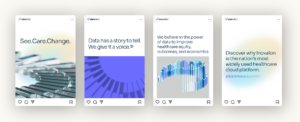
Inovalon trusted us with reimagining their brand. See why.
How do brand strategy agencies create durable positioning?
Durable positioning starts with clarity and ends with proof. Leading brand strategy agencies run disciplined programs that move from research to distinctive narratives and then to visible, verifiable proof points across campaigns, content, and sales enablement.
Data-driven discovery that reduces guesswork
Resilient brands do not bet on opinions. They invest in insight. Sophisticated brand strategy agencies use quantitative and qualitative research to clarify market structure, growth pockets, and category codes. They audit competitors and adjacent categories to identify white space and to determine where differentiation can be both credible and sustainable. This work often includes an internal diagnostic to align leadership, product, and go-to-market teams around a common reality before any creative decisions are made.
A category point of view that buyers can follow
Positioning that lasts gives buyers a mental model for why the category exists, where it is going, and why a specific solution set matters. Seasoned brand strategy agencies help executives articulate a point of view that reframes the market on favorable terms. This often means naming emerging pain points, setting new evaluation criteria, and linking product innovation to measurable outcomes that chief decision makers recognize.
Message architecture that scales across teams
Resilient brands communicate with precision. The best brand strategy agencies build message architectures that cascade from corporate narrative to segment and solution proof, supported by customer evidence and ROI quantification. The output gives sales, marketing, product, and HR the same core language so that the brand speaks consistently across regions, roles, and channels, even as campaigns change.
Governance that protects integrity at speed
Growth adds complexity. Without governance, complexity erodes brand value. Experienced brand strategy agencies design brand systems, usage rules, and training that enable fast, accurate adoption. From templates and asset libraries to field guidance and partner toolkits, governance empowers people to execute across time zones and functions without creating fragmentation.
Why B2B and B2G brands benefit most from this approach
Multi-stakeholder buying and lengthy procurement cycles amplify the value of a resilient brand. Enterprise deals require consensus across technical, financial, and operational leaders. Public sector contracts introduce compliance, security, and mission requirements that exceed commercial norms. Brand strategy agencies that focus on complex markets understand how to translate differentiation into credibility for each persona and stage.
Winning complex buying committees
Brand credibility is cumulative across touchpoints. Technical buyers look for architectural fit and peer validation. Economic buyers look for risk mitigation and quantifiable value. Users look for ease and support. Leading brand strategy agencies map each requirement to the message and content strategy so that the brand advances the deal even when no salesperson is in the room. That is resilience applied to revenue, not just reputation.
Navigating public sector priorities
Public sector marketing requires fluency in mission outcomes and the realities of acquisition. Brand claims must align with policy goals and security expectations. Experienced brand strategy agencies calibrate language and evidence so that positioning resonates with program managers, contracting officers, and integrators. Teams that speak both brand and mission accelerate trust without overpromising, which is essential for long-term contract performance.
Where experience design meets resilience
Consistency across channels is a stress test for every brand. As go-to-market models prioritize digital, strategy must inform experience design across websites, content ecosystems, social, events, and sales enablement. Top brand strategy agencies connect the dots between narrative and UX so that value is obvious, navigation is intuitive, and calls to action align with buyer intent. When experiences match expectations, conversion improves and goodwill accumulates, which cushions performance during macro shocks.
Risk, issues, and crisis planning as a brand advantage
Reputations are fragile if risk is treated as an afterthought. The most future-ready brand strategy agencies include scenario planning and response protocols within the core brand program. That includes defining who speaks for the brand, what approval paths exist, and what evidence is ready for immediate publication. For leaders building resilience into communications, explore how specialized crisis communications frameworks reinforce trust before, during, and after an event.
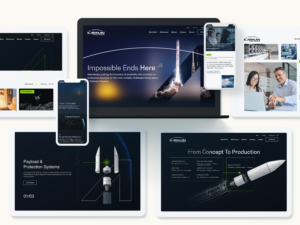
Karman needed a brand that customers could trust. See how we built them one.
What to measure to track brand resilience
Executives need indicators that are both leading and lagging. A well-designed measurement framework helps leadership see whether the brand is gaining strength or masking vulnerabilities. Strong brand strategy agencies create dashboards that blend perception, performance, and pipeline metrics so the team can act early.
- Brand relevance and consideration across priority segments
- Share of voice and quality of coverage in earned and owned channels
- Search demand for branded and category terms, along with click-through performance
- Pricing power signals and win rates against primary competitors
- Sales velocity by stage and renewal health, linked to brand-influenced touchpoints
Measurement starts with clean baselines and clear hypotheses. Sustained improvement requires ongoing insight. Robust programs rely on research and analytics to identify the next best optimization rather than waiting for quarters of underperformance to reveal a problem.
When should executives engage brand strategy agencies?
Timing matters. The most successful engagements start before pain is visible to the market. There are clear triggers that signal value in bringing on experienced brand strategy agencies.
- Strategic shifts such as category entry, exit, or reframing
- Market expansions across geographies or into regulated sectors
- Transformation of the portfolio through innovation, partnerships, or platform moves
- Mergers, acquisitions, or carve-outs that require narrative clarity and identity alignment
- Performance plateaus where awareness and demand diverge
- Significant reputational risk that demands structural change in communications
Brand fundamentals age faster than leaders expect. Proactive alignment with seasoned brand strategy agencies reduces execution drag and eliminates the hidden tax of inconsistency across teams.
What should leaders expect from a proven process?
A resilient brand is the product of a disciplined program. While every engagement adapts to context, top brand strategy agencies typically run a process executives can preview and govern.
- Discovery and alignment. Stakeholder interviews, market scans, brand audits, and goal setting create a shared starting point.
- Insight and opportunity mapping. Research clarifies where to focus, how to differentiate, and which messages will resonate with priority segments.
- Strategy development. Positioning, message architecture, and naming frameworks take shape, along with a point of view that reframes the category.
- Identity and system design. Visual identity, voice, and design systems translate the strategy into executable assets and guidelines.
- Activation planning. Campaign strategy, content roadmaps, website and sales enablement plans connect brand to pipeline and revenue.
- Enablement and governance. Toolkits, training, and operating models drive adoption throughout the organization.
- Optimization. Measurement and iteration lock in gains and prepare the brand to evolve with the market.
Executives should ask for transparency at each stage and measurable outcomes tied to commercial objectives. The best brand strategy agencies make the process as valuable as the deliverables by building internal alignment and capability.

SonicWall needed clarity. Here’s how Bluetext helped them deliver it.
How to evaluate and select the right partner
Not all expertise is equal. Selecting among brand strategy agencies should center on fit for your market, the rigor of the firm’s process, and proof that the work drives outcomes beyond aesthetics. Use criteria that reflect your risk and growth profile.
- Category fluency in your sector or adjacent spaces with similar complexity
- A research-first approach that reduces bias and accelerates consensus
- Demonstrated link between brand decisions and measurable business results
- Activation capability across digital, content, and sales enablement
- Governance and change management experience for fast global adoption
- Executive-caliber communication and stakeholder management
Ask to see how the team turned strategy into results, not just visuals. Review whether past programs survived leadership changes, market swings, or product pivots. That is the clearest signal you are talking to brand strategy agencies that truly build resilience.
From boardroom strategy to brand in market
A strategy on paper is not resilience. Execution is. Effective brand strategy agencies connect boardroom intent to front-line behavior and market-facing experiences. That means strong collaboration between strategists, creatives, and digital activation teams as well as a laser focus on handoffs to sales and customer success. When strategy becomes a living system, every interaction reinforces value and signals reliability to buyers and stakeholders.
Proof that resilience scales across use cases
Whether launching a new category story, modernizing a legacy brand, or unifying a portfolio after acquisition, outcomes matter more than outputs. Explore Bluetext’s breadth of impact by reviewing our branding work to see how strategy translates into identity, messaging, and campaigns that move markets. Patterns emerge across industries: clarity speeds growth, governance reduces waste, and disciplined activation compounds brand equity over time.
Brand strategy for B2G: aligning mission, security, and outcomes
Public sector engagement elevates the stakes for credibility and compliance. The partners that thrive here are brand strategy agencies that align mission language to technical truth without diluting differentiation. The work spans FedRAMP or cyber postures, supply chain assurance, and partner ecosystems, but the core remains the same. Resilient brands tell the truth well, document their claims, and earn the right to scale across programs and agencies by delivering measurable mission impact.
Avoiding common pitfalls that erode resilience
Most brand erosion is self-inflicted. Recognizing the traps helps leaders avoid expensive rework. Brand strategy agencies consistently warn against a handful of missteps.
- Jumping to visuals before agreement on positioning and message architecture
- Confusing internal alignment with market validation
- Underestimating the governance and training required for adoption
- Failing to link brand KPIs to pipeline and renewal metrics
- Treating risk and issues management as a separate discipline rather than core brand work
Each pitfall saps energy and fragments experiences. The remedy is a disciplined partnership with brand strategy agencies that address strategy, design, activation, and change management as a unified program with shared accountability.
Why Bluetext is built for brand resilience
Bluetext partners with growth-minded leaders to create brands that withstand volatility and outperform peers. Our approach integrates research, positioning, identity systems, content, and activation into a cohesive plan that turns strategy into momentum. For a deeper view on how leading brand strategy agencies operate, start with our perspective on the choices that drive durability. Then align your leadership team around a roadmap that connects brand decisions to commercial outcomes and risk mitigation.
Next step: build your resilient brand
If your organization faces a category shift, evolving buyer expectations, or the need to unify a complex portfolio, the moment to act is now. Engage a partner that treats resilience as a system, not a slogan. Bluetext can assess where your brand stands today, identify the highest-impact levers to strengthen positioning and experience, and build an operating model that equips your teams to scale. To discuss your goals and define a path forward, contact Bluetext for strategy, branding, or campaign support that is built to last.
Recent Posts
Bluetext’s Recent Work