In a digital-first world, the difference between growth and stagnation often comes down to how clearly and quickly your ads communicate value. Buyers skim, compare, and shortlist before they ever speak to sales. That is why B2B ad design experts are now central to marketing performance. They combine brand strategy, data, and channel-specific creative to stop the scroll, earn attention, and convert qualified demand. For executive marketers managing complex portfolios, government audiences, or high-stakes categories, expert ad design is no longer an optional capability. It is the connective tissue between positioning, pipeline, and revenue.
Why Creative Is the New Performance Multiplier in B2B
As performance channels mature, the media edge narrows. Targeting looks similar across competitors. Budgets face constant scrutiny. In this environment, creative quality has become the largest variable that teams can control. B2B ad design experts maximize that variable. They build ideas and visual systems that clarify the offer, resolve buyer uncertainty, and accelerate action across the funnel. Strong creative can lift click-through and conversion rates even when the audience and bids remain unchanged. Better still, it compounds. Once a winning concept is identified, variants extend performance across formats and segments without diluting message clarity.
Executives often ask if brand and demand are in conflict. B2B ad design experts align them. They use brand assets as performance levers and ensure that the first impression of your company is consistent from display to landing page to sales follow up. This coherence reduces friction for buyers and raises marginal ROI on every subsequent impression.
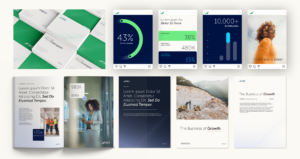
Explore how we deployed our full creative suite for CBIZ
What Do B2B Ad Design Experts Actually Do?
These specialists operate at the intersection of creative strategy and modern media. Their work spans research, ideation, design, testing, and optimization, all tuned to B2B and B2G realities. Typical responsibilities include:
- Translating complex value propositions into simple, high-contrast creative that can be understood in two seconds.
- Designing channel-native assets for LinkedIn, programmatic display, paid social, CTV, and ABM activation.
- Developing modular ad systems with reusable elements, so campaigns can scale without sacrificing quality.
- Running structured creative tests and folding the results back into concept development.
- Partnering with demand generation and sales to ensure creative aligns with ICPs, offers, and pipeline goals.
B2B ad design experts also understand the nuance of selling into regulated industries and the public sector. They design within compliance constraints while preserving stopping power, which is especially critical in categories like cybersecurity, aerospace, healthcare, and government technology.
How Experts Turn Complex Offers Into Clear, High-Impact Ads
Many B2B and B2G products are technical and multi-layered. The temptation is to jam too much into the ad. B2B ad design experts do the opposite. They reduce the message to a single promise and a single action. They prioritize the most credible proof point. They select imagery that expresses outcomes rather than features. The goal is pre-qualification at speed. If the viewer is the right buyer, the ad should create instant relevance and invite a next step. If not, it should politely filter out the rest.
They also map creative to buying stage. Early-funnel units raise a problem or open a curiosity gap. Mid-funnel assets frame a choice and show contrast with competitors. Late-stage ads reinforce urgency and use social proof or risk mitigation to help buyers finalize.
Channel-Specific Design Principles That Raise Response
One-size-fits-all creative is an expensive myth. B2B ad design experts treat each channel as a different medium with different grammar.
- LinkedIn: Design for professional scanning patterns. Use bold value statements, a visible brand mark, and copy blocks that read well on mobile. Incorporate dynamic offers like webinars or reports to drive lead capture with minimal friction.
- Programmatic Display: Maximize legibility at small sizes. Focus on high-contrast color, short copy, and a repeatable headline structure so sequential frames tell a clear story.
- Connected TV: Lead with brand and problem framing in the first three seconds. Use supers and simple visuals to accommodate sound-off viewing. Close with a memorable line and URL.
- ABM: Personalization is more than a name. Tailor creative to the account’s current initiative or tech stack. Build variant sets that speak to roles within buying committees.
- Paid Social: Design for movement. Subtle animations and micro-interactions increase thumb-stopping power, but only when they reinforce the message rather than distract.
To see how ideas translate into breakthrough campaigns, review our advertising work for advanced B2B and public sector brands.
Why Motion, Sound, and 3D Matter More Than Ever
Static images still play a role, but the attention economy increasingly rewards motion and sound. B2B ad design experts integrate lightweight animations and short-form video to deliver more meaning in less time. A quick parallax effect can dramatize a transformation. A sonic logo can make an impression before a viewer looks up. 3D elements can explain a system architecture within seconds. The key is not flair for its own sake. Motion earns its place when it clarifies the value proposition or accelerates comprehension, especially in technology and industrial categories.
Creative Testing That Actually Produces Answers
Testing without a hypothesis wastes spend. B2B ad design experts plan experiments around a creative ladder. They test big things first, like core message or visual metaphor, before refining smaller elements. They also protect test integrity with even budget allocation and consistent audience definitions. Once a winner emerges, they scale it across channels with channel-specific adaptations, rather than simply resizing a single file. This approach builds cumulative learning, so every campaign starts smarter than the last.
Data Signals That Guide Continuous Improvement
Executives need to know which creative decisions are driving returns. B2B ad design experts create a feedback loop that connects creative variables to performance metrics. They tag assets by concept, offer, and design choice. They pair CTR and engagement with lead quality and pipeline contribution. They compare scroll depth and dwell time on the landing page to isolate friction. Over time, patterns emerge. Certain metaphors resonate with CISOs. Certain proof points move operations leaders. This pattern recognition shapes the next campaign brief and speeds the path to scale.

Inside our comprehensive creative approach for Intelsat’s website redesign
Accessibility, Compliance, and Brand Safety in B2G Environments
Public sector advertising introduces additional requirements. Accessibility standards like color contrast and readable type sizes are non-negotiable. Claims must be accurate and defensible. Media placements must align with brand safety thresholds. B2B ad design experts bake these constraints into creative templates and review workflows so campaigns stay compliant without losing impact. For organizations targeting federal, state, and local buyers, expert alignment with procurement cycles and policy language is an advantage, not a barrier. Explore our public sector work to see how creative excellence and compliance can co-exist.
Integrating Creative and Demand Generation for Pipeline Growth
Isolated creative wins rarely translate into revenue. B2B ad design experts collaborate tightly with demand generation to align ICP definitions, content strategy, and lead capture flows. They design ad units as part of a system that includes landing page modules, interactive tools, and nurture sequences. They ensure continuity of message so prospects never feel a disconnect between the ad they clicked and the page they land on. This integration increases conversion rates and reduces cost per opportunity.
When growth targets depend on sustained performance, it helps to have partners that have built programs end-to-end. See our approach to demand and lead generation to understand how creative and pipeline work together.
Creative Architecture for Enterprise and Portfolio Brands
Many enterprise marketers manage multiple products, regions, or sub-brands. B2B ad design experts architect creative systems that scale. They establish a hierarchy of messaging so that corporate brand, solution category, and product-level claims do not collide. They define flexible templates that local teams can adapt without diluting core identity. They build asset libraries with modular blocks, which reduces production time and helps media teams move faster when market conditions change.
Measurement That Proves the Value of Better Design
Leaders do not just want incremental metrics. They want to see the contribution to sales cycles and bookings. B2B ad design experts capture both top-of-funnel and down-funnel impact. They benchmark creative lift against prior campaigns. They measure the velocity of opportunities touched by the campaign. They attribute content downloads and webinar registrations to specific creative concepts. They look at multi-touch paths to understand when and where creative moved a buyer closer to a decision. With this level of clarity, it is easier to justify increased investment in the ideas that are moving markets.
How to Choose the Right B2B Ad Design Experts
Not all creative partners are built for complex B2B and B2G needs. As you evaluate options, look for:
- Evidence of results in your category and buyer audience.
- Demonstrated collaboration between creative and performance teams.
- Comfort with compliance, accessibility, and security requirements.
- Ability to scale concepts across formats, languages, and regions.
- A rigorous testing methodology with clear documentation.
Ask to see concept boards, testing frameworks, and post-mortem analyses. Review channel-native work, not just brand campaigns. Confirm that the team can handle both the vision and the velocity required by modern media calendars.

Walk through how our full funnel video campaign for nShift helped grow their pipeline
The Rising Role of AI in Ad Design, Without Losing the Human Edge
Generative tools can accelerate storyboard drafts, image exploration, and copy variants. B2B ad design experts use AI as a creative co-pilot while maintaining human judgment on narrative, taste, and brand fit. They also set governance norms to protect IP and ensure ethical data use. The best results occur when AI expands the option space early in concepting and when experts decide which ideas deserve investment, polish, and testing.
Avoiding Common Pitfalls That Kill Performance
Even strong teams fall into traps that blunt results. B2B ad design experts help you avoid:
- Feature overload: Ads try to explain everything and end up convincing no one.
- Visual noise: Fancy effects make the ad look impressive but slow comprehension.
- Copy bloat: Long subheads that wrap on mobile and reduce click clarity.
- Landing page mismatch: The page fails to deliver the promise of the ad.
- Testing drift: Simultaneous changes to too many variables obscure learnings.
By standardizing creative briefs, concept reviews, and QA protocols, expert teams keep campaigns aligned and outcomes predictable.
From Messaging to Market Momentum
Great ads do more than drive clicks. They shift how your market talks about a category. B2B ad design experts craft narratives that position your company as an authority and simplify key distinctions. Over the course of a quarter, the right concept library can redefine the choice set for buyers, influence peer conversations, and set up sales with stronger inbound intent. Creative becomes a strategy instrument, not just a production task.
Why Bluetext for Executive-Grade Creative and Performance
Bluetext brings senior strategic leadership together with hands-on creative execution for organizations that expect measurable growth. As a full-service B2B marketing agency, we align brand, messaging, media, and analytics so each campaign builds on the last. Our B2B ad design experts create work that is crisp, compliant, and conversion minded across enterprise technology, cybersecurity, industrial, healthcare, and government sectors. We design to win attention and to win deals.
A Practical Framework to Launch Your Next Campaign
If you need to move quickly, use this simple framework. It reflects how B2B ad design experts approach high-stakes campaigns:
- Define a single buyer action per campaign and a single promise that leads to it.
- Craft three distinct creative concepts that express the promise through different metaphors.
- Design channel-native variants for two priority media placements to start.
- Launch a controlled A/B test that isolates the concept as the primary variable.
- Scale the winner across additional formats with tailored adaptations, not simple resizes.
- Refresh the concept with motion and copy variants at week three to counter fatigue.
- Roll learnings into the next campaign brief and repeat the cycle.
This approach keeps teams focused on decisions that matter and compresses time to insight. It also produces a growing library of proven creative that can be repurposed for events, sales enablement, and product launches.
Bring Your Story to Life With Expert Ad Design
Digital-first buyers move fast and reward clarity. The brands that rise above the noise will be those that invest in expert creative and connect it to performance with discipline. B2B ad design experts deliver that edge. They turn strategy into market momentum, translate complexity into compelling narratives, and meet buyers with the right message in the right format at the right time. If your vision for growth requires both breakthrough ideas and measurable outcomes, Bluetext is ready to help. Explore our integrated capabilities, see how we build campaigns that convert, and connect with our team to put expert creative to work for your pipeline. Contact us to get started on a strategy, branding, or campaign program built for a digital-first world.
Recent Posts
Bluetext’s Recent Work