In this week in 1930, following a desperate search by the radio industry for a magic bullet to increase advertising revenue, the first soap opera was born. The industry managed to convince manufacturers of household goods to sponsor programming content that appealed to their primary consumers and “Painted Dreams” debuted on WGN in Chicago – its first sponsor was no other than Colgate-Palmolive.
It didn’t take long for Proctor & Gamble to jump in and up the game with its own innovation – producing and sponsoring its own branded programming content as consumers migrated from radio to TV. That run lasted 80 years and sparked a sudden and seismic shift in the way consumers digested content.
Fast forward to the present, and technology has forced marketers to become both publishers and innovators of branded content to keep up and stay engaged with a customer whose primary screen of interest now changes by the minute.
Chief among them are the hot Cyber Security brands that have stormed onto the global technology stage – in such masse that they are desperately seeking a way to differentiate themselves and appeal to their primary customers. And just like P&G did in the 1930s – they too are producing and sponsoring their own branded content. And given the endless number of channels their customers can chose to digest it, there is no shortage of compelling examples.
Identity solutions leader Lexis Nexis’ “Fraud of the Day” franchise hits it on the nose with breach stories that keep every potential customer of theirs wide awake at night and staring at the ceiling. A simple yet brilliant concept to keep their brand in front of them daily in a contextually relevant way.
Intel & Toshiba pushed the boundaries of branded content with “The Power Inside” a blockbuster film that combined social media and technology to create an immersive, participatory experience for their primary consumer to experience their technology against the backdrop of a full feature motion picture.
http://www.insidefilms.com/en/
Palo Alto Networks has taken a less risky, more proactive and automated approach of creating a library of branded content that they license to partners and re-sellers to co-brand and amplify their industry focused solutions through what we like to call “social shrapnel” to extend the reach of their message.
http://www.computerlinks.com/fms/13679.173466_
McAfee went much farther than a library…they hired Bluetext to build an entire virtual agency on The Mall in Washington – 10 years into the future. “Future Agency” – the rich, immersive and interactive experience we created is a branded “house of content” that their primary consumer can literally fly through to access all things McAfee – branded content so appealing that it drove average time of engagement beyond the six minute mark.
http://bluetext.com/futureagency/
What does this all mean for the modern marketer in today’s increasingly digital environment? That branded content has worked effectively for nearly 100 years to engage the primary consumers it was intended to appeal to, enhanced, of course, by the technology that takes that marketing one step farther by allowing us to interact with it and share it to the friends and colleagues we think it will most appeal to. The only thing that’s changed is how they digest it.
As you plan your marketing strategy to drive visibility and demand for your brand in the red hot and highly competitive cyber security space, branded content can and should play a critical role. Even more critical is finding an agency partner with the creative firepower to “paint your dream” and drive customer engagement with a truly differentiated and professionalized branded content experience.
On Friday night, Georgetown’s McDonough School of Business kicked off its alumni weekend with an awesome party under a tent outside the Hariri Building. Great food and great company were the hallmarks of the event. In keeping with the tight partnership Bluetext has formed with McDonough over the past two years through the design and build of McDonough’s new responsive website, msb.georgetown.edu, McDonough allowed Bluetext to set up a massive screen right next to the bar (a perfect place) to showcase the new website.
In turn, our team wanted to do something special for all of the alumni who returned. We are offering organizations of Georgetown McDonough School of Business Alumni a free digital marketing assessment, including website, SEO and Social. Interested alumni can reach us at msb@bluetext.com to learn more.
Thanks to Chris Kormis, Patrick Burritt and the entire team at McDonough school of business marketing and communications team for the ongoing partnership and relationship.
“Bluetext has been the ideal partner for the McDonough School of Business at Georgetown University. Our customer journey experience with this top notch agency was collaborative, creative, and technically sound. We are proud of the work Bluetext delivered to the school and we feel the results of the platform day in and day out.”
Chris M. Kormis
Chief Marketing Officer
McDonough School of Business

Who doesn’t like inbound leads? The fruit of your content marketing labor is finally coming to bear. You sit back and the emails and calls are flying in. It is the ultimate feeling for a marketer across any industry.
Before you run to the bank, however, it is smart to ask if your website and diready to handle the leads? At Bluetext, we believe that focusing on your net is often as important as your bait.
Websites need to be structured a specific way to effectively handle inbound leads. Inbound marketing is a science and that science needs to be applied to your entire website and landing page eco-system.
Here are 10 ways to critique your site:
1. This is not your Father’s responsive website…
Does your website have iWatch and other wearables in the responsive requirements as your site evolves? The form factor requirements are changing so fast that you must make sure your site is built in a responsive manner to be able to scale.
2. Is your net sticky?
Have you looked at your retention analytics lately? How are people navigating your site? Have you buried the most impactful content elements?
3. ABC – Always be closing?
It is all about clear and easy conversion throughout the entire site. Unless prompted, most visitors will browse and then run for the hills. Make sure that the entire site, including the homepage and all interior pages, are optimized for lead capture and conversion? Does every blog post end with an “ask”? Are you asking visitors to download something premium and relevant? Are you suggesting that they follow the author or the company brand? You have to be very aggressive and show a full commitment to this opt-in.
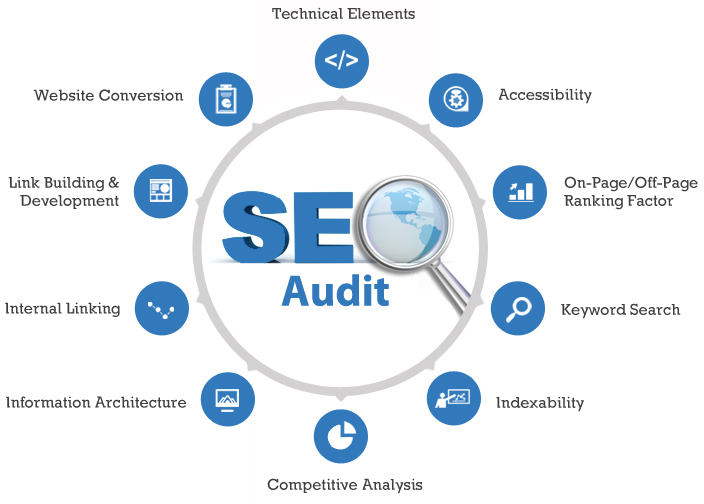
4. Have you done an SEO audit of your website in the last year?
Remember, algorithms change. Rules change. Bing continues its growth. YouTube is more important than ever as the #3 search engine. Make sure to continuously review your keywords to capture both short and long tail opportunities.
5. What are you doing to differentiate your user experiences to drive engagement with your brand online?
Are you presenting content in new and unique ways? We have done some recent work with CSC (www.csc.com/dbc) and McAfee (www.bluetext.com/futureagency.com) to help them create virtual briefing centers to get their content out virtually to create very powerful experiences.

6. Do you have a comprehensive landing page ecosystem to address all of your organizational KPIs?
Make sure to think through all of your metrics and have a clear, concise offer to address all of them.
7. Are you updating your programmatic digital advertising buys with retargeting and other social media buying as they are evolving?
CRM and adtech are getting more close than ever. It is important to ensure that they are in synch to make sure your campaigns work as hard as they can.
8. Hide the Keywords
Get the keywords out of your meta header. Google doesn’t value them and you are sharing your seo strategy with your competitors.

9. Reverse the IP and Get Smart About Your Traffic
Many off the shelf tools can help you understand your traffic with reverse IP matching technology to let you know which businesses are reviewing your site. This is great information to share with the sales team.

10. Commit to video and interactive content
The world is changing. Think about how people are consuming data. Make sure that you are modernizing your content and delivering it in new and unique ways.
Today’s digital landscape and the unification of social, mobile, and the web into a cross-channel experience are fundamentally changing the ways our portfolio of brands engages with its customers. This new paradigm has led to an evolution of user experience (UX) into Customer Experience (CX), influencing how we approach creating digital experiences that drive business impact for our clients.
One of the implications of CX is the increased role of content management systems (CMS) in delivering and managing customer experiences across channels. In the not-too-recent past, companies implemented CMS platforms to help them manage and maintain website content, generating operational efficiencies and gaining greater control over their web properties. The new focus on CX requires that CMS must become an enabler in helping clients go to market differently and transform the way they deliver products and services.
Here are three examples of the new demands CX is placing on content management technologies:
Marketing Automation
The most effective demand generation processes are those where marketers respond individually to each prospect in the buying process. But given the volume of marketing campaigns, that’s not practical. Marketing automation gives companies the ability to manage their interactions with customers and deliver the right messages at the right times over the right channels.
Marketing automation software like Eloqua and Marketo are established solutions with proven performance. However, best-of-breed CMS need to go beyond simply enabling easy integration with current marketing automation applications and build automated targeting, testing, and analytics tools right into the content workflow.
Personalization
Digital personalization serves users content and even unique experiences based on their profile and behaviors. Delivering a more relevant, or personalized, experience results in higher user engagement and enables a website to more effectively drive key business outcomes.
Personalization takes one of two forms, explicit and implicit. Explicit personalization is straightforward. Data is gathered when the user performs an action, such as filling out a form. Content can then be customized based on what the data tells us about the user.
Implicit personalization employs passive tools like cookies to gather data about users from behavior such as page views, searches, and location.
Retailers like Amazon employ complex and extremely granular personalization that requires a significant investment in resources. However, best-of-breed CMS technologies will need to enable a personalized experience to be created with very basic user information. This means that organizations can implement a personalization strategy without the massive investment.
Multi-site
Many marketing organizations today face the need to deliver an increasing number of stand-alone and unique digital experiences for marketing campaigns, product launches, or new brands. Whether it’s a landing page, microsite, or more complex website, they frequently have new content, a unique look-and-feel, and an accelerat ed time-to-market.
CMS platforms will need to make the process of delivering large numbers of unique web experiences repeatable and scalable, taking days instead of weeks and months. Marketers are able to maintain high brand consistency while more effectively react to market opportunities.
When reviewing the current CMS landscape, products like Adobe CQ and Sitecore clearly stand out from the pack in terms of CX enablement. Another entry worth noting is Drupal.
Beginning as a flexible open-source platform for on-line communities, Drupal has evolved into a truly enterprise CMS platform, capable of delivering content-driven brand engagement and sales enablement. As a pure CMS, Drupal is powerful, yet user-friendly, with a streamlined development, admin, and publishing processes that helps accelerate a site’s time-to-market.
In the past, custom modules and expert code development could enable Drupal to deliver a degree of marketing automation, personalization, and multi-site capabilities. Acquia, the commercial open source software company that provides products and technical support for Drupal, then introduced two products that brought Drupal to the next level.
Acquia Lift –an interoperable platform that delivers testing, targeting, and analytics capabilities to simplify the delivery of personalized digital experiences. By mining and interpreting data, it automates contextual relevance to create a one-on-one conversation with users.
Acquia Site Factory –a turnkey solution that reduces the complexity of and time necessary to deploy one site or hundreds of sites. Intended for non-technical users, Site Factory allows for customized design and content, without the need for back-end Drupal development.
For companies currently on Drupal or who prefer open-source technologies, Drupal is a powerful and viable solution for customer experience management.
Decisions around digital technologies come with an investment and companies have to weigh a number of factors such as existing infrastructure, total cost of ownership, and business requirements. The emergence of CX means that ROI and revenue performance management are now starting to become part of the decision-making process. Whether you’re considering replacing your current CMS or upgrading your current system, be sure to make customer experience enablement a “must have” and a high priority requirement.
Are you planning to integrate or upgrade your content marketing into your online marketing strategy? Not sure where to begin? Here is a basic rundown of how to create an effective content marketing strategy.
1. Establish Your Conceptual Target
An effective content marketing strategy must begin with this first critical step. The goal is typically pursuing new customer opportunities while preserving your core customer base. Understanding who they are, where their interests lie and how to get them to take action and engage with your brand is key to developing your content strategy.
2. Don’t be a One Hit Wonder
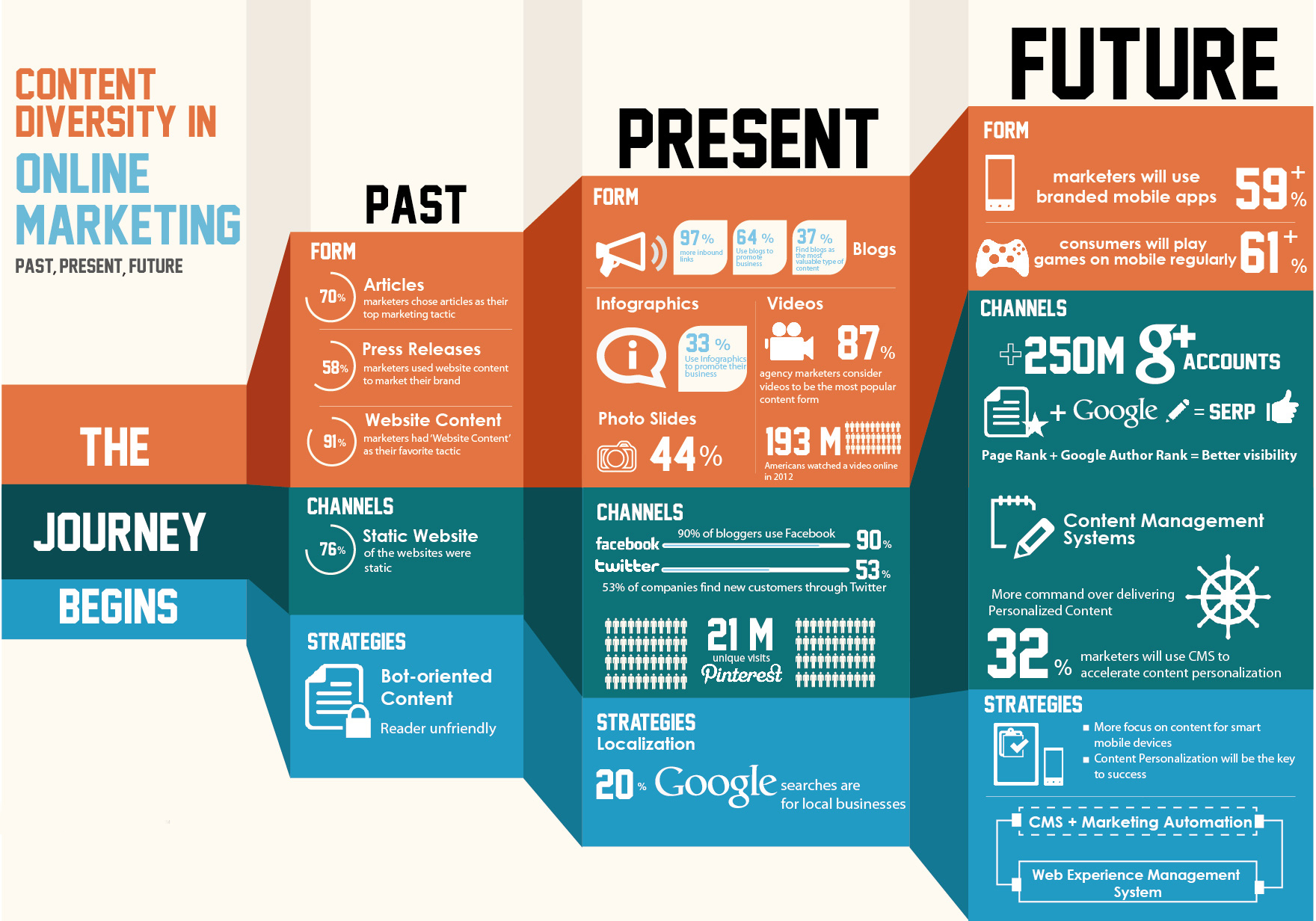
As opposed to advertising – which is driven by “The Big Idea” – to stay fresh and engaging, your content marketing strategy needs to offer a variety of premium content on a number of contextually relevant topics When content marketing teams are under resourced, they tend to gravitate back to the big idea and get boxed into a an approach that’s not scalable long term.
3. Use an Editorial Approach
Too many content marketing programs fail in the planning phases of the program because the a long term content strategy has not been fully thought out – so the content being developed using a shoot from the hip approach tends to be more episodic than strategic. The most effective way to avoid failure is to identify specific themes for your content strategy that align with the cyclical business or personal needs of your target audience
4. Be Contextually Relevant
The content you develop must be interesting, engaging and above all else, relevant. Your conceptual target should be able to quickly connect the dots between his challenges and the capabilities you can offer to overcome them – the more contextually relevant your content is to them the easier they will be able to make that connection
5. Process Driven Approach
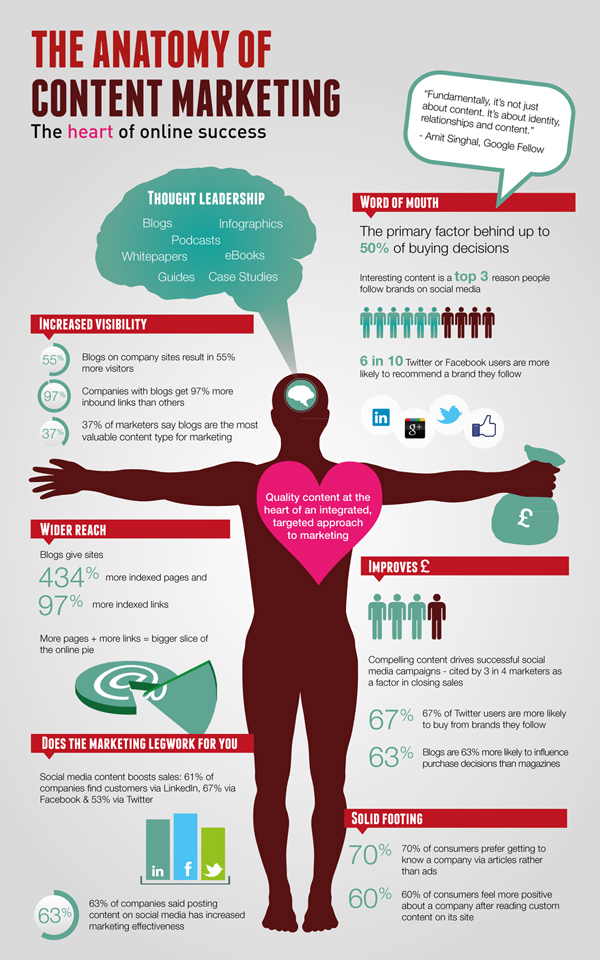
Since content marketing is still a relatively new approach, a lot of companies are not investing adequate resources or the defined process that planning, managing and publishing an adequate amount content requires. Building a solid content marketing workflow process, and investing in the necessary resources to implement it – whether internal or external – are critical to your success.
6. Collaboration is Key
As with any emerging marketing channel – and social media is a good example of this -there is an internal struggle over which department actually “owns” it. Until that’s figured out, many companies will make it a shared responsibility between their PR, Advertising and Creative departments – passing the content baton from one silo to the next with no clear strategy. If you must borrow the resources, make sure there is a coordinated effort to collaborate as a team on the themes, goals and structure of your content marketing program.
7. Cadence and Consistency
When creating your content strategy, be sure to decide on the frequency of your content marketing so that once your audience is engaged, they stay engaged. Having a consistent and predictable flow of content that your customer can rely on is critical to establishing brand credibility.
8. Use the Right Channels
Instead of hoping your audience stumbles upon you, be sure to publish your content where they already are – in their own environment where they will be more willing to engage. Consider promoting your content on broader social sites like Twitter can make it go viral. If the content is what readers are looking for, they won’t hesitate to share – and that’s the holy grail of content marketing.
9. Leverage SEO
A solid content marketing strategy geared toward the right audience is worthless if it doesn’t reach that audience one way or the other. One of the most effective ways to leverage that content is to employ a strong SEO strategy to incorporate keywords that your customers are using to search for the solutions you are ultimately trying to sell to them
Ever since Google’s last significant evolution of its search engine algorithm, known as Hummingbird, the marketing world has been treading water trying to understand how to drive search traffic to digital campaigns and websites. In the pre-Hummingbird era, search could be gamed by gaining multiple links back to a page and installing keywords throughout the content. So-called “Black Hat” experts charged a lot of money to get around the rules. In today’s Hummingbird era, it’s no longer only about keywords, but rather having good content with a smart keyword strategy that is relevant to the target audience. Attempting to manipulate the system through meaningless links and keyword overload no longer affects the search results.
While the Google algorithm is extremely complex, SEO itself is not complicated. It’s actually very easy to understand. In sum, Google’s algorithms are designed to serve the best, most relevant content to users. That’s the filter that any company or organization needs to use when deciding whether any particular activity that is part of your online strategy will have an impact on your SEO.
It’s just difficult to execute.
For example, if you’re thinking about blasting a request to bloggers to link back to your site, don’t bother. If they haven’t created good content, it won’t make a difference. Want to change the title of every page on your site to your key search term? It won’t work. Thinking about jamming every keyword into a blog post? If it’s not good content, don’t do it.
The challenge is determining the definition of “good content,” at least as far as Google is concerned. That’s where the hard work begins. Good content is not a subjective evaluation, but rather an analysis that the web page or blog post is relevant to users as measured both by the type of content and the extent of its sharing by other influential users. Let’s break those apart and take a closer look.
The merit of the content is important because if Hummingbird detects that it’s crammed full of keywords, or that it is copied from other sites or even within other pages of the same site, it will quickly discount the relevance. The Google algorithm will see right through those types of attempts to create SEO-weighted pages. Good content needs to be original and unique.
More importantly, good content is also a measurement of how much that content is linked to or shared by influential sites and individuals. When you have created a blog post or web page with good, relevant content, it is vital to share this with your intended audience and with influencers that they trust. This is the hard part. There are no shortcuts when it comes to developing good content and in getting it in front of your audience. Nor are there easy ways to identify trusted influencers and get the content in front of them.
For the content itself, the goal is not just to be informative and provide the types of information that the target audience is seeking, although that is important. The goal is also to have that information shared, whether via social media platforms or through other sites and feeds. That means it must be interesting and sometimes even provocative so that the intended audience takes the next step and slips it into its own networks. It should challenge the conventional wisdom, offer valuable and actionable insights and educate the audience with information not already known. And it must be relevant to the audience.
How do you find the right influencers for your audience? That’s not easy, either. At Bluetext, we do in-depth research into who is talking about the topics and issues important to our client campaigns, and then evaluate each of those potential influencers to determine the size and reach of their audience. These can include industry insiders, trade journalists and columnists, government officials, and academic experts.
A solid SEO strategy takes time and patience, and a lot of hard work. It’s not complicated, but it is difficult.