Prefer listening over reading? Check out the podcast version of this blog below and enjoy insights on the go!
Washington DC sits at the intersection of policy, procurement, and technology. For leaders selling into government, this nexus is where strategy becomes opportunity. The most effective path to growth in the public sector is not a repackaged B2B playbook. It is a specialized approach designed for federal, state, and local buyers who value mission outcomes, security, accessibility, and proof of performance. That is where marketing agencies in Washington DC distinguish themselves. By pairing Beltway fluency with modern growth tactics, they drive B2G innovation that converts complex buying cycles into predictable pipeline.

Why DC agencies have an edge in B2G
Proximity to federal decision makers, industry associations, and prime contractors helps marketing agencies in Washington DC track real-time shifts in policy, funding, and mission priorities. This closeness accelerates insight gathering, informs positioning, and keeps campaigns aligned with the programs and initiatives that matter most to public sector buyers.
Beyond access, marketing agencies in Washington DC bring institutional knowledge that spans compliance, contracting vehicles, and acquisition timelines. They understand how agencies define risk, the role of influencers like program managers and system integrators, and how to translate technical capabilities into measurable mission impact. That understanding sets the tone for every creative choice, content plan, and media investment.
What differentiates successful B2G go-to-market strategies
Winning in the public sector requires a layered approach that starts with clarity on mission outcomes, not product features. The top marketing agencies based in Washington DC prioritize message architectures that tie capabilities to agency priorities, from zero trust to citizen experience to supply chain assurance. They communicate value in the language of procurement and policy, then prove it with evidence that satisfies both technical evaluators and executive sponsors.
Timing also matters. Marketing agencies in DC structure annual plans around budget cycles, RFI and RFP calendars, and program milestones. Integrated campaigns are staged to seed narratives before market research begins, then activate demand as budgets lock and acquisition paths solidify. This orchestration aligns brand, demand, and field tactics to how government actually buys.

Check out our work with Aechelon
Compliant creativity without compromise
Government buyers have stringent expectations for accuracy, accessibility, and privacy. The best marketing agencies in Washington DC create bold ideas inside those guardrails. They balance messaging consistency with the nuance needed for different agencies, roles, and mission sets. They ensure claims are verifiable, creative is compliant, and assets meet accessibility standards, all while keeping a strong and differentiated brand voice.
This discipline enables creative work that stands out in crowded categories like cybersecurity, cloud, data, and digital services. Marketing agencies based in DC use storytelling frameworks that connect technology to outcomes such as operational readiness, resilience, and citizen trust. The result is work that resonates in briefings and on procurement portals alike.
Data-driven targeting and ABM for public sector
Account-based marketing is essential in government. With a finite set of priority agencies and programs, DC-based marketing agencies support their clients by using account intelligence to focus resources where they will land the highest impact. They map decision units, surface intent signals, and personalize outreach by role and stage in the buying cycle.
From target lists to buyer journeys
- Define an Ideal Agency Profile and a priority list of programs and sub-agencies.
- Identify contracting paths and relevant partners to shape teaming strategies.
- Map influencers and evaluators across mission, IT, security, legal, and procurement.
- Build journey paths that mirror research, evaluation, and acquisition phases.
- Activate channel mixes that include thought leadership, analyst relations, events, sales enablement, and targeted media.
To maintain relevance, marketing agencies in Washington DC refresh account insights quarterly. They integrate data from events, webinars, social engagement, and site analytics to refine creative and offers. This closed-loop approach keeps programs efficient and outcomes measurable.
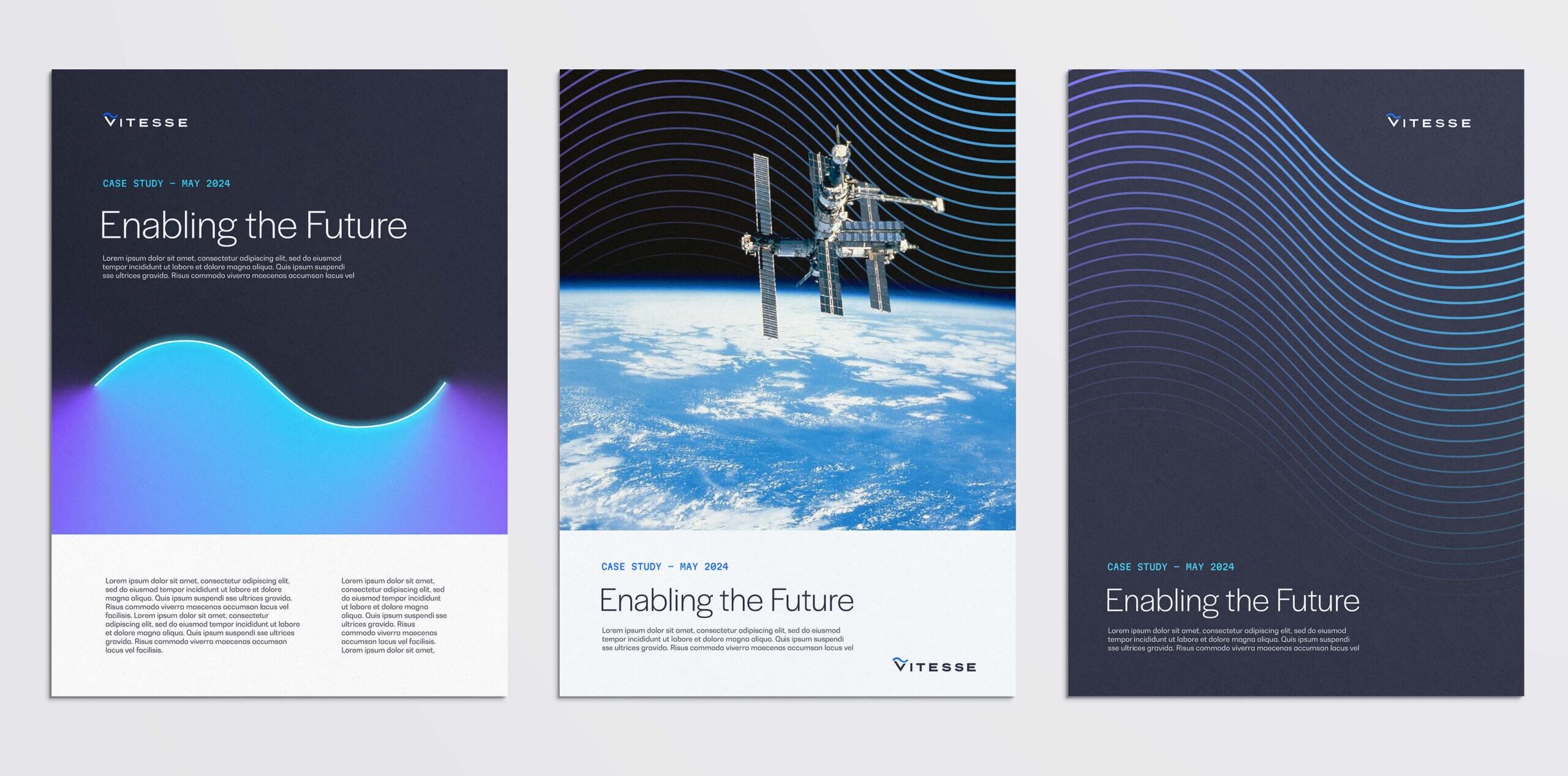
Check out our work with Vitesse Systems
Content and thought leadership that moves the needle
In B2G, content is a trust engine. The strongest marketing agencies in Washington DC build editorial programs that elevate a company’s point of view on policy and mission topics while demonstrating technical depth. Executive briefs, issue primers, solution playbooks, and ROI calculators work as a system to educate buyers and equip capture teams.
Distribution is curated, not broad. A strong marketing agency partner will place content in channels where program managers and contracting officers already spend time. They prioritize association partnerships, targeted newsletters, public sector communities, and earned media over indiscriminate reach. This precision maximizes credibility and reduces waste.
Websites and digital experience built for government buyers
Public sector prospects demand clarity. The best marketing agencies in Washington DC design websites that make it easy to find contract vehicles, compliance credentials, data sheets, and mission-specific solutions. Performance and accessibility are table stakes. Navigation and content architecture reflect how agencies search, not how companies are organized internally.
Conversion strategy matters as much as user experience. Marketing agencies should aim to use tailored calls to action for demos within secure environments, technical briefings, capture team requests, or on-demand webinars. They should also measure engagement by role, agency, and account to inform sales prioritization and nurture design. Accessibility and performance best practices should be treated as differentiators, not afterthoughts.
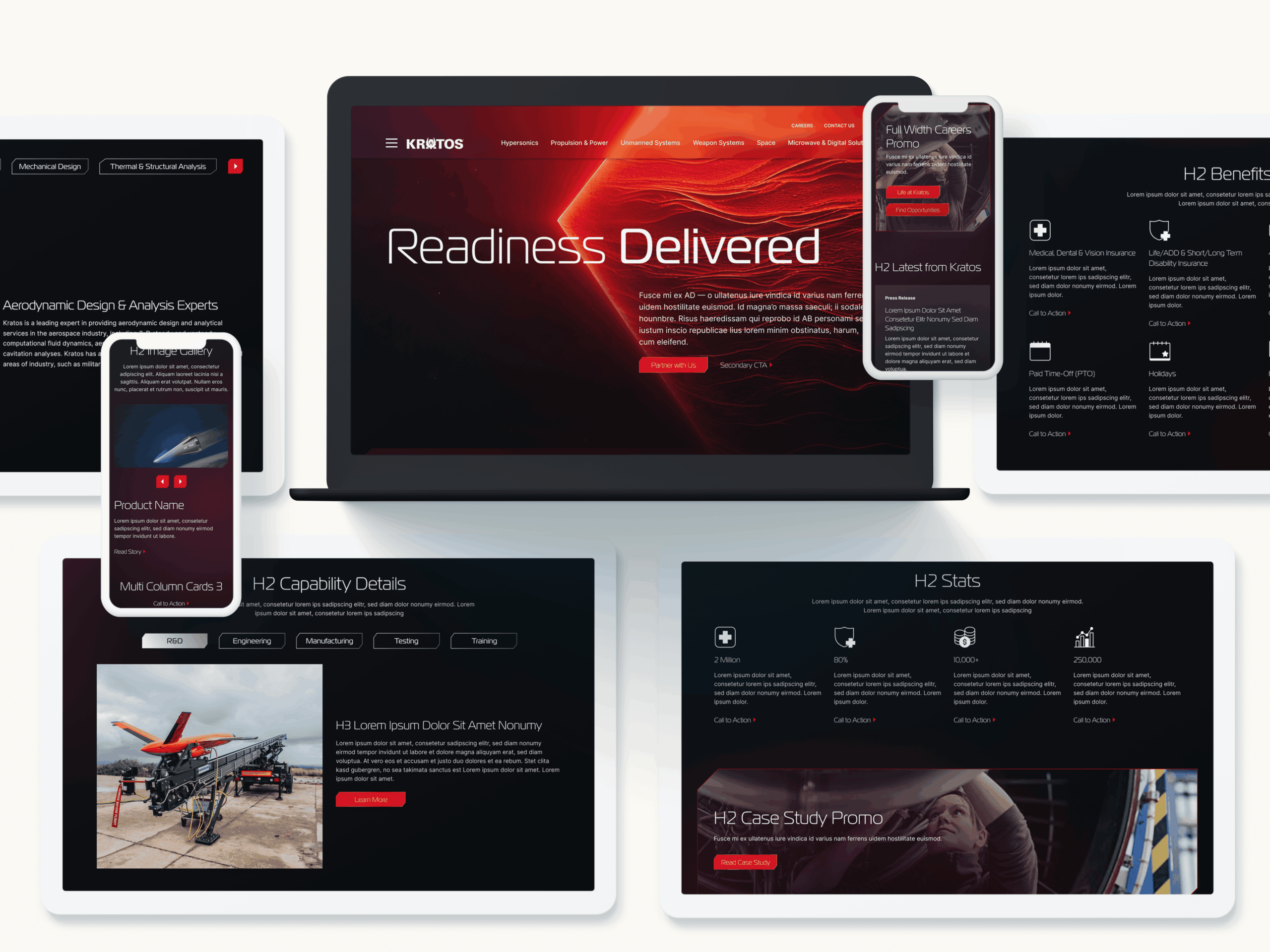
Check out our work with Kratos
SEO and intent capture for public sector buyers
Search is a primary research tool for government evaluators. Top marketing agencies in Washington DC build SEO strategies around mission-aligned keywords, procurement terms, and compliance queries. They optimize solution pages, partner content, and structured data to capture high-intent traffic from federal and state buyers who are already evaluating options.
Technical excellence underpins findability. From schema to page speed to secure hosting, marketing agencies in Washington DC ensure sites are engineered for visibility and trust. When it is time to scale organic growth, partnering on search engine optimization unlocks compounding returns that lower cost per opportunity while increasing pipeline quality.
Events and field marketing aligned to the Beltway calendar
Industry events remain critical for discovery and relationship building. Marketing agencies in Washington DC plan roadmaps around cornerstone conferences, agency days, and Hill briefings. They integrate event moments into broader campaigns with pre-event thought leadership, in-booth activations, invite-only roundtables, and post-event follow-ups that reflect what buyers actually discussed in the room.
Measurement and attribution across long buying cycles
Attribution is complex when cycles span quarters or years. The leading marketing agencies in Washington DC design measurement frameworks that blend account engagement, capture team feedback, and revenue outcomes. They build models that recognize the role of upper-funnel influence in pipeline creation and the importance of persistence through downselect.
Operationally, marketing agencies in Washington DC align KPIs to the business question at hand. Brand programs are judged on reach and resonance in priority agencies. Demand programs are measured on account-level engagement, meeting creation, and qualified pipeline. Both roll up to revenue, but are optimized differently to avoid false tradeoffs.
How to evaluate a B2G agency partner
Choosing the right partner influences everything from win rates to the credibility of your message. The most reliable marketing agencies in Washington DC combine creative excellence with Beltway literacy and operational rigor. Ask for examples of work that moved the needle in programs similar to yours and look for teams that bring both strategists and doers to the table.
- Sector fluency: Can the agency articulate emerging priorities in your target programs and agencies?
- Proof of performance: Do they have case studies with measurable impact in public sector campaigns?
- Compliance confidence: Are accessibility, claims substantiation, and privacy integrated into their process?
- Sales alignment: How do they enable capture, channel, and partner teams to extend campaign momentum?
- Measurement maturity: Can they build attribution models that reflect your buying cycle?
If you need a partner that already speaks the language of the mission, review Bluetext’s public sector work and perspective on why federal marketing matters.

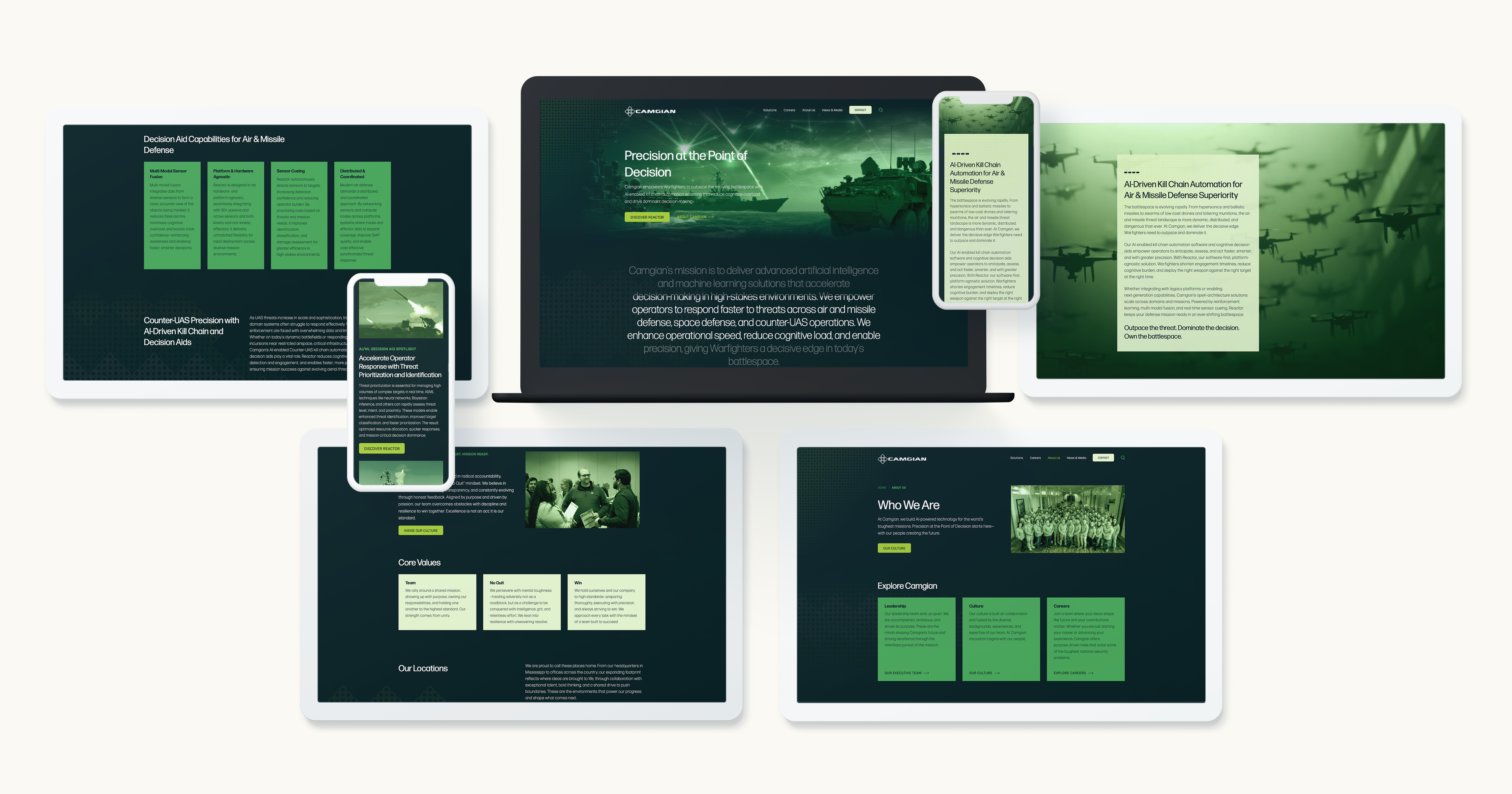
Check out our work with Camgian
Partner ecosystems and routes to contract
Routes to market in B2G are rarely linear. The most effective marketing agencies in Washington DC support co-marketing with primes, ISVs, and channel partners to expand reach and qualify deals. They build campaign narratives that make teaming value explicit and help sales navigate partner-influenced capture and subcontracting strategies.
Programmatically, marketing agencies in Washington DC create enablement kits that include joint messaging, campaign-in-a-box assets, and event packages. They equip clients to carry their story into accounts where they already have credibility, which shortens sales cycles and increases probability of win.
Creative that respects the mission and the audience
Government audiences are inundated with noise. The strongest marketing agencies in Washington DC build brand systems that communicate relevance quickly. Visual identity, motion, and copy should reflect the seriousness of the mission while showcasing what is distinct about your approach. This balance is essential for categories where features look similar and incumbency is strong.
Campaigns work hardest when creative aligns with the buying stage. Middle-funnel assets like solution briefs and demonstration videos are crucial for technical evaluators, while outcome narratives and ROI frameworks resonate with executive sponsors. Marketing agencies in DC plan creative by persona and journey stage to ensure every touchpoint has a clear job to do.
AI, analytics, and the next wave of B2G innovation
AI-driven analytics are reshaping account intelligence, content creation, and media optimization. The most progressive marketing agencies in Washington DC use AI to identify emerging intent signals, generate first drafts for specialized content, localize assets for state and municipal audiences, and improve channel mix decisions. They do this within strict governance to protect privacy and uphold accessibility.
As missions evolve across cybersecurity, data interoperability, and digital service delivery, marketing agencies in Washington DC will continue to lead in crafting messages that bridge policy and technology. If your roadmap includes advanced capabilities and complex change management, working with B2G specialists raises your odds of adoption.
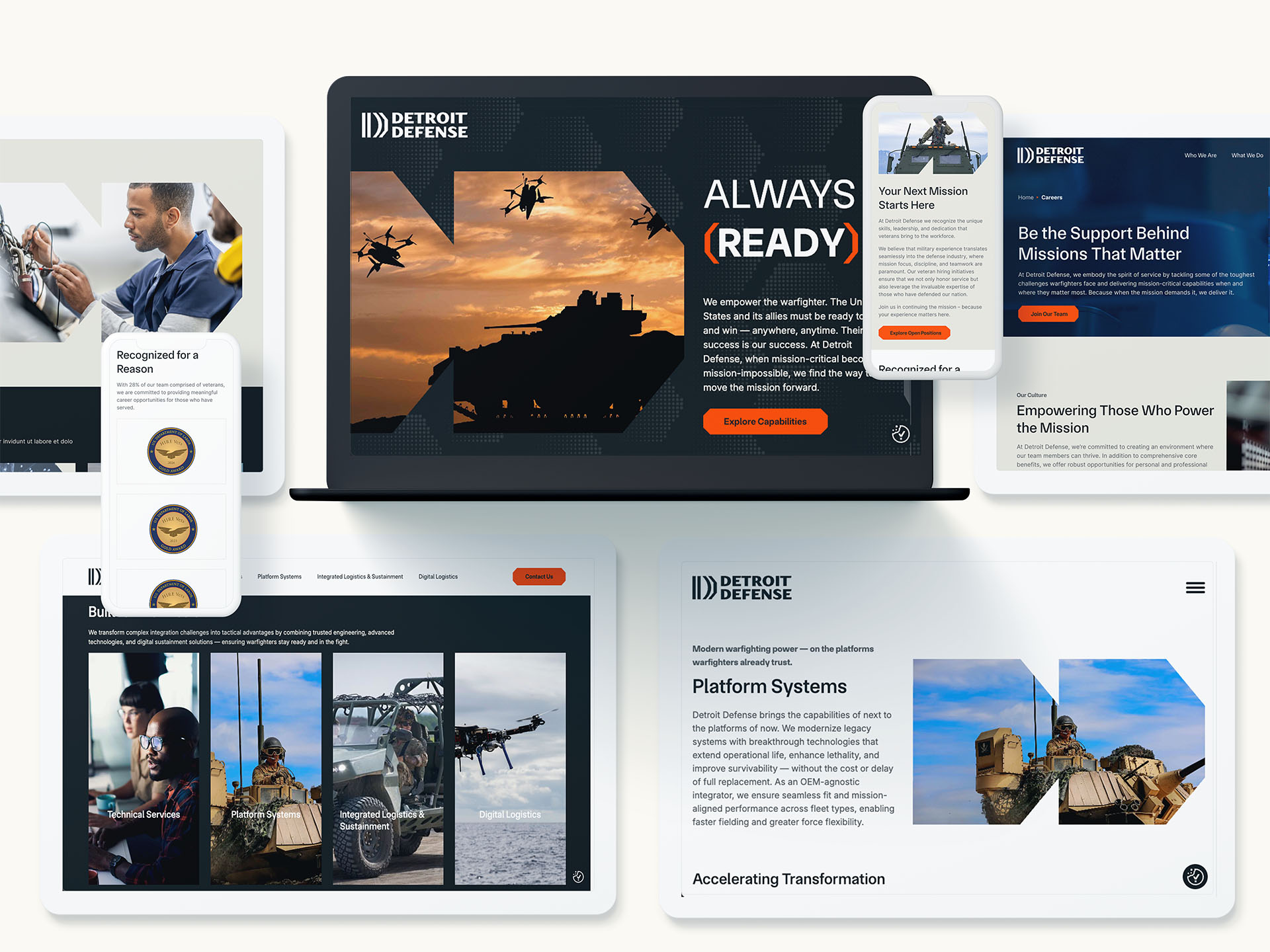
Check out our work with Detroit Defense
Practical steps to get started
If you are entering or expanding in the public sector, begin with a focused plan. We recommend starting with three elements: a priority agency and program list, a message architecture tied to mission outcomes, and a 90-day campaign MVP that stress-tests channels and content. These inputs give you data to refine the model before committing to a broader rollout.
- Document your Ideal Agency Profile and target programs.
- Build a messaging framework aligned to policy and procurement drivers.
- Map buyer journeys by role and stage, including capture and partner touchpoints.
- Stand up a pilot campaign to validate channels and offers.
- Scale with a governance model that keeps accessibility and compliance central.
As you scale, a DC-based marketing agency can help align sales enablement, partner engagement, and measurement to the operating rhythm of your capture teams. With this alignment in place, marketing becomes a direct contributor to win strategy.
Why Bluetext
Bluetext is built for organizations that need to influence government buyers with clarity and credibility. Our team pairs creative excellence with public sector fluency and operational rigor. We design programs that resonate at the mission level, scale across partners, and roll up to measurable revenue impact.
From brand strategy and digital experience to ABM and performance media, we help companies turn complexity into momentum. Our process is collaborative, data-driven, and built to deliver progress your executive team can see in pipeline and awards.
Take the next step
Government buyers expect rigor, and the right strategy can elevate your message from noise to necessity. If you are ready to accelerate growth with a partner who lives at the intersection of policy and performance, connect with Bluetext. Our team will assess your current state, prioritize opportunities, and design a plan to win in the public sector. Contact us today and see why companies choose Bluetext to drive innovation, credibility, and measurable outcomes across the B2G landscape.
Prefer listening over reading? Check out the podcast version of this blog below and enjoy insights on the go!
Government markets do not behave like commercial categories. Federal buyers face different pressures, strict rules, and long decision cycles. That environment rewards brands that are clear, credible, and consistently visible where program managers, contracting officers, and integrators do their research. For growth leaders, aligning with a branding agency partner that knows the Beltway ecosystem can be the difference between being shortlisted and being invisible. This blog breaks down how Washington DC-based branding teams translate complex solutions into winning narratives, and why the right strategy can accelerate pipeline across civilian, defense, and state and local accounts.
Why Washington is a unique branding arena for government-facing companies
DC sits at the intersection of policy, procurement, and technology adoption. Media cycles are policy driven, not seasonal. Conferences anchor around budget milestones, not product launches. The best branding agency specialists understand these rhythms and plan campaigns around appropriations, RFP windows, and mission priorities. That proximity to agencies, systems integrators, and think tanks informs messaging that sounds like the buyer, not a vendor pitch.
Another differentiator is scrutiny. Government decision makers need proof. They want to see how a solution reduces risk, improves readiness, or strengthens compliance. A strong branding agency answers that need with quantified benefits, mission language, and validation from real deployments. It also manages the reputation dynamics of contracting, teaming, and transitioning from pilot to production.

Check out our work with Kratos
What services should a branding agency provide for government markets?
Government marketing requires a precise blend of research, strategy, creative, and field activation. A capable partner brings an integrated stack designed for B2G realities. The following capabilities are foundational.
Buyer and competitive research built for B2G
Federal personas differ by agency and mission. A branding agency should conduct stakeholder interviews, competitive teardowns, and message testing with government audiences. The output should map to roles involved in procurements and define the narrative that will resonate with technical evaluators and business sponsors.
Messaging and positioning that speaks mission language
Great positioning simplifies complexity. It ties a capability to the outcomes that matter in a specific mission context. A seasoned branding agency will crystallize a value proposition that fits the FAR environment, prioritizes measurable impact, and avoids commercial buzzwords that can disqualify credibility with federal buyers.
Visual identity and brand systems that scale
Brand systems have to work across proposal covers, conference booths, digital ads, JIRA tickets, and secure portals. The right partner builds modular assets for consistency and speed. A branding agency should deliver toolkits for in-house and partner usage so teams can respond quickly without diluting the brand.
Digital and content programs aligned to procurement cycles
Content must anticipate market education, market research, and RFP release. A branding agency plans editorial calendars around budget cycles and mission priorities. It publishes explainers, solution briefs, and case studies that match the questions buyers will ask at each stage of acquisition.
Public relations and thought leadership in the right venues
Policy and mission media set the conversation in DC. A strong partner knows how to win coverage with the outlets, associations, and forums that matter. A branding agency also equips spokespeople to address mission outcomes, zero trust mandates, or supply chain risk with authority and clarity.
How federal procurement changes the branding playbook
Federal acquisition rules redefine the funnel. Many touchpoints will be invisible until the market research phase. This reality places outsized importance on category leadership and discoverability. A branding agency pivots away from pure demand capture to sustained thought leadership that shifts buyer beliefs well before an RFI. It also equips business development with brand-aligned capabilities statements and past performance narratives that can be plugged into proposals without rework.
Moreover, teaming is routine. Your brand has to coexist within primes and partner ecosystems. The best branding agency creates messaging frameworks flexible enough for joint pursuits and produces co-branded assets that still read as yours. Finally, the post-award moment matters. Kickoff communications, task order updates, and change management all shape the perception of performance for future recompetes.
A proven path to market with a branding agency
Entering or expanding in the public sector benefits from a stepwise approach that reduces risk and accelerates adoption.
- Clarify growth thesis. Define which agencies, use cases, and contract vehicles will drive revenue. A branding agency can ground this thesis in mission demand signals and competitive whitespace.
- Codify positioning. Document a primary narrative, proof points, and use cases aligned to target programs. Create messaging for technical and executive personas.
- Build the assets that win meetings. Produce a fast, compliant website section, solution briefs, and a capabilities deck. A branding agency ensures brand coherence and compliance-ready claims.
- Activate thought leadership. Launch a quarterly content series around mission outcomes. Pair it with PR and conference tactics to maximize visibility in DC.
- Enable BD and capture. Provide proposal language libraries, one-pagers for teaming, and executive leave-behinds. The branding agency maintains a version-controlled repository to speed pursuits.
- Measure and refine. Track share of voice, qualified meetings, pipeline influenced, and win themes. Iterate messaging and creative based on real buyer signals.
What makes positioning resonate with federal buyers
Positioning must answer three questions quickly: why change, why now, and why you. A great branding agency crafts these answers for a mission buyer, not a generic CIO. The best narratives quantify risk avoided, costs saved, or readiness gained, and back claims with past performance and third-party validation. They also avoid product-first language. Instead, they lead with mission outcomes and show how technology enables them.
Proof points federal stakeholders trust
- Documented measurable results tied to program KPIs
- Authority-to-operate or compliance milestones achieved
- Adoption by peer agencies or integrators
- Independent testing and accreditation
A branding agency will fold these proof points into every asset, so reviewers see evidence everywhere they look.

Check out our work with Aechelon
Content strategy that aligns with the federal decision journey
Content should guide buyers from awareness to acquisition without triggering vendor fatigue. Start with mission explainers, move to solution architectures, then publish deployment playbooks. A seasoned branding agency sequences content by persona and procurement phase. It also repurposes assets to extend reach across owned, earned, and paid channels.
Search visibility is essential. Federal researchers use commercial tools to find vendors and frameworks. Optimized pillar pages and briefs increase discoverability for mission terms and compliance queries. For a deeper dive into building a credible brand foundation, review Bluetext’s perspective on brand strategy agencies and how strategy translates to execution across channels.
Digital experiences designed for compliance and conversion
Your website is often the first filter for credibility. It must be easy to navigate, fast, accessible, and stocked with the content evaluators want. A branding agency will build information architecture around mission solutions, use cases, and contract vehicles. It will also add gated and ungated options for briefs and past performance to accommodate security-minded visitors.
Speed to content matters. Evaluators do not hunt through menus. Place capabilities summaries, NAICS codes, UEI identifiers, and points of contact within one click. Pair that with high-contrast design for accessibility and fast load times for secure networks. For examples of platform execution and best practices, explore Bluetext’s website design and development work and how structure supports conversion in complex buying groups.
Integrating brand with PR, events, and ABM
PR lifts credibility. Events compress the sales cycle. Account-based marketing connects the dots. A branding agency integrates these functions under a single narrative. It aligns PR hooks with the content calendar, builds event themes that translate into demos and workshops, and targets ABM outreach by account and program. The result is a buyer experience where every touch feels consistent and cumulative.
In DC, conferences remain critical. Plan your presence so the booth, speaking sessions, and private meetings reinforce one storyline. A branding agency will design assets that carry through from pre-event outreach to on-site engagement and post-event follow-up. It will also coordinate partner amplification when teaming is involved.
Check out our work with Vitesse
Measurement that proves impact for leadership
Government marketing requires patience, but leaders still need near-term signals. Define a measurement stack that blends brand and pipeline. A branding agency should track:
- Share of voice in mission-specific media and analyst coverage
- Growth in qualified federal web traffic and engagement
- Influenced opportunities, pursuits supported, and win rates
- Message pull-through in RFIs, Q and As, and debriefs
Regular readouts connect creative decisions to capture outcomes. This transparency builds organizational confidence in brand investments and guides budget allocation as programs move through the funnel.
How to evaluate and select a branding agency
Selection criteria should mirror the demands of B2G. Look for a portfolio that proves government fluency and category breadth. Ask for examples of messaging that translated into wins. Confirm the team understands compliance, security, and the realities of working with BD and capture. The best fit will feel like a partner to sales, not just a creative vendor.
Dig into operational discipline. A reliable branding agency will run structured research, use version control for proposal language, and map milestones to acquisition timelines. It will also bring a bench with PR, content, UX, and motion design so strategy and execution stay integrated. For teams seeking an end-to-end partner, Bluetext’s focus on public sector branding and campaigns demonstrates how integrated programs drive measurable outcomes.
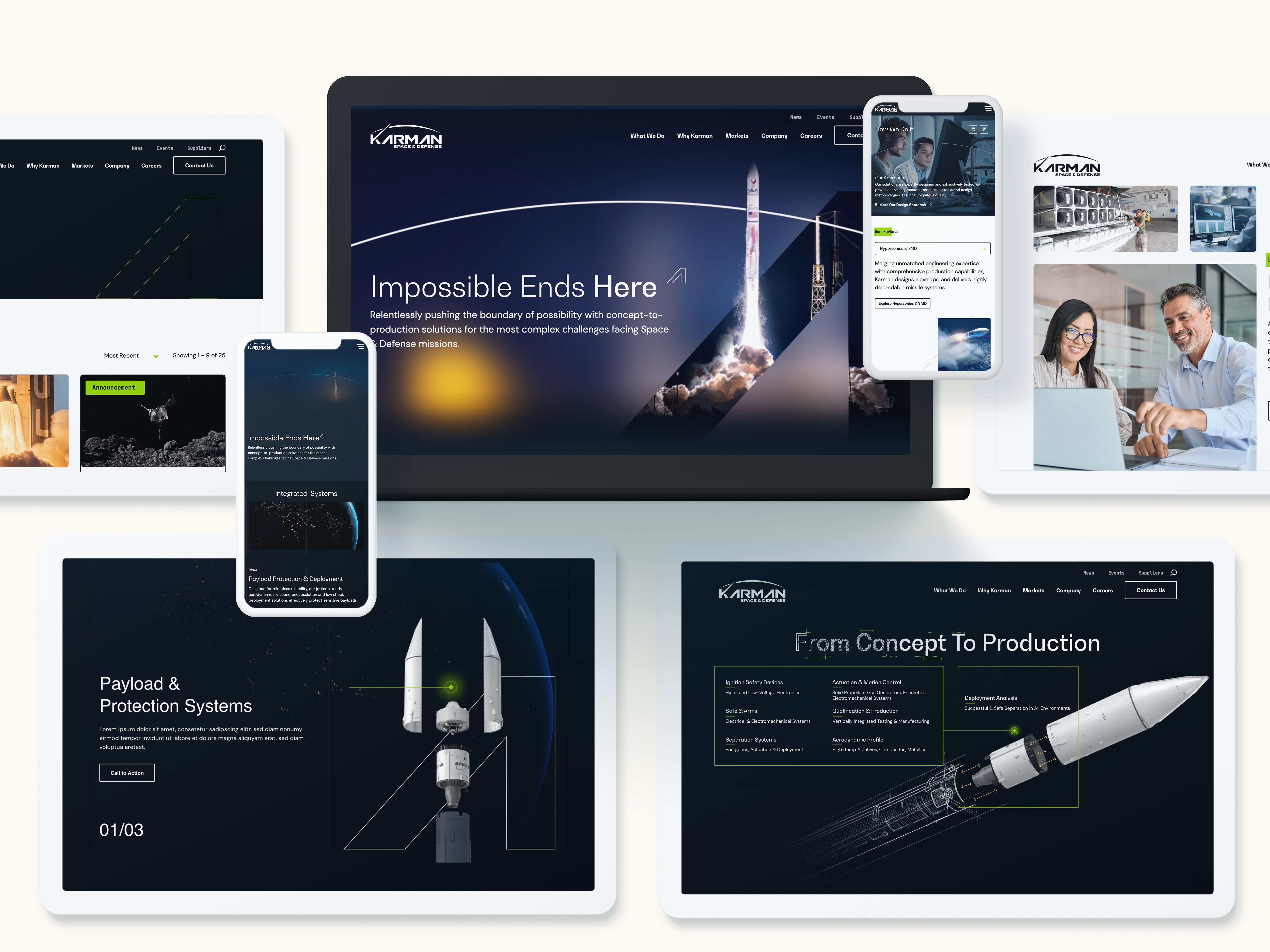
Check out our work with Karman Space & Defense
Avoid these common pitfalls in government branding
Several mistakes slow momentum in federal markets. First, leading with product features. Mission buyers need outcomes and risk reduction. Second, pushing gated content too early. Many federal devices and policies limit form fills, so ensure a path to value without gates. Third, overlooking teaming narratives. A branding agency should prepare stories that show how your capability expands the value of a prime’s solution. Finally, treating events as one-offs. The best programs use events as anchors in a broader content and ABM plan.
Trends reshaping the DC branding landscape
Zero trust, AI adoption, and supply chain resilience continue to dominate agendas. Brands that show real implementation maturity will lead. Accessibility and performance expectations are rising due to federal digital experience guidelines. A skilled branding agency is investing in design systems, content automation, and analytics tied to account intelligence. Video and motion graphics now carry a larger share of the story, especially in pre-solicitation education and stakeholder briefings.
On the media front, mission-focused newsletters, communities, and podcasts offer focused reach. Content must be skimmable and credentialed. A great branding agency tunes tone and format for each channel while maintaining message integrity.
Why Bluetext is built for B2G growth
Bluetext partners with innovators across cybersecurity, defense, AI, and critical infrastructure to help them win in government markets. Our teams blend research, positioning, and award-winning creative with deep capture support and PR. Leaders choose us when timelines are tight and the bar for quality is high. Explore how our B2G content and digital marketing experts structure programs that balance brand lift and pipeline impact, and why federal marketing requires a specialized approach that is different from commercial demand generation.
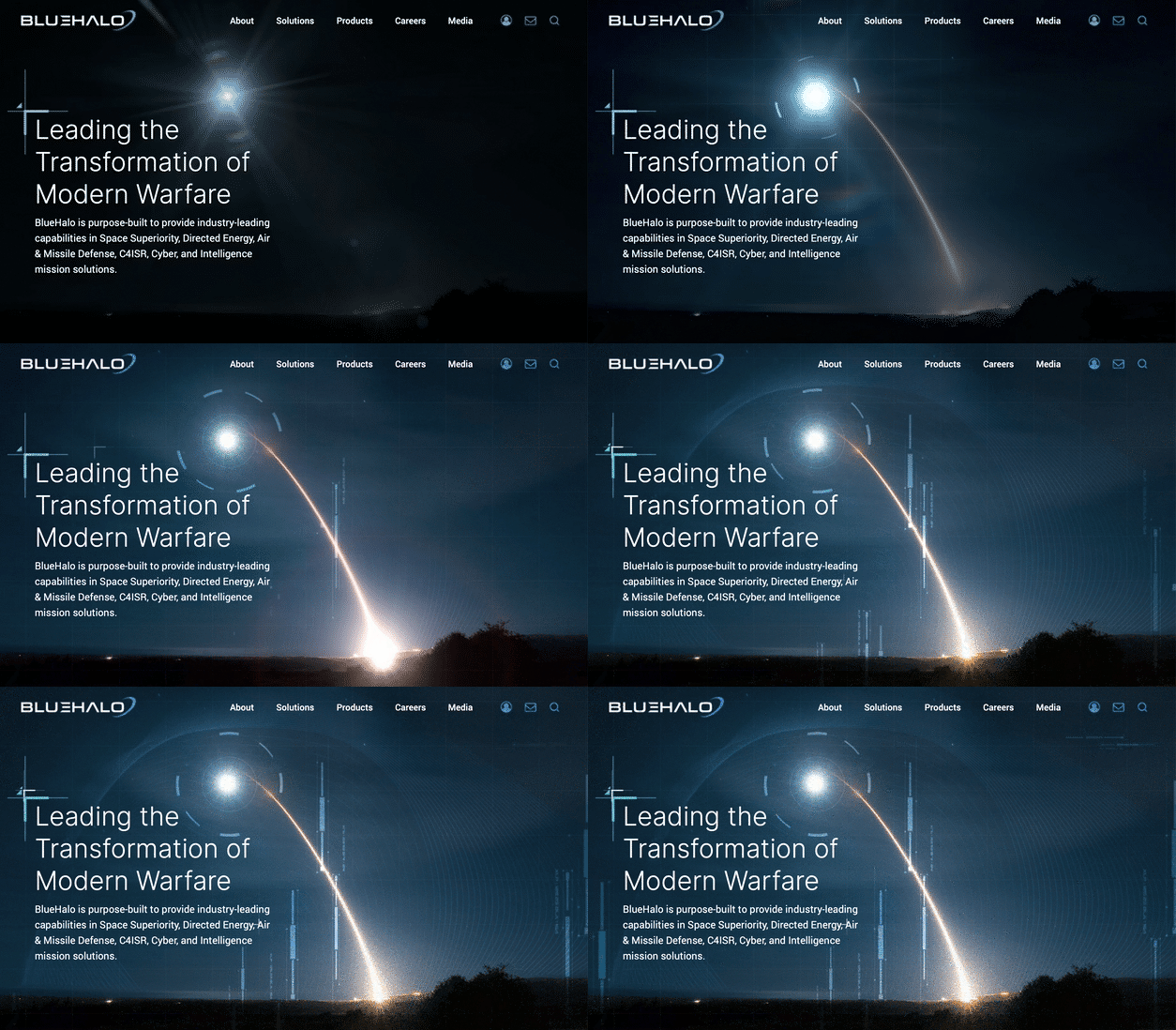
Check out our work with BlueHalo
Getting started with a branding agency: a 90-day action plan
Momentum comes from clarity and cadence. The first 90 days should focus on proof, speed, and alignment.
- Weeks 1 to 2: Run rapid discovery with BD, capture, and solution leads. A branding agency synthesizes buyer insights, win themes, and competitive dynamics.
- Weeks 3 to 4: Finalize positioning and produce a messaging guide. Build a creative brief and asset roadmap.
- Weeks 5 to 8: Launch a refreshed website section, capabilities deck, and two solution briefs. Integrate with PR and event plans.
- Weeks 9 to 12: Publish a mission-focused content series and activate ABM targeting priority accounts and programs. Begin monthly reporting on influence and engagement.
By day 90, you should see improved discoverability, consistent conversation across teams, and higher quality meetings. A branding agency will continue to optimize based on actual buyer behavior, debriefs, and evolving mission priorities.
Next step for growth leaders
Brands that win in government markets combine rigor, relevance, and repetition. They speak mission, show proof, and show up where it counts. If you are evaluating a branding agency to elevate your presence across federal, defense, and state and local buyers, Bluetext is ready to help. Explore how we translate complex solutions into simple, credible narratives and deploy them across digital, PR, events, and capture. Visit our overview of DC digital branding for more context, then contact Bluetext to start a conversation about your goals, timeline, and what success looks like for your team.
Prefer listening over reading? Check out the podcast version of this blog below and enjoy insights on the go!
Content is no longer a trade show handout or a library of PDFs. It is the front door to your brand, the connective tissue across every buyer interaction, and the engine that powers pipeline and trust. For marketing leaders in complex B2B and B2G environments, the mandate is clear. You need effective content marketing that reaches senior decision makers, speaks to technical evaluators, and satisfies procurement and compliance expectations. This blog outlines how to operationalize effective content marketing across strategy, creation, distribution, and measurement, with a view to the realities of long sales cycles, account-based motions, and public sector requirements.
What Does Effective Content Marketing Look Like Today?
Effective content marketing drives measurable progress at every stage of the journey, not just top-of-funnel traffic. It is built on a clear value narrative, consistent editorial standards, and the disciplined use of data to guide decisions. It also prioritizes subjects where your brand can credibly lead, then packages those insights into formats that match the intent of each channel and it integrates with sales and capture teams to move opportunities forward with timely, relevant assets.
In practice, effective content marketing delivers three outcomes:
- It increases qualified attention with content tailored to search and social behaviors.
- It accelerates consideration by removing friction and answering stakeholder questions with authority.
- It supports conversion and retention through proof, enablement, and customer success stories that resonate with the pains and risks your buyers manage daily.
Why Effectiveness Looks Different in B2B vs. B2G
B2B buyers want clarity and confidence, and they move faster when the solution is de-risked with real proof. Federal and state buyers must also manage public accountability, policy mandates, and procurement rules. That difference changes what effective content marketing requires. In B2B, content often leans into category leadership, product differentiation, and ROI. In B2G, it must honor compliance, accessibility, evidence-based claims, and mission impact while anticipating multi-agency stakeholder review.
For B2B marketers, effective content marketing balances thought leadership with deep product education. It supports ABM motions with account-specific narratives and executive briefs. For B2G marketers, it prioritizes clarity on contract vehicles, security posture, data residency, and past performance. It also uses content to prepare for capture, shape requirements early, and equip teams with credible materials for Q&A and orals.
Build a Data-Driven Content Engine
Effective content marketing starts with a repeatable planning cadence. Create a quarterly editorial plan that aligns stories to revenue targets and priority accounts. Use first-party intent data, CRM insights, and on-site search logs to identify questions buyers are asking. Pair that with SEO research to map keywords to stages of the journey. The outcome should be a set of thematic pillars tied to business goals, with content formats selected by the complexity of the message and the time available to the audience.
Operationally, treat your content engine like a product team. Define roles for research, subject matter expertise, writing, design, and distribution. Codify a taxonomy for audiences, industries, and solutions, then tag every asset for reuse. Establish an editorial board that includes marketing, sales, product, and, for public sector, privacy and legal. This governance model keeps effective content marketing aligned with brand, compliant with policy, and focused on measurable outcomes.

Use AI the Right Way, With Human Editorial Control
AI can accelerate research, drafting, and personalization. It can synthesize long-form reports into executive briefs and transform webinars into articles and social snippets. It can even help identify gaps in your content coverage. However, effective content marketing always relies on human judgment to validate facts, refine tone, and ensure claims are defensible. Treat AI as a force multiplier, not an author of record, especially in regulated or procurement-sensitive contexts.
Establish a clear workflow. Use AI for outlines, topic clustering, and first-draft summaries. Require subject matter reviews for accuracy, and implement a messaging guide for consistent terminology and voice. Add automated checks for accessibility and reading level, and deploy human QA for sensitive or strategic pieces. This balance preserves speed while ensuring quality and trust.
Search, AEO, and the Executive Reader
Executives want answers, not fluff. Effective content marketing meets that expectation by optimizing for both search engines and answer engines. Structure pages with descriptive headings that mirror the way leaders search for solutions. Use concise paragraphs, clear lists, and strong transitions. Include definitions, frameworks, and steps that can stand alone in featured snippets while still rewarding the reader who goes deeper.
Search is not only about keywords. It is about intent and authority. Build authority by publishing original analysis, research-backed positions, and practical playbooks. Interlink related assets so that a reader can move from a high-level overview to a technical deep dive or a customer proof point in two clicks. Treat every piece as a gateway to a next best action, from subscribing to a series to booking a strategy session.
Formats That Convert for Complex Buying Groups
Modern buying groups include executives, practitioners, finance, security, and procurement. Effective content marketing serves each role with tailored formats and levels of detail. Consider these building blocks:
- Executive briefs that summarize risks, benefits, and investment rationale.
- Practitioner guides that show steps, architectures, and integration patterns.
- Interactive ROI tools that quantify impact with realistic assumptions.
- Customer stories that emphasize outcomes, milestones, and lessons learned.
- Compliance one-pagers that address security, privacy, accessibility, and certifications.
- Orals decks and capture kits for B2G pursuits, aligned to RFP language and evaluation criteria.
Video and interactive content now play a central role. Short videos increase reach and retention, while webinars and virtual workshops create engagement and capture intent. For public sector audiences, recorded briefings, captions, and accessible formats are essential. Effective content marketing brings these mediums together within a modular system where one core story fuels many channel-specific outputs.
Distribution Strategies That Match Buyer Behavior
Distribution deserves equal energy to creation. A strong program places the right format in the right channel with the right cadence. In B2B, that may include LinkedIn, targeted newsletters, partner channels, and search syndication. In B2G, it may include public sector media, forums, procurement portals, and associations. Effective content marketing uses clear UTM governance and uses CRM integration to measure the downstream impact of each channel.
Scale with a hub-and-spoke model. Anchor content on your site, then atomize it for social, sales enablement, and account-based touchpoints. Equip sellers and capture managers with content cards that include context, who to send it to, and how to follow up. Set a weekly distribution rhythm and a monthly review to prune what does not perform and double down on what does.
Align Content With Sales and Capture
Alignment is not a quarterly meeting. It is a shared pipeline view and a consistent content feedback loop. Effective content marketing builds shared dashboards with sales and capture teams to identify stages where deals stall. Map content to those moments, such as business case validation or security due diligence. Create tailored microsets for target accounts that reflect their industry and mission language.
Consider a simple enablement framework. For each solution, define the top five objections, the three most relevant proof points, and the two best assets for each persona. Train frontline teams on how to apply these, and update the package after every major pursuit. This approach turns content into a tool that moves deals, not a library that gathers dust.
Measure What Matters, Not Just What Is Easy
Views and clicks are indicators, not outcomes. Effective content marketing reports on contribution to pipeline, influence on opportunity velocity, and impact on win rates. Define leading indicators like engaged time and repeat visitors, mid-funnel metrics like content-assisted MQLs and stage advancement, and outcome metrics like conversion to opportunity and revenue attribution.
Measurement improves planning. Use cohort views to understand how content affects accounts over time. Compare performance by theme, format, and buyer role. Use insights to retire low-value topics, expand high-impact pillars, and test new formats. Share these findings broadly so that content investment decisions are grounded in data, not opinions.

Governance, Compliance, and Risk in Public Sector Content
Public sector content must be precise and policy aware. Effective content marketing in B2G requires clear rules for claims, sourcing, accessibility, and data handling. Maintain a library of approved statements about security, compliance frameworks, and contract vehicles. Ensure all assets meet accessibility standards and are available in formats suitable for public distribution.
Build a pre-flight checklist. Validate claims and approvals, confirm accessibility compliance, review for export controls if relevant, and align language with mission outcomes. Train teams on what can and cannot be said before, during, and after an active procurement. This discipline reduces risk while preserving the authority and clarity that B2G audiences expect.
Change Management and Content Operations
Shifting to an always-on model requires new habits. Effective content marketing depends on cross-functional collaboration and clear SLAs. Define intake processes for requests, set turnaround expectations, and create standardized templates that speed production. Invest in a content operations platform to manage calendars, approvals, and asset reuse.
Talent and systems matter. Upskill teams in interviewing subject matter experts, data storytelling, and on-camera delivery. Build a bench of external creators for surge capacity. Establish a quarterly content retro to capture lessons and refine workflows. The result is a sustainable operation that delivers consistent quality at a predictable pace.
A 90-Day Plan to Kickstart Momentum
When speed is essential, a focused sprint can unlock near-term results while setting foundations for scale. Here is a simple path:
- Weeks 1–2: Audit content and performance, interview sales and capture leads, define three thematic pillars tied to revenue goals, and finalize an editorial calendar.
- Weeks 3–4: Produce a flagship asset for each pillar, such as a benchmark report, an executive guide, and a proof-driven case study. Build derivative assets for social, email, and sales follow-ups.
- Weeks 5–6: Launch an integrated distribution plan, set up UTM governance, and enable sales with content cards and email templates.
- Weeks 7–8: Run two webinars aligned to the pillars, supported by pre- and post-event nurture. Capture Q&A to inform follow-up articles and FAQs.
- Weeks 9–10: Review metrics by account and stage, meet with sellers and capture managers, and prioritize content updates that target friction points.
- Weeks 11–12: Publish a mid-quarter insight recap, retire low performers, and plan the next quarter on the basis of what worked.
This focused program creates fast impact while proving the practices that make effective content marketing scalable and repeatable.
How to Tell Your Story With Credibility
Trust is earned when brands share what they know in a way that respects the audience. Effective content marketing emphasizes clarity over hype and evidence over slogans. Use original research, customer outcomes, and transparent methodologies to anchor your claims. Frame insights within the context of industry dynamics, budget realities, and risk tolerances that your buyers understand.
Precision with language matters. Avoid overusing superlatives. Define how you are different in practical terms, such as time to value, breadth of partners, or open standards. In public sector, describe mission outcomes, such as improved service delivery or accelerated modernization, through the lens of stakeholder benefits and measurable milestones.
Scaling Personalization Without Losing Efficiency
Personalization is not adding a first name to an email. It is delivering content that reflects the role, industry, and stage of the buyer. Effective content marketing uses modular storytelling and variable elements to personalize at scale. Build a core narrative that can be adapted for industry, agency, or account, then swap examples, metrics, and visuals to match the audience.
Use signals such as site behavior, intent data, and account lists to trigger the right asset at the right time. Maintain a library of approved variations so teams do not improvise under deadline pressure. Measure lift from personalization by comparing engagement and stage advancement, then iterate on the variables that make a measurable difference.
From Content to Community
The most durable programs build a community around their point of view. Effective content marketing fosters two-way dialogue with customers, partners, and industry leaders. Host roundtables, publish collaborative research, and invite feedback that informs future work. Encourage employees to share thought leadership and equip them with guidelines, assets, and training to do it well.
Community compounds reach and credibility. It helps content travel further, uncovers new stories, and accelerates trust. For B2G, community can take the form of practitioner councils or mission-focused forums that bring together agencies and integrators to share best practices in a vendor-neutral environment.
Partner With Bluetext
The future belongs to brands that combine strategic clarity with operational excellence. Bluetext helps B2B and B2G organizations build effective content marketing programs that influence complex buying groups, accelerate pursuits, and protect brand trust. If you are ready to clarify your story, modernize your content engine, and drive measurable growth, contact Bluetext to discuss strategy, branding, or campaign support. Our team is ready to partner with you to design and deliver what comes next.
Prefer listening over reading? Check out the podcast version of this blog below and enjoy insights on the go!
Security teams cannot defend what they cannot see, and the same truth applies to marketing. If your solutions, guidance, or research are invisible in search, the buyers who need you most will never find you. SEO for Cybersecurity aligns your brand, content, and technical infrastructure with the way CISOs, SOC leaders, procurement officers, and researchers actually search during critical moments. Done well, it increases qualified demand, compresses sales cycles, and strengthens digital trust at the precise moments that shape the outcome of a deal or crisis. For modern marketing leaders, SEO is not a channel to check off a list. It is a strategic capability that directly supports pipeline resilience and brand credibility in a volatile threat landscape.
What is SEO, and why does it matter now?
SEO focuses on the unique needs, search behaviors, and risk thresholds of security decision-makers. It elevates content that answers high-stakes questions across prevention, detection, and response. When a ransomware incident hits and a buyer searches for immediate help, the cybersecurity providers who have invested in SEO will appear with credible guidance and clear actions. That visibility translates to trust, and trust becomes a new business conversation. In B2G, where procurement rigor and compliance considerations are extensive, the right search visibility shortens discovery and validates a vendor’s authority early.
The cybersecurity market has matured beyond vanity keywords. Today, SEO prioritizes the intersection of intent, expertise, and speed. Executive buyers search differently from practitioners. Federal audiences search differently from enterprise teams. Search results pages have also shifted to favor authoritative answers and structured information, not just blogs with superficial coverage. The companies winning organic share are those that bring deep expertise to their content, reinforce it with technical excellence, and maintain rapid publishing cadences for emerging threats.
How should cybersecurity brands structure an intent-led content strategy?
The foundation of SEO is a content model built around buyer intent. Map topics to real scenarios and decision stages. Example categories include executive explainers on zero trust architecture, practitioner deep dives on SIEM tuning or EDR comparisons, and emergency guides for incident response. Every topic should have a clear purpose, a defined target persona, and an obvious next step.
- Define evergreen pillars: security operations maturity, vulnerability management, identity security, cloud posture, and compliance frameworks. Use these as permanent hubs for your authority.
- Create fast-turn clusters: pages for new CVEs, ransomware variants, and supply chain vulnerabilities. The brands that operationalize rapid publishing are the brands buyers bookmark.
- Build B2G tracks: content tailored to procurement workflows, ATO timelines, FedRAMP considerations, and interagency collaboration. These tracks support SEO for Cybersecurity while acknowledging public sector constraints.
Format matters. Technical evaluators favor detailed comparisons, architecture diagrams, and deployment runbooks. Executives want concise risk framing, total cost narratives, and case studies that show time to value. Both groups respond to content that is skimmable, accurate, and transparent. Successful SEO balances depth with clarity and uses structured elements such as checklists and step-by-step playbooks to satisfy search intent quickly.
What technical SEO improvements make the biggest impact for cyber brands?
Security audiences have low patience for slow or unreliable websites. Core Web Vitals, clean architecture, and robust internationalization are table stakes. Start with a streamlined site taxonomy that reflects how buyers navigate from high-level strategy to solution detail. Use internal linking to guide movement between related topics and to surface high-intent pages. Strong information architecture makes SEO in the cybersecurity industry more resilient as you scale content across products and markets.
Implement structured data wherever it informs the searcher. Product, FAQ, How To, and Article schema can improve discoverability and sitelink coverage. For vulnerability advisories and CVE documentation, standardized labeling and precise metadata are essential. Accelerate indexing with clear sitemaps and a publishing process optimized for speed and version control. If you run status or incident hubs, apply thoughtful indexation rules so that public communications are discoverable while sensitive operational pages remain controlled.
Security buyers often prefer browsing on locked-down devices or via mobile during off-hours. Mobile responsiveness, reliable HTTPS configuration, and lightweight code become competitive advantages. Combine technical cleanliness with measured pacing of scripts and trackers. That improves user experience and reduces the likelihood of false positives with endpoint protections. The end result is a technical foundation that supports SEO without introducing friction.
How do credibility, E-E-A-T, and digital PR reinforce search authority?
Cybersecurity is a YMYL category where expertise and trust are non-negotiable. Elevate named authors with verifiable credentials. Publish real research with original data, not recycled commentary. Provide transparent editorial standards and update logs on time-sensitive content. When you demonstrate experience and authority, search engines and buyers reward you. This is the essence of SEO in high-stakes categories.
Your backlink strategy should mirror the industry’s trust graph. Prioritize mentions and citations from respected analyst outlets, academic communities, standards bodies, and industry associations. Avoid low-quality link schemes that risk reputational damage. Run digital PR around responsible vulnerability disclosures, joint research with partners, and policy commentary that adds genuine value. As these signals accumulate, they compound the impact of SEO and protect your brand during crises.
What role does thought leadership play in demand generation?
Effective thought leadership turns organic demand into pipeline. Long-form guides on NIST CSF alignment, zero trust implementation roadmaps, and MDR vs. XDR decision frameworks meet buyers where they are. Pair these assets with calculators that quantify risk reduction or SOC efficiency gains. Package learnings into short executive briefs for the C-suite and deeper technical documentation for practitioners. When thought leadership drives clarity, it accelerates qualified conversations and strengthens SEO across priority topics.
How do B2G requirements change the SEO approach?
Public sector buyers face distinct procurement steps, compliance gates, and budget rhythms. Content must speak to these realities: authority to operate, cloud security posture, supply chain integrity, and vendor risk management. Create pages that align with key contract vehicles, timelines, and compliance milestones. Above all, use precise language and avoid marketing abstractions. Clear alignment to mission outcomes increases trust and drives performance in SEO for federal and state audiences.
Localization often helps. When targeting specific agencies or regions, reflect their terminology, use cases, and regulatory references. Build structured pages that address common questions from contracting officers and technical evaluators. Offer credible proof points: implementation timelines, integration patterns with government tech stacks, and support models. This directly supports SEO by reducing ambiguity and highlighting measurable value.
How can SEO mitigate crisis risk and support incident response?
During a security event, search becomes a truth-seeking channel. Plan for “brand + breach” and “brand + vulnerability” scenarios with prebuilt playbooks. Create a response hub that centralizes verified updates, FAQs, and remediation steps. Use canonical signals to avoid outdated information outranking current guidance. Coordinate PR, legal, security, and marketing teams to publish quickly and coherently. Placing accurate, helpful content in the SERP is a tangible way SEO defends reputation when it matters most.

What metrics prove value to the C-suite?
Executives need proof that organic performance drives business outcomes. Move beyond traffic and rank positions. Track assisted revenue, pipeline influence, share of search in target categories, and conversion quality by intent. Measure how often buyers who entered via organic convert to sales-qualified opportunities compared to paid channels. These indicators make the ROI case for SEO for Cybersecurity with clarity and credibility.
Layer in operational diagnostics: indexing efficiency, time to publish for critical content, and visibility for executive queries like “best zero trust vendors” or “incident response retainer.” Monitor brand SERP health, including sitelinks, knowledge panels, and presence of third-party reviews. Analyze log files to identify crawl waste and prioritize technical fixes. This discipline ensures SEO remains a durable growth engine rather than a reactive project.
How do you operationalize SEO for complex security portfolios?
Organize teams around topics, not just products. Establish a governance model with editorial standards, SME review cycles, and an always-on calendar for emerging threats. Build cross-functional rituals among product marketing, research, comms, and demand gen. Equip the team with templates for comparison pages, advisory posts, implementation guides, and FAQs. Systematizing production improves speed and consistency, which directly strengthens SEO at scale.
Finally, connect organic insights to broader go-to-market motions. Feed search intent data into ABM lists, paid search negatives, webinar themes, and sales enablement. Use organic performance to inform product naming, messaging pillars, and positioning tests. When SEO is integrated with brand, creative, and campaigns, the entire program becomes greater than the sum of its parts.
Move from visibility to velocity with Bluetext
Security markets reward clarity, speed, and credibility. That is exactly what a modern, integrated program delivers when SEO is built into your brand, content, and digital infrastructure. If you are ready to capture high-intent demand, strengthen your authority with decision-makers, and operationalize fast, reliable publishing, Bluetext can help. Contact our team to elevate your strategy, sharpen your positioning, and launch campaigns that turn search into sustained growth.
LinkedIn is the social platform we all associate with business, and for a good reason, it was designed for professional networking. Whether it’s your personal career or your organization’s growth, LinkedIn is made to promote success. With more than 30 million companies on the platform, LinkedIn generates more leads for B2B companies than Facebook or Twitter. With 675 million users worldwide and 303 million monthly active users, it is also a great tool to enhance your company’s brand awareness.
Before embarking on your brand awareness journey it’s essential to know your audience, and particularly what kind of content may interest them. The largest percentage of LinkedIn users are 33- to 55-year-olds, demonstrating how those who dominate the social platform are more serious career-oriented adults rather than young adults/teenagers. Likewise, LinkedIn is the number one platform for CEOs, with 94% having a social media presence on the site. It is crucial that your business maximize its presence on the platform to take advantage of its many business opportunities.

3 Tips to Increase Brand Awareness and Engagement on LinkedIn
1) Build Out Your Company Page
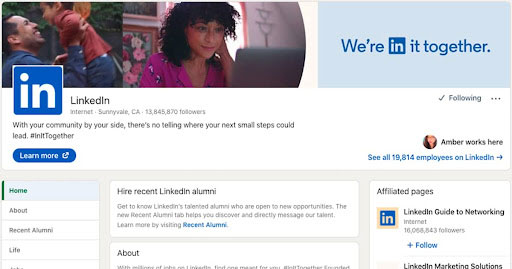
Next to your company website, your company’s LinkedIn page is the most important digital representation of your business. This is your chance to showcase your business in a professional online setting. One of the most common mistakes businesses make on LinkedIn is treating it like a one-and-done task. After establishing your company page, make sure to frequently update your profile to reflect the most recent and relevant attributes of your business. From location to company bios and team members keeping the profile up to date gives prospective partners, customers, and even employees the most accurate snapshot of your business to date. You may want to consider investing in LinkedIn Premium, which allows you to open your network and grow your business even further. With this feature you can see who views your profile, giving insight into who is interested in your page. From here, it is recommended that you connect with viewers to allow for further interaction.
2) Get Active
LinkedIn rewards active profiles by making them appear higher in searches. What do we mean by active? This is any sort of platform engagement, not just publishing! Therefore, your organization’s account should be adding reactions to posts, such as likes and comments. When commenting you should be thoughtful and provide responses of substance that encourage further conversation. While you should establish your own organic content schedule & strategy, not all the responsibility falls on you to properly build out a company page. You can participate in relevant conversations but re-sharing other organizations’ content, such as blogs, relevant articles, and other thought leadership pieces. Next, you should follow other companies, especially those in your industry who could potentially become partners. Overall, it is beneficial to be active on the platform and engage with other pages to stimulate the same kind of interactive environment on your own business page.

3) Join Groups
There are over 1 million groups on LinkedIn, which are always open to new members. Join groups that are relevant to your business and industry to discover relevant and related content, but also increase the chances of your content being discovered by others. Doing so filters down your audience from millions of varying interests to a more targeted niche audience. Groups connect you with people that you have something in common with. Here you can promote your content, by sharing blog posts, giving you more of an opportunity to brand yourself as an industry and topical expert.

Interested in up-leveling your brand’s LinkedIn presence? Contact us to stay ahead of your competition and learn some additional tricks of the trade.