As the aerospace industry evolves, so too does the marketing landscape that surrounds it. Emerging technologies are reshaping how aerospace companies engage with their audiences, creating new opportunities for innovation and growth. For an aerospace marketing company, staying ahead of these trends is crucial to maintaining a competitive edge. This article explores how these emerging technologies are impacting aerospace marketing and why modern marketing leaders need to pay attention.
Revolutionizing Communication with AI
Artificial Intelligence (AI) is at the forefront of transforming aerospace marketing strategies. By leveraging AI, companies can analyze vast datasets to gain insights into customer behavior and preferences. This allows for highly personalized marketing campaigns that resonate with specific audience segments. AI-driven chatbots and virtual assistants also enhance customer interaction by providing real-time support and information. For an aerospace marketing company, these tools streamline communication and improve customer satisfaction.

See how we took BlueHalo’s brand to the next level
Harnessing the Power of Data Analytics
Data analytics is another powerful tool reshaping aerospace marketing. With the ability to process and interpret complex data, aerospace companies can make informed decisions about their marketing strategies. Predictive analytics help in forecasting market trends and customer needs, enabling proactive adjustments to campaigns. This data-driven approach ensures that marketing efforts are not only efficient but also effective in reaching the target audience.
Integrating Virtual and Augmented Reality
Virtual Reality (VR) and Augmented Reality (AR) are revolutionizing how aerospace products are showcased. These technologies provide immersive experiences that allow potential customers to interact with products in a virtual environment. For example, a potential buyer can explore the interior of an aircraft through a VR simulation. Such experiences can be pivotal in decision-making processes, offering a tangible sense of the product before purchase. An aerospace marketing company can leverage these technologies to create engaging and memorable brand experiences.
Leveraging Social Media and Digital Platforms
Social media and digital platforms have become indispensable in aerospace marketing. These platforms offer a direct line of communication with audiences, facilitating engagement and feedback. By utilizing targeted advertising and content marketing strategies, aerospace companies can reach specific demographics with precision. Engaging content that highlights innovation and expertise can position a company as a thought leader in the industry. With the right approach, social media can be a powerful tool for brand building and audience expansion.
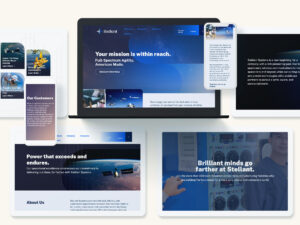
Uncover the transformation that made Stellant impossible to ignore
The Role of Influencer Marketing
Influencer marketing has gained traction in the aerospace sector as well. Collaborating with industry experts and influencers can amplify a company’s reach and credibility. These influencers often have a loyal following that trusts their recommendations, making them ideal partners for promoting aerospace products and services. An aerospace marketing company can strategically select influencers whose values align with the brand, ensuring authentic and impactful campaigns.
Embracing Sustainable Marketing Practices
As sustainability becomes a key concern for consumers, aerospace companies are increasingly incorporating eco-friendly practices into their marketing strategies. Highlighting sustainable innovations and practices can enhance brand reputation and appeal to environmentally conscious consumers. By transparently communicating sustainability efforts, aerospace companies can build trust and foster long-term relationships with their audience. This shift towards sustainable marketing is not only beneficial for the environment but also aligns with the growing consumer demand for ethical business practices.
Strategizing for Future Growth
To thrive in this evolving landscape, aerospace companies must adopt a forward-thinking approach. By investing in emerging technologies and staying abreast of industry trends, they can develop marketing strategies that are both innovative and effective. Partnering with a specialized aerospace marketing company can provide valuable insights and expertise, ensuring that marketing efforts are aligned with business goals and market demands.
In conclusion, emerging technologies are reshaping the aerospace marketing landscape, offering new avenues for engagement and growth. By leveraging AI, data analytics, VR/AR, and sustainable practices, companies can create impactful marketing strategies that resonate with modern audiences. As the industry continues to evolve, staying ahead of these trends will be crucial for success. For tailored strategies and support, contact Bluetext to enhance your marketing initiatives and drive your business forward.
Recent Posts
Bluetext’s Recent Work