Cancel
Analytics, Artificial Intelligence, B2B Marketing Agency, Content Marketing, Digital Marketing

Mastering Scalable Marketing in a Digital-First World

by Jason SiegelAugust 10, 2026
Share

In today’s fast-paced, digital-first world, scalable marketing has become a cornerstone of successful business strategies. As businesses seek to expand their reach and optimize their marketing efforts, understanding how to build and execute scalable marketing strategies is crucial. This shift toward digital transformation is not just a trend; it’s an essential strategy for staying competitive in both B2B and B2G markets. For marketing leaders, mastering scalable marketing means leveraging digital tools and platforms to enhance efficiency and achieve sustainable growth.

The Importance of Scalable Marketing

Scalable marketing is vital for businesses looking to grow without proportionally increasing their costs. By implementing strategies that can be expanded or contracted based on demand, companies can maintain flexibility and efficiency. This approach is especially important in the B2B and B2G sectors, where market dynamics can change rapidly. Businesses need marketing solutions that can adapt quickly to new challenges and opportunities. For example, using analytics technology allows companies to make data-driven decisions, ensuring their marketing efforts are both effective and scalable.

Leveraging Technology for Scale

Incorporating technology into marketing strategies is no longer optional—it’s a necessity. Automation tools, AI, and advanced analytics enable businesses to reach larger audiences with personalized messaging. Marketing automation platforms streamline processes, from lead generation to customer engagement, allowing teams to focus on strategic planning rather than manual tasks. Additionally, leveraging artificial intelligence can enhance the personalization of marketing efforts, making campaigns more relevant to target audiences.
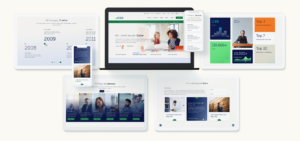
Distinct beats polished. Take a closer look at how we kept CIBZ up with the competition.

Creating a Digital-First Culture

For scalable marketing to be effective, companies must foster a digital-first culture. This involves aligning organizational goals with digital strategies and ensuring that all departments are on board with the digital transformation. Leaders should encourage innovation and provide training to help teams adapt to new technologies. By promoting a culture that values digital solutions, businesses can ensure that their scalable marketing strategies are implemented smoothly and effectively.

Content as a Catalyst for Growth

Content marketing remains a powerful tool for driving growth in a scalable manner. By creating high-quality, relevant content, businesses can attract and engage their target audiences without the need for massive advertising budgets. Content can be repurposed across various channels, extending its reach and impact. A strategic approach to content marketing not only supports SEO efforts but also establishes thought leadership and builds brand trust.

Buyers decide before they read the deck. Get the story behind our redesign of the brand.

Measurement and Optimization

To ensure scalable marketing strategies are effective, continuous measurement and optimization are key. By tracking key performance indicators (KPIs) and analyzing campaign data, businesses can identify areas for improvement and adjust their strategies accordingly. Tools like Google Analytics provide valuable insights into customer behavior and campaign performance. Regularly reviewing this data allows companies to refine their approaches and maximize their marketing investments.

Partnering for Success

In a digital-first world, scalable marketing is essential for businesses seeking sustainable growth. By leveraging technology, fostering a digital-first culture, and focusing on content and data-driven decision-making, companies can create marketing strategies that adapt to changing market conditions. For organizations looking to enhance their marketing efforts, partnering with experts can provide the guidance and expertise needed to navigate this complex landscape. Contact Bluetext today to learn how our team can support your strategy, branding, and campaign needs, ensuring your business is well-positioned for future success.

Frequently Asked Questions (FAQ)

What does scalable marketing really mean for B2B and B2G organizations?

Scalable marketing is about increasing impact without costs and headcount rising at the same pace. In B2B and B2G, that means building modular campaigns, reusable content, and interoperable tech that can flex with shifting demand and long buying cycles. It also requires processes that adapt to stricter compliance and procurement requirements common in government markets. The goal is to quickly ramp up or down while preserving precision and accountability.

How do analytics technologies make marketing more scalable?

Analytics consolidate data across channels to reveal which audiences, messages, and channels are actually moving the needle. With clear attribution and cohort analysis, teams can shift budget to the highest-yield programs instead of guessing. Predictive insights help forecast demand and prioritize segments, reducing waste and manual rework. Tools like Google Analytics also surface journey bottlenecks so you can fix what doesn’t convert before you add more spend.

Where does AI add the most value when scaling personalized outreach?

AI accelerates audience discovery by clustering prospects with similar behaviors and intent signals. It can power dynamic content and send-time optimization so each contact gets relevant messages at the right moment. Generative tools speed up production of drafts, variants, and summaries, while humans ensure quality and brand alignment. Together, these capabilities increase relevance at scale without overwhelming your team.

What are practical first steps to build a digital-first marketing culture?

Start by setting shared, measurable goals across marketing, sales, and customer teams, with executive sponsorship to remove roadblocks. Audit your tech stack and workflows, then standardize on a core set of tools with clear data governance. Invest in training so teams are fluent in automation, analytics, and experimentation. Finally, adopt a test-and-learn cadence with small pilots, rapid feedback, and transparent reporting.

How can we repurpose content at scale without it feeling repetitive?

Begin with cornerstone assets—like a research report or webinar—and atomize them into persona-specific blogs, social posts, email snippets, and sales enablement. Adapt for each channel’s native format and tone rather than copy-pasting. Refresh statistics, examples, and calls to action by industry or buying stage to keep it timely and relevant. Track performance by variant so you double down on what resonates and retire what doesn’t.

Which KPIs matter most when measuring scalable marketing performance?

Prioritize metrics that connect activity to revenue, such as cost per opportunity, pipeline created, and conversion rates from MQL to SQL to closed-won. Monitor pipeline velocity and CAC payback to understand efficiency over time. Layer in engagement and content performance to capture early signals, but optimize based on downstream impact. Regular KPI reviews ensure you scale what works and stop what doesn’t before costs balloon.

How do marketing automation platforms support scale from lead generation to engagement?

Automation platforms orchestrate journeys across email, web, and ads, triggering actions based on behavior and lifecycle stage. They enable consistent lead scoring, routing, and nurturing so no prospect falls through the cracks. Integrations with CRM and analytics close the loop on performance and attribution. With governance, templates, and modular programs, teams can launch more campaigns faster while maintaining quality control.

When should a company consider partnering with an external agency to scale marketing?

It’s smart to bring in expert partners when growth goals outpace internal bandwidth or specialized skills, such as advanced analytics or AI-driven personalization. Agencies can accelerate roadmaps, de-risk major platform implementations, and inject objective strategy grounded in benchmarks. They also help establish scalable processes, creative systems, and measurement frameworks you can own long-term. The result is faster time to impact with fewer costly missteps.