The role of marketing companies in Washington DC has become increasingly pivotal in driving growth within the government sector. As government entities seek to modernize and improve their communication strategies, these specialized agencies are uniquely positioned to provide the expertise needed to navigate complex regulatory environments and engage effectively with diverse stakeholders. For executive-level marketing leaders, understanding the impact of these agencies is essential to leveraging opportunities for innovation and efficiency in government operations.
Understanding the Unique Needs of Government Marketing
Government marketing differs significantly from traditional B2B marketing. It requires a deep understanding of regulatory constraints, public sector priorities, and the unique challenges of engaging with government audiences. Marketing companies in Washington DC, such as Bluetext, possess the specialized knowledge necessary to tailor strategies that align with governmental goals while adhering to strict compliance requirements. This expertise is crucial in crafting messages that resonate with both internal stakeholders and the broader public.
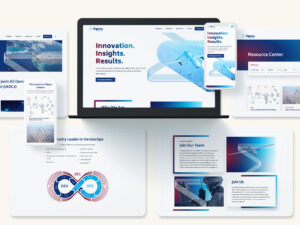
See how Sigma Defense’s brand redesign opened new doors
The Importance of Strategic Communications
Strategic communications are at the core of successful government marketing initiatives. DC-based marketing firms excel in developing comprehensive communication strategies that enhance transparency, build trust, and improve public engagement. By leveraging data-driven insights and cutting-edge digital tools, these agencies help government bodies convey their messages clearly and effectively. This approach not only strengthens public relations but also facilitates more informed decision-making processes within governmental organizations.
Leveraging Technology for Enhanced Engagement
Technology plays a vital role in modern marketing efforts, and Washington DC marketing companies are at the forefront of integrating innovative solutions into government strategies. From advanced analytics to virtual reality experiences, these agencies employ a range of technologies to create immersive and interactive engagements. Such initiatives are designed to increase public awareness and participation, ultimately leading to more successful policy implementations and improved community relations.
Branding and Positioning in the Public Sector
Branding is not exclusive to the private sector. Government entities also require strong branding and positioning to communicate their values and missions effectively. DC marketing companies specialize in developing cohesive brand identities for government agencies that reflect their core objectives and resonate with their target audiences. This involves crafting compelling narratives and visual elements that distinguish government programs and initiatives in a crowded information landscape.
Case Studies: Successful Government Marketing Campaigns
Several successful campaigns highlight the impact of strategic marketing in the government sector. For instance, Bluetext has worked on projects that showcase the power of targeted messaging and creative execution. Through initiatives that combine digital marketing, public relations, and social media, these campaigns have effectively reached and engaged diverse audiences, demonstrating the value of a well-rounded marketing approach in government settings. For more information on similar projects, visit our public sector work.

Pull back the curtain on Aevex’s full-scale brand redesign
Challenges and Opportunities in Government Marketing
Despite the opportunities, marketing in the government sector presents unique challenges. Navigating bureaucratic processes, securing stakeholder buy-in, and managing public perceptions are complex tasks that require expertise and patience. However, these challenges also present opportunities for innovation. By employing agile marketing methodologies and fostering a culture of continuous improvement, DC-based marketing firms can help government agencies adapt to changing environments and meet evolving citizen expectations.
Collaborating for Success
Collaboration is essential for successful government marketing. Marketing agencies in Washington DC often work closely with government leaders, IT departments, and other stakeholders to ensure alignment and maximize the impact of marketing efforts. This collaborative approach facilitates the sharing of insights and resources, leading to more effective and efficient marketing strategies. Agencies like Bluetext offer tailored solutions that cater to the specific needs of government clients, ensuring that all parties work towards common goals.
The Future of Government Marketing
As the government sector continues to evolve, the role of marketing companies in Washington DC will only grow in importance. These agencies are uniquely positioned to drive innovation, enhance public engagement, and improve the overall effectiveness of government communications. For marketing leaders, partnering with a specialized agency like Bluetext can provide the strategic insight and expertise needed to navigate the complexities of the government landscape successfully. To learn more about how Bluetext can support your government marketing needs, contact us today.
Recent Posts
Bluetext’s Recent Work