Sustainable branding has moved from a niche talking point to a board-level mandate for organizations that serve both commercial and public sector buyers. Executives are under pressure to prove environmental and social value, not just financial performance. In this context, Washington DC marketing firms have emerged as pioneers in aligning purpose with measurable outcomes. Positioned at the intersection of federal policy, regulated industries, and mission-driven organizations, Washington DC marketing firms bring a rigor and credibility to sustainability narratives that is difficult to replicate elsewhere. For leaders who need sustainability to translate into pipeline growth, procurement readiness, and enterprise value, the region offers a distinctive blend of strategic discipline, policy fluency, and creative excellence.
Why sustainability now sits at the center of B2B and B2G brand strategy
Sustainability is no longer a peripheral CSR initiative. It influences how contracts are awarded, where investors deploy capital, how employees choose employers, and how citizens judge progress. Washington DC marketing firms see this shift every day across federal RFP criteria, state and local procurement guidelines, and enterprise buyer shortlists. For B2B and B2G organizations, sustainability confers competitive advantage when it is integrated into brand architecture, customer experience, and sales enablement. That is why Washington DC marketing firms build sustainability into positioning and messaging from the outset rather than treating it as a campaign add-on.
There is also a trust imperative. Claims that lack substantiation can backfire quickly with procurement officials, analysts, and technically sophisticated buyers. The best Washington DC marketing firms treat sustainability like any performance attribute. They establish a baseline, agree on metrics, and craft communications that explain both progress and tradeoffs without overpromising results.
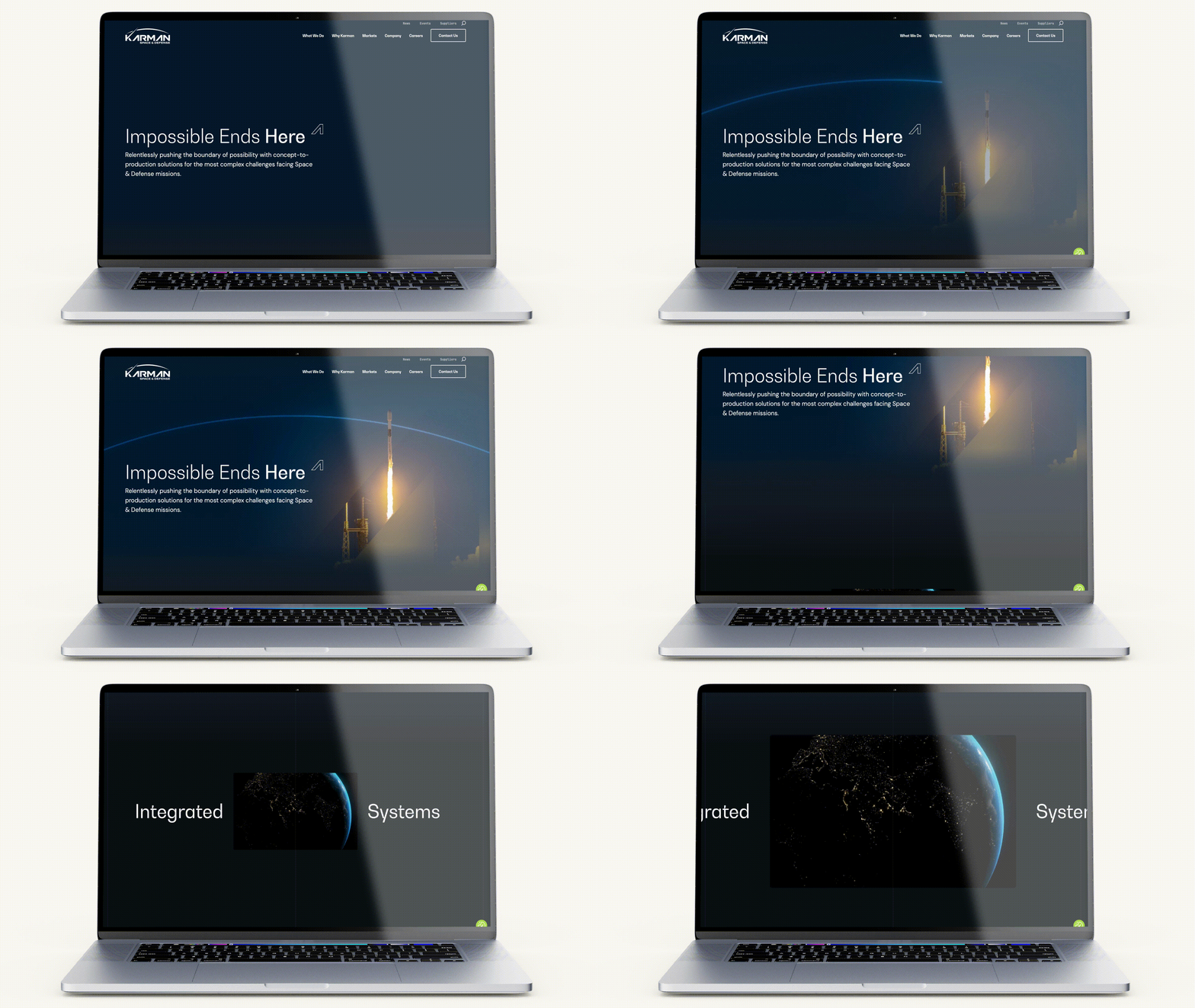
Check out our work with Karman Space & Defense
What sets Washington-based agencies apart in sustainable branding
The region’s ecosystem blends government, NGOs, think tanks, and global enterprises. That mix cultivates a practical understanding of policy timelines, compliance language, and stakeholder engagement. When sustainability ambitions collide with operational reality, Washington DC marketing firms can translate complex requirements into simple, compelling value propositions. They recognize how federal frameworks such as climate resilience, supply chain transparency, and energy efficiency ripple through sourcing, vendor risk, and program oversight. They also understand how to brief senior stakeholders, from agency program managers to C-suite leaders, in ways that maintain credibility.
Another differentiator is speed with substance. Tight windows for RFP responses and budget cycles demand rapid synthesis of technical material. Washington DC marketing firms specialize in building clear narratives from dense documentation, engineering data, and policy memos. That means sustainability proofs can be advanced in weeks rather than months, with messaging ready for capture teams, partner alignment, and field marketing.
Building a sustainable brand platform that wins buyers and budgets
Effective sustainability programs begin with a strong brand foundation. A defined purpose, crisp positioning, and a disciplined visual and verbal system provide consistency across channels and contracts. Leaders often start by stress-testing their value proposition against sustainability use cases, then codify the results inside a formal platform. Teams that need a proven framework partner look to expert branding capabilities that organize complex claims into category-defining platforms.
Washington DC marketing firms typically guide clients through a sequenced approach: align executive intent, assess stakeholder expectations, prioritize initiatives with clear ROI, and codify simple proof points. Those proof points should be both outcome oriented and attributable. For example, instead of saying a solution “reduces emissions,” quantify expected reductions over a defined timeframe and specify the mechanism. Washington DC marketing firms hardwire these details into messaging playbooks so the story scales across teams and partners without drift.

Messaging that resonates with policymakers, procurement, and technical buyers
Sustainability messaging must work on three levels at once: regulatory alignment, operational value, and human impact. The best frameworks synthesize these layers without jargon. Washington DC marketing firms often structure narratives around three questions: what policy requirement is at stake, how the solution satisfies or exceeds that requirement, and what quantifiable benefits accrue to the mission. That format delivers confidence to acquisition officials while remaining persuasive to end users and citizens.
Proof hierarchy matters as well. Lead with the most verifiable, contract-relevant evidence first. Use data visualizations to compress complex metrics into a single glance. Support claims with independent validations when possible. Washington DC marketing firms build libraries of vignettes that map specific features to sustainability standards and program outcomes so that capture and solution engineering teams have a common language.
Translating ESG ambition into measurable outcomes and KPIs
Sustainability performance is only as strong as the metrics behind it. Begin with a baseline and define a limited set of KPIs that correlate with growth, cost reduction, or risk mitigation. Executive teams benefit from a measurement plan that connects data collection to storytelling and sales. Washington DC marketing firms typically establish quarterly checkpoints to validate progress, refine targets, and update content. Leaders who want analytical rigor often partner with teams skilled in research and analytics to set the right benchmarks and attribute impact to the right levers.
Dashboards should be built for different audiences. Executives need trend lines and forecasts. Program managers need leading indicators and alerts. Sales needs simple fact packs and case snapshots. Washington DC marketing firms reduce friction by automating data ingestion where possible and creating modular content that can be updated without full redesign.
How to avoid greenwashing and build durable trust
The surest way to avoid greenwashing is to align claims with auditable evidence and to communicate progress with humility. If a target is aspirational, label it as such and pair it with interim milestones. If there are tradeoffs, explain them. Washington DC marketing firms coach clients to stress test their language under regulatory scrutiny and to ensure that visuals do not imply benefits the data cannot support. They also bake in governance so that sustainability content has a clear owner and review cycle.
Partner selection matters too. Validate suppliers, verify certifications, and pressure test the chain of custody for claims that depend on third parties. Washington DC marketing firms often help clients institute a content provenance process so that data sources are tracked, updated, and ready for due diligence.
Digital experiences that encode sustainability into the user journey
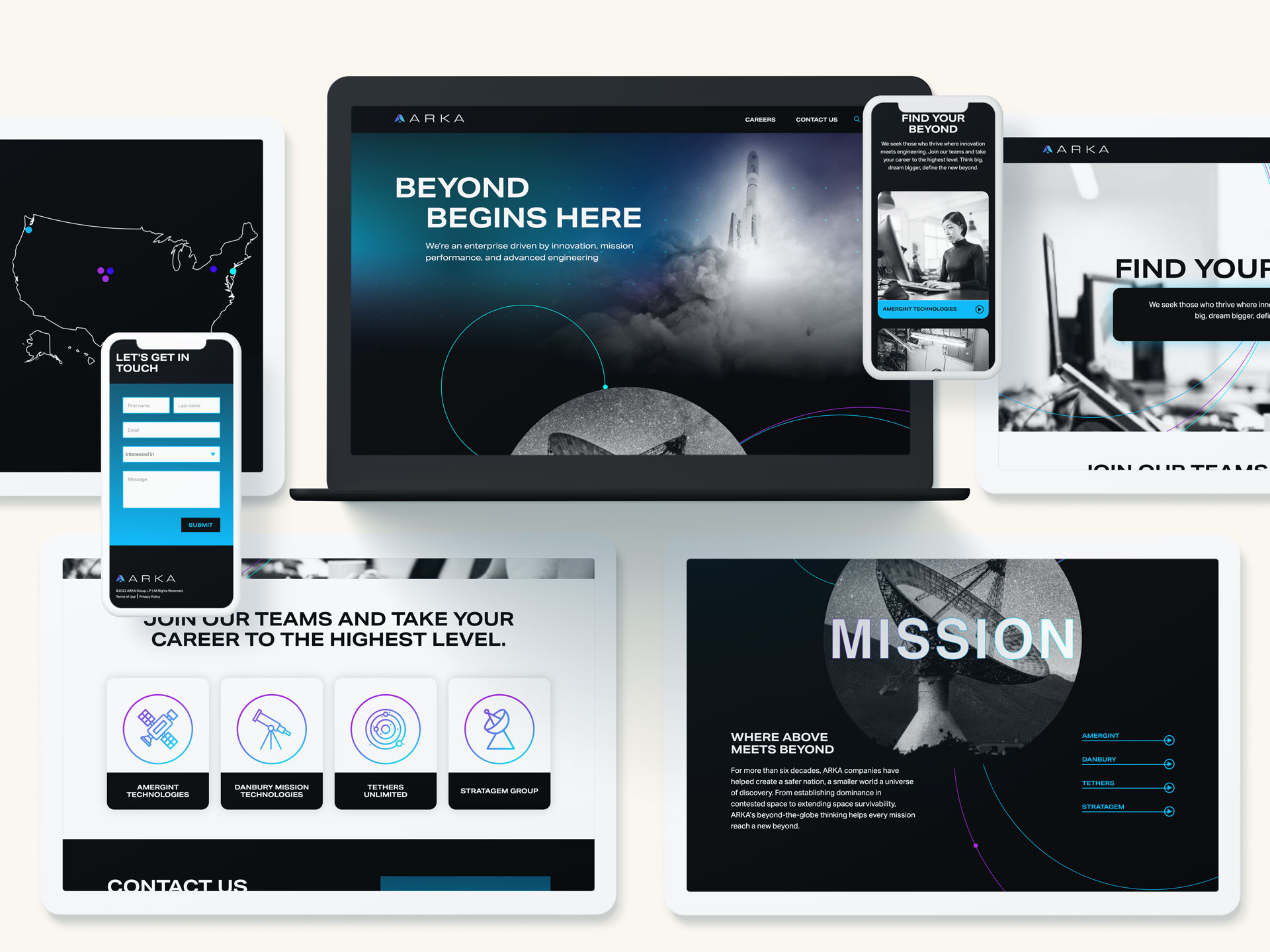
For B2B and B2G brands, sustainability should live in the product experience and the website, not just on a corporate responsibility page. Start with information architecture. Make sustainability benefits discoverable by role, use case, and compliance need. Provide calculators or estimators that let buyers model outcomes. Washington DC marketing firms integrate these elements into design systems so that sustainability communicates by default rather than by exception. Organizations that are evolving their digital footprint often look to specialized website design and development programs to embed these features efficiently.
Site performance also matters. Faster pages and efficient media delivery can reduce digital carbon footprints while improving conversion. Washington DC marketing firms optimize media, adopt modular component libraries, and create content governance models that prevent bloat.
Search and content strategies that scale sustainability reach
Executives expect sustainability to support demand generation, not just reputation. That starts with thoughtful topic modeling, entity optimization, and authoritative content that anticipates buyer and policy queries. Washington DC marketing firms plan editorial calendars around regulatory milestones, budget cycles, and industry events. They pair leadership perspectives with practical guides, ROI models, and customer stories that show how sustainability delivers operational value. The result is a durable content engine that compels both discovery and conversion.
Organic search is not only about keywords. It is about intent and authority. Washington DC marketing firms balance technical SEO with human-centered narratives so that sustainability pages rank and resonate. They build internal linking structures that surface proof where and when it is most persuasive, and they equip sales with content derivatives tailored to capture timelines.
Industry lenses: where sustainable branding moves markets
Different sectors require distinct approaches. In energy and utilities, sustainability is the proposition itself. In aerospace and defense, it must align with mission assurance and life cycle cost. In logistics and manufacturing, it shows up in supply chain visibility and efficiency. Washington DC marketing firms frame these nuances in sector playbooks that map benefits to the metrics buyers value most. Leaders building strategies across energy transition and resilience turn to partners with deep energy experience to translate complex engineering into market momentum.
Public sector priorities also evolve quickly. Electrification, grid modernization, climate resilience, and sustainable procurement are accelerating. Washington DC marketing firms help clients anticipate budget narratives and tailor solutions to agency missions. They translate sustainability into better citizen outcomes, smoother program delivery, and lower total cost of ownership, which is how proposals win.
Public sector marketing considerations for sustainable brands
Success in B2G requires fluency in procurement language, contract vehicles, and pre-award influence. Sustainability claims should map to evaluation factors and be woven into management plans, staffing approaches, and quality control narratives. Washington DC marketing firms excel at aligning sustainability messages with acquisition strategies while maintaining traceable proof paths. For organizations expanding their government footprint, experienced public sector marketers help convert complex sustainability stories into compliant, competitive content.
Industry partnerships can amplify credibility. Teaming with suppliers that bring verified environmental performance, or universities that contribute research, can strengthen the offer. Washington DC marketing firms orchestrate these ecosystems so that the joint story is seamless and defensible.
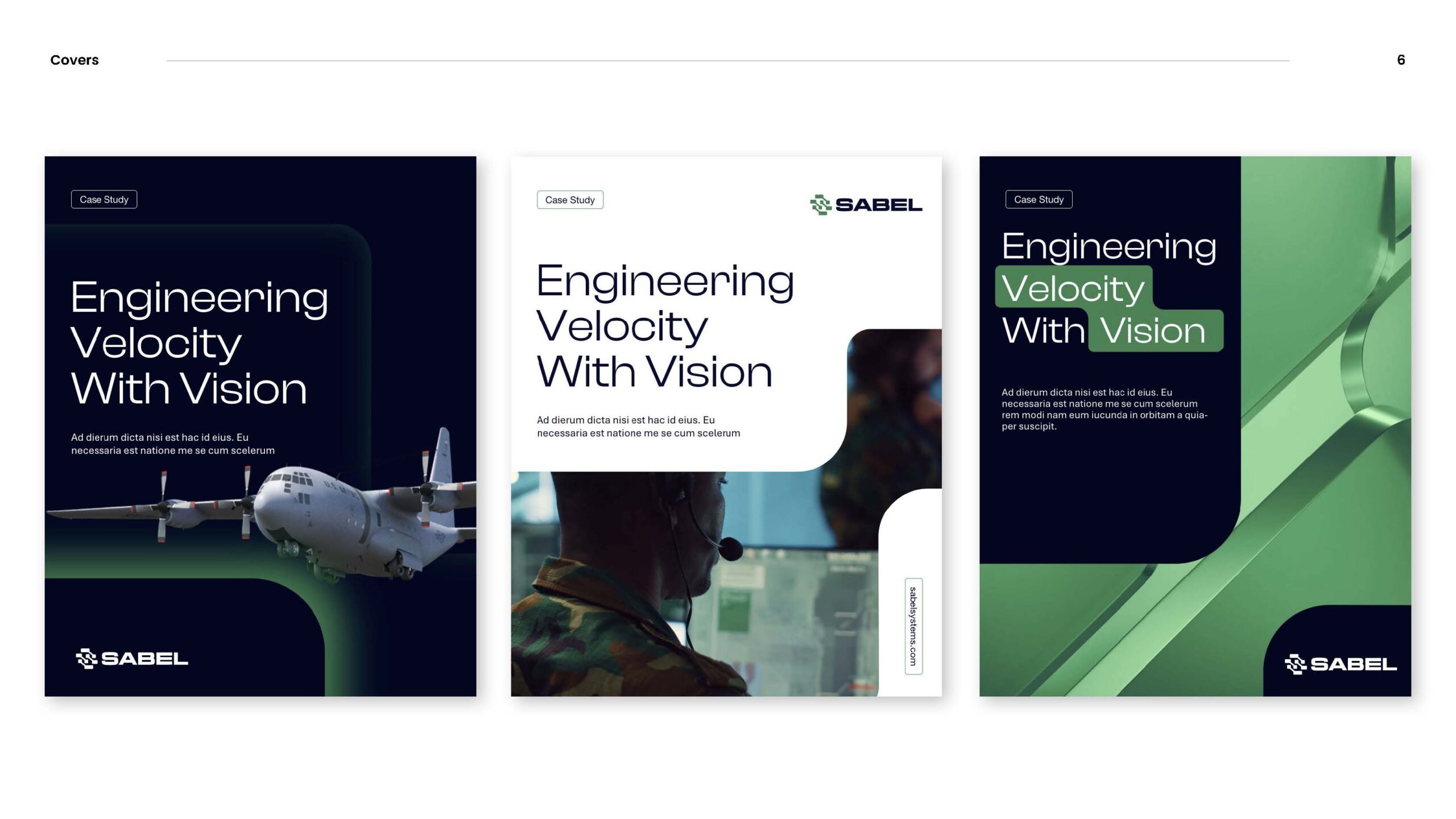
Check out our work with Sabel Systems
Creative that makes sustainable stories memorable
Data earns trust, but creativity earns attention. Visual systems, motion graphics, and interactive tools can translate technical sustainability benefits into intuitive understanding. Washington DC marketing firms invest in concept development that connects purpose to performance in a single frame or headline. The most effective creative distills complex engineering truths into symbols and narratives that executives recall in the next budget meeting.
Content should scale across touchpoints. Think briefing center screens, capture decks, proposal graphics, social thought leadership, and product UI. Washington DC marketing firms maintain a common design language across channels so that sustainability looks and feels consistent whether it is a one-to-many keynote or a one-to-one procurement conversation.
Operating model: standing up a sustainable brand newsroom
To keep pace with policy shifts and stakeholder expectations, treat sustainability like a newsroom. Establish a cross-functional team that includes marketing, product, legal, and operations. Define beats such as policy updates, customer outcomes, and R&D milestones. Washington DC marketing firms often serve as an extension of this newsroom, providing editorial direction, creative production, and analytics to keep content accurate and timely.
Governance is critical. Create approval workflows that balance speed with accuracy. Maintain a source-of-truth repository for metrics and references. Washington DC marketing firms reinforce these processes with templates, asset libraries, and content calendars that keep teams aligned and compliant.
Measuring the commercial impact of sustainable branding
Executives want to see sustainability move the numbers. Identify commercial indicators that correlate with sustainability engagement such as RFP shortlisting rates, deal cycle time, cross-sell velocity in energy-efficient product lines, and premium win rates for solutions with verified impact. Washington DC marketing firms link content engagement to these indicators and report the story in business terms. That reporting earns continued investment and refines the playbook over time.
Do not ignore internal metrics. Employee advocacy, recruiting efficiency, and retention can all benefit from a credible sustainability platform. Washington DC marketing firms help HR and communications teams align messages so that the internal story is as strong as the external one.
How to select the right DC partner for sustainable branding
Look for four attributes. First, evidence of policy and procurement fluency for your sector. Second, a track record of turning complex technical material into clear narratives. Third, a measurement mindset that treats sustainability like a performance KPI. Fourth, creative excellence that brings the story to life without exaggeration. Washington DC marketing firms that embody these traits will accelerate your strategy and reduce execution risk.
Request examples that show before-and-after brand impact, not only beautiful deliverables. Ask how they structure stakeholder interviews, validate claims, and manage content governance. The strongest Washington DC marketing firms will welcome this scrutiny and show how they have applied the same rigor to their own operations.
Why Bluetext: a practical partner for purpose and performance
Bluetext helps growth-minded organizations build sustainable brands that win in complex markets. Our team pairs policy and procurement fluency with world-class creative and digital execution. We translate ambitious sustainability goals into positioning, narratives, and experiences that withstand due diligence and speed decisions. Whether your growth strategy is enterprise, channel, or federal, we design programs that connect sustainability to pipeline and performance. Washington DC marketing firms thrive on outcomes, and Bluetext is built to deliver them with clarity and speed.
If you are ready to advance your sustainable brand, align your executive team, and scale a content engine that drives measurable impact, contact Bluetext to discuss strategy, branding, or campaign support. We partner with leaders to build durable, credible platforms that convert sustainability from promise into competitive advantage across the markets that matter most.
Recent Posts
The Role of Simplified Logos in Corporate Rebranding
Top Brand Agencies and the Rise of Experiential Marketing
Bluetext’s Recent Work