Whether it is a 12-year-old buying a new basketball shoe, a college student looking for a new smartphone, or an IT manager evaluating which cloud CRM tool to purchase on behalf of the company, there is no denying that each can be influenced in the buying decision. Price, design, and features all play a huge part, but consumer and business brands have also recognized, going back centuries, that the right celebrity endorsement can have a disproportionate impact on the buying decision of a large number of individuals.
For businesses considering the use of celebrity spokespeople for their brands, it is not as simple as forking over a sack of money to someone famous and expecting a flood of new product/service orders to follow. Success requires a mix of the right chemistry, strategy, and execution.
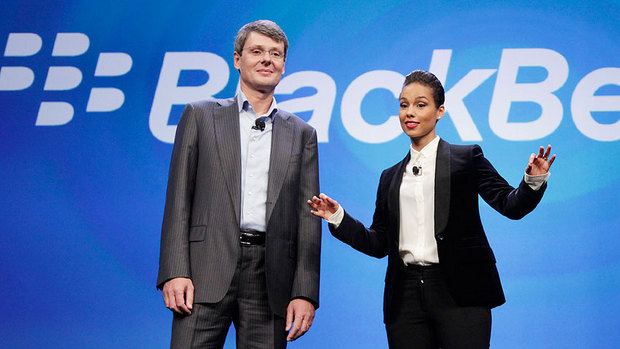
A brand might turn to a celebrity for a variety of reasons ranging from inspiration to desperation. In the latter category, one might look to when BlackBerry appointed singer-songwriter Alicia Keys “Global Creative Director” a couple of years back. BlackBerry was suffering from a brand perception as a functional device lacking innovation and hoped that Keys, a genuine BlackBerry user/fan, could inject creativity into branding efforts.
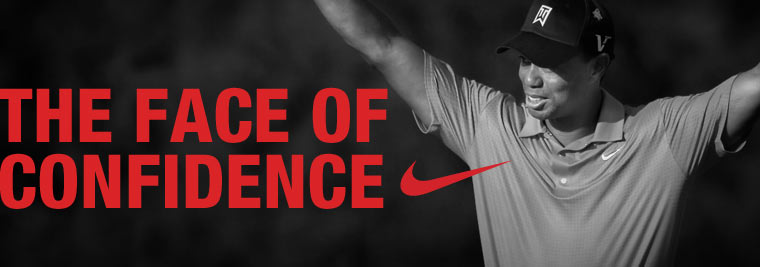
While opinions differ on how much a celebrity can impact sales, research published in Marketing Science in the March/April 2013 issue found that the right celebrity endorser could in fact boost sales. Research authors found that from 2000 to 2010, the Nike golf ball division secured an additional profit of $103 million via the acquisition of $9.9 million in sales from Tiger Woods’ endorsement. Through additional sales generated when Woods topped the rankings, Nike recovered 57 percent of the $181 million the company paid Woods between 2000 and 2010 – and that was on just U.S. golf ball sales alone.
Celebrity endorsements can and often do work. To maximize the use of celebrities for brand marketing campaigns, there are a few considerations and strategies to keep in mind:
Analyze the celebrity’s social reach and audience
When partnering with a celebrity for a marketing campaign, your brand should conduct a thorough analysis of the celebrity’s social channels (Twitter, Facebook, Instagram, YouTube, etc.). This analysis must extend beyond simply concluding the celebrity has a large number of followers, and take into account several questions:
- Is the celebrity willing to reach out to his/her followers as part of this campaign? If so, how often?
- Does the general profile of the celebrity’s social audience align with the product or service your brand offers?
- How has the celebrity’s audience reacted in the past to brand endorsements? Receptive? Hostile? Skeptical?
- What is the tone of the celebrity’s past social media communications, and does this tone pose risks based on the current brand mission?
If your brand believes the celebrity’s social media presence needs to play a significant role in the success of the campaign, it is critical to answer these questions before any paid partnership is struck.
Leverage celebrities passionate about your brand
It goes without saying that the overwhelming majority of celebrity endorsements are transactional in nature. In other words, a brand offers to pay a celebrity a certain fee to serve as spokesperson, and the celebrity agrees to that price. Brands should be tuned into how celebrities talk about their brand – whether it is a particular smartphone, food item, airline, or even a conference calling service – and if it finds celebrities organically speaking positively about the brand in a passionate way, a more genuine marketing opportunity is created. It is hard to artificially create “celebrity chemistry” with a brand and/or its product, so when that already exists, audiences will recognize it and the impact can be more tangible.

Don’t fear “odd couple” pairing of brand and celebrity
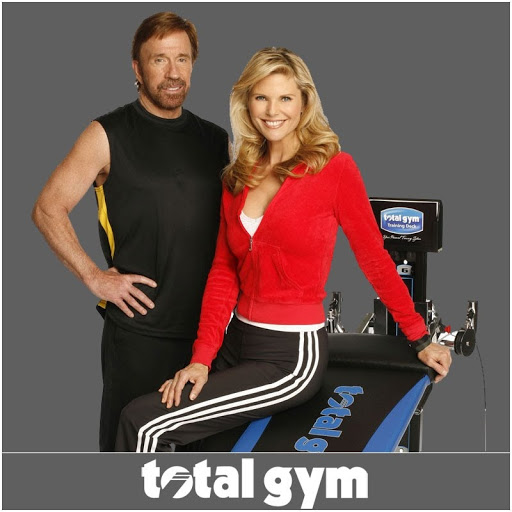
Chuck Norris’ endorsement of The Total Gym makes sense. So does, for example, a supermodel hawking a skin care product or an NBA player endorsing Gatorade. These endorsements follow a logical path of how we perceive the celebrity’s persona to be (even if that persona is purely based on fictional characters they play) and the brand, product or service.
But sometimes the celebrity marketing campaigns that stand out are the ones where the celebrity’s persona clashes in a humorous or dynamic way with the brand. A few years back, our team worked on a marketing campaign for Identity Guard that leveraged the in your face, brutally honest, comedian Lewis Black. On the surface, having a comedian film a series of Web videos for an identity theft protection and credit monitoring service might seem an odd fit, but it worked because at the time LifeLock was marketing with their CEO spokesperson daring thieves to steal his identity. We took the opposite tact and used Lewis Black’s personality to say NONE OF YOUR D*MN BUSINESS (NOYDB). Who better to say NOYDB than loud comedian Lewis Black?
Don’t get hung up with A-List celebrities and professional athletes
Brands often fear that only A-List celebrities can move the sales needle, but the fact is that these endorsement deals are very expensive and there is no such thing as a sure thing when it comes to the economic impact of a celebrity endorsement. A-List celebrities can come with an entourage of rules, handlers, skepticism and endorsement “baggage,” and the irony is that some celebrities are so over-exposed that when we see them endorsing a product it doesn’t have the desired impact.
Find spokespeople
who embody brand philosophy
Brands often find it challenging to attach a set of values to what is in effect a faceless corporate entity. In these cases, it can be more effective to try and find an individual whose career and experience embodies that philosophy. This approach was used for an advertising campaign, Game Changer, on behalf of leading accounting firm CohnReznick (a Bluetext client). Torre was a strong choice to serve as CohnReznick’s national spokesperson because, as the firm stated, “Joe Torre exemplifies the same characteristics that CohnReznick strives for every day in serving our clients – excellence, integrity, dedication, proven performance, and results-driven leadership.”
In summary, for businesses considering the use of celebrity spokespeople, success requires a mix of the right chemistry, strategy and execution.
Last week we launched a new digital experience for Georgetown University’s McDonough School of Business. The new website, msb.georgetown.edu, gives alumni, global executives, prospective students, master’s candidates, faculty and staff a world-class digital experience. It is specifically designed to show how the McDonough School of Business helps its students succeed in their goals and the institution move up in the highly competitive business school rankings.
Site launches are always an exciting time for the Bluetext team, and McDonough was no different. It’s opening night, the curtain is raised, and the target audience will determine if the strategy, creativity, discipline and hard work have paid off. Shortly after the site launch, we gathered the team to review the project, discuss lessons learned, and identify ways to apply those to current and future projects.
The session was also an opportunity to further refine our core approach to innovative digital experiences to Higher Education as a market. Here are some of the key take-ways:
- Build a strong and sophisticated brand connection. Clean, bold, and straightforward design lets the institution’s brand speak for itself. The design, imagery, headlines and copy should convey confidence. Videos, infographics and interactive functionality can showcase the value proposition and the work of faculty and students.
- Address Return-On-Investment up-front. Students are savvier than ever. They want to understand the value proposition and why the degree at any particular institution is worth the cost. Address the question up-front in a way that students understand, speaking to their concerns and goals.
- Show the “bigger picture.” How will the education experience help students make an impact or shape their world in a positive way? Talk about how their education correlates to what’s relevant today. Depending on the discipline, it could be entrepreneurism, clean energy research, transforming the public education system, or even global citizenship.
- Engagement is essential, just like in the real world. It’s about social engagement and community. Smart use of social tools will put a face on the educational product, faculty and institution.
- Simplify. Put phone numbers and contact information at their fingertips. Clearly describe the admissions process and what they need to know to get started.
- Deliver a coherent digital experience across all touchpoints. Digital audiences are more connected, more empowered, and more distracted than ever before. They are constantly interacting with one or more devices that place data from websites, apps, and social media at their fingertips. Responsive design can give a consistent brand experience across multiple devices. What’s also important, but often neglected, is making sure that content is structured in a way that makes it reusable across desktops, laptops, mobile devices, social media and digital campaigns.
These core principles provide a solid foundation for creating a successful digital experience that drives ROI for any institution. Today, the user experience is about how a broad range of audiences interact with the brand and product across multiple contexts. That requires thinking of the .edu presence as a digital platform, not simply a “website,” to drive enlistment, revenue, and engagement goals.
Supporting CSC’s global digital brand team, Bluetext designed and built CSC’s Digital Briefing Center, a virtual experience where clients and CSC’s entire ecosystem can come to learn about CSC’s key technology conversations across its target verticals.
As the company expands with a global customer base and diverse set of solution offerings, it was important to ensure that prospective customers could get a similar experience as they would if they visited corporate HQ.
Bluetext designed a virtual office building where each floor represents a specific vertical industry, and visitors can learn about CSC’s key solutions and experience across cloud computing, big data, applications, cyber security, and mobility.
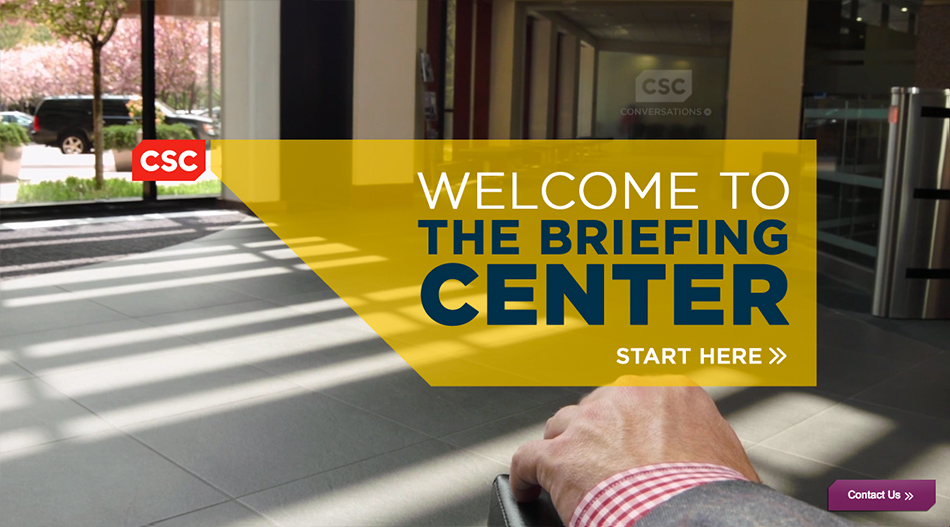
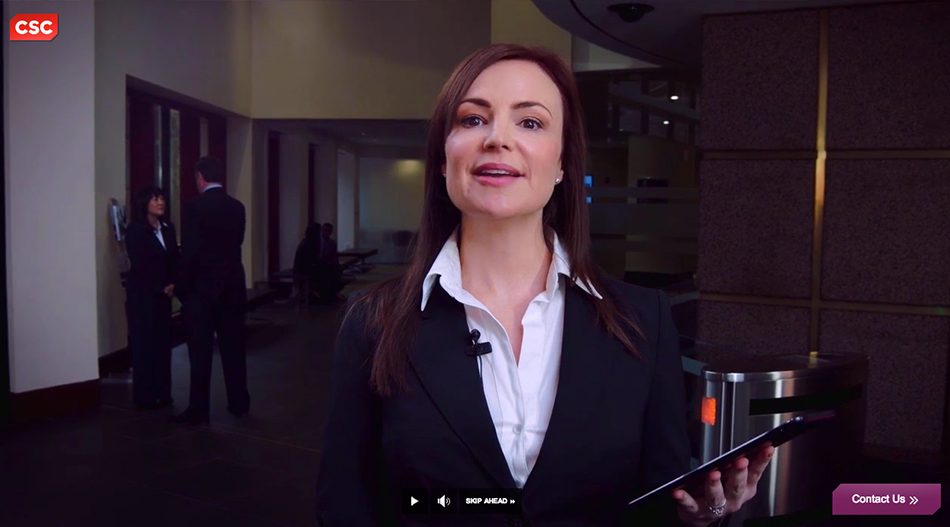
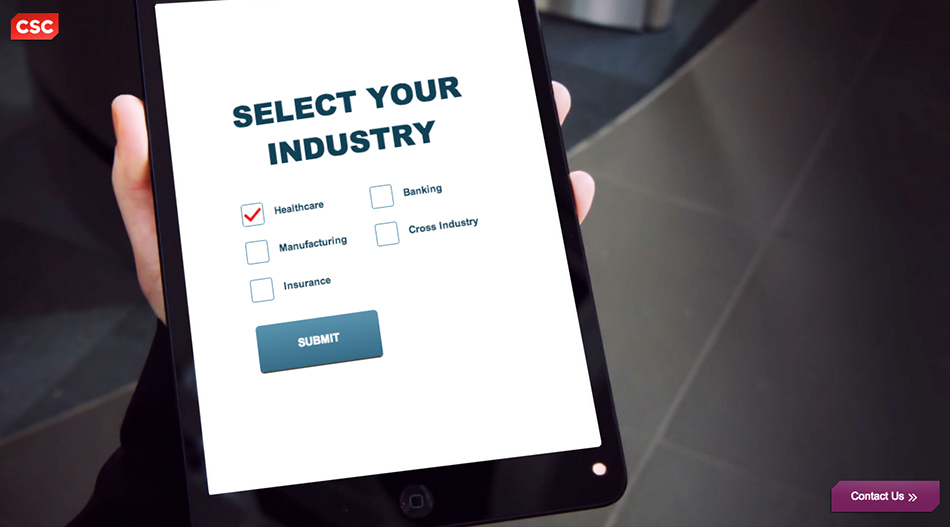
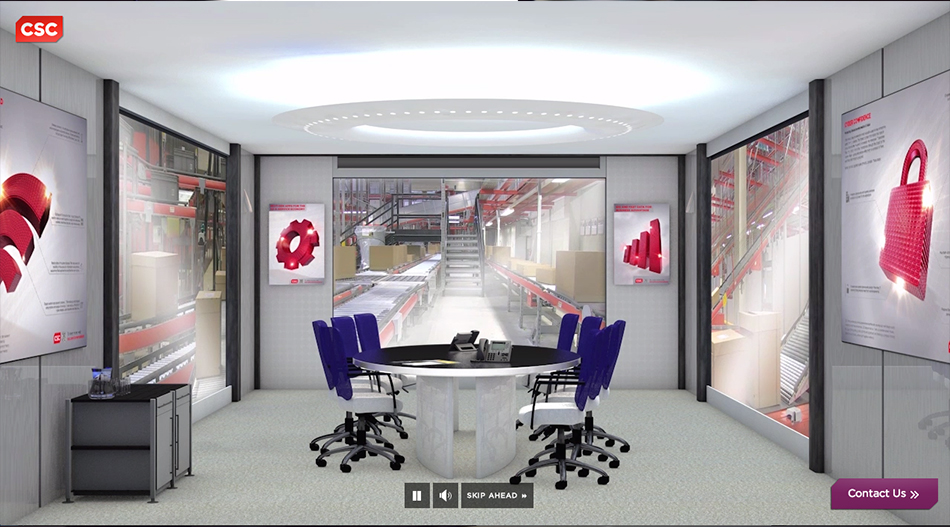
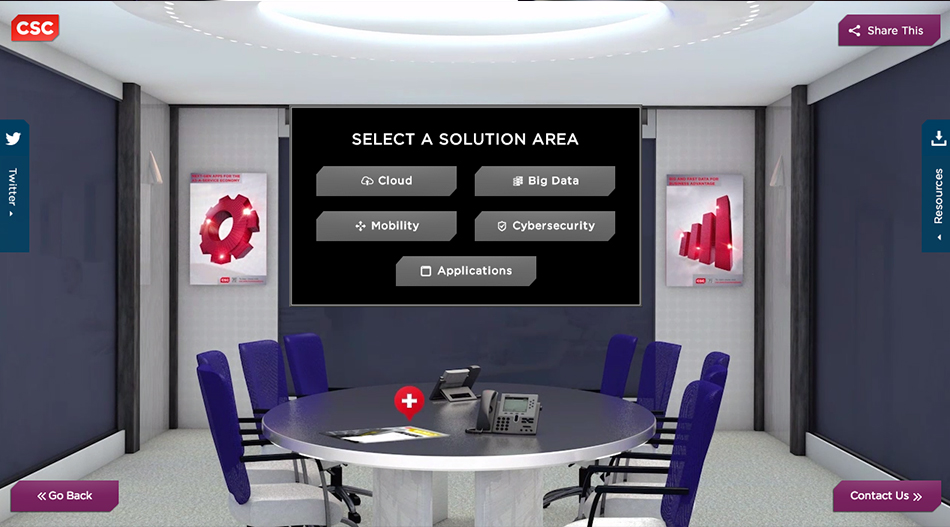
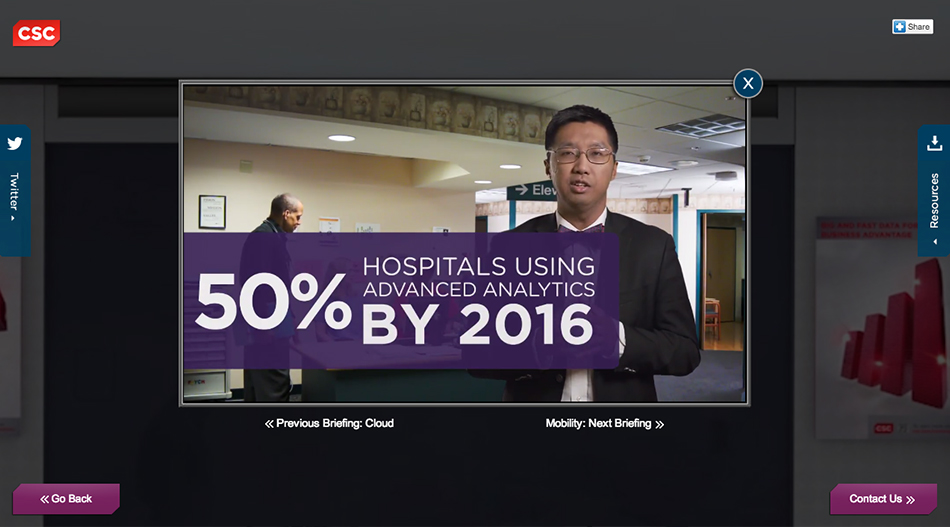
The highlight of the Digital Briefing Center is the elevator ride where users can see “CSC” in action across healthcare, banking, manufacturing, and insurance. The solution is designed to scale with more solutions and target industries, as well as partner ecosystem solutions from CSC’s top technology partners.
It was built for users across all browsers. For pre-HTML5 browsers we built a lightweight code base, and for today’s modern browsers we used HTML5, a custom video player, and a JSON XML Twitter integration. Bluetext handled all CMS integration into CSC’s environment.
In the early days of search engine optimization Meta Keywords were all the rage. “Keyword stuffing” your Meta header was tactic #1. Unfortunately for today’s markets, those days are long gone.
Since this point of education and correction is reviewed nearly every time we consult clients on search engine optimization, I thought it would be good to write a quick blog outlining two reasons why meta keywords are dead.
1. Google ignores them
About a decade ago, search engines judged pages only on the content of web pages, not on any so-called “off-page” factors such as the links pointing to a web page. In those days, keyword meta tags quickly became an area where someone could stuff often-irrelevant keywords without typical visitors ever seeing those keywords. Because the keyword meta tag was so often abused, many years ago Google began disregarding the keyword meta tag.
2. They alert your competition to which SEO words you are focused on
SEO is a very competitive sport. Source code is publicly available. So if you have a set of keyword research in which you have identified great long tail and short tail keywords, you don’t want to show your competitors what words you are optimizing for. Your competitors can emulate that organic strategy and buy those keywords to one up you on the search engine results pages.
To learn more about the latest SEO strategies and trends please download this white paper or contact me to discuss your SEO goals.
An emerging trend across business-to-business marketing is its “consumerization.” As customer expectations shift and their buying habits change, businesses that sell and market to other businesses are stealing tactics from “businesses to consumer” marketers.
Tried and true b2c marketing strategies such as user engagement, personalized content, rich media, gamification and alignment with offline events are increasingly nudging their way into b2b digital campaigns. This shift is not lost on businesses, advocacy groups and trade associations, which are all leading the charge in adapting consumerized marketing tactics to a business customer audience. They are creating digital communities to effectively tell their story, sell their products, and gain traction for their issues. These communities are designed to make complex messages more consumable, mobilize user or advocacy groups, and provide users the opportunity to join or “own” the conversation.
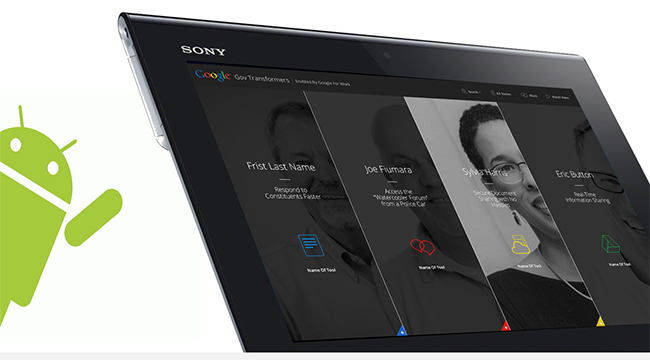
At Bluetext, our approach to developing and executing digital marketing campaigns for clients is to not be bound by conventional battle lines of business, consumer and government. Each market is surely unique, but by remaining open to innovative tactics and strategies we are consistently able to help clients’ marketing efforts stand out from the pack. Based on recent projects, we have assembled a set of core recommendations for any business or organization seeking to leverage the consumerization of b2b and advocacy marketing to impact customer buying decisions and brand awareness.
Drive Personalized Content and Experiences
By stepping back and letting your best customers and members take the lead in telling your story, the content becomes more real and personalized. One example is a campaign Bluetext developed for Google called GovTransformers that showcases a wide variety of public servants and how they are using Google’s enterprise applications. The campaign shines a spotlight on dozens of government workers all across the United States – from law enforcement to CIOs – with video profiles, photographs and written descriptions. By making customers the heroes, other customers are encouraged to share their stories.
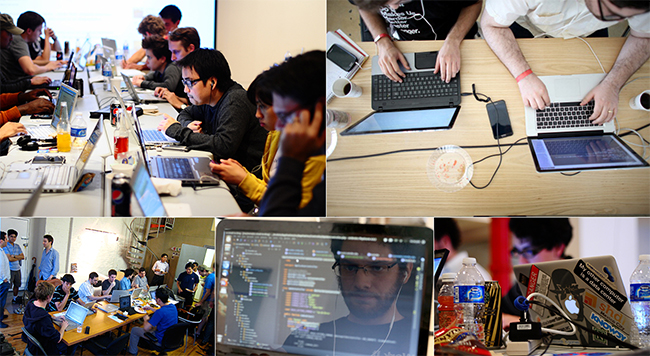
We leveraged offline events to grow the community with a series of Hackathons in key cities around the country. Each Hackathon brings together programmers and developers over a weekend to help solve digital challenges using any developer tools they want, as long as one of Google’s enterprise apps is also part of the solution. For example, at the Denver Hackathon, one of the challenges involved automating the Colorado Disaster Assistance Center. Another challenge included designing a transparent budget data system for the state of Wyoming.
Enable Users to Join the Conversation
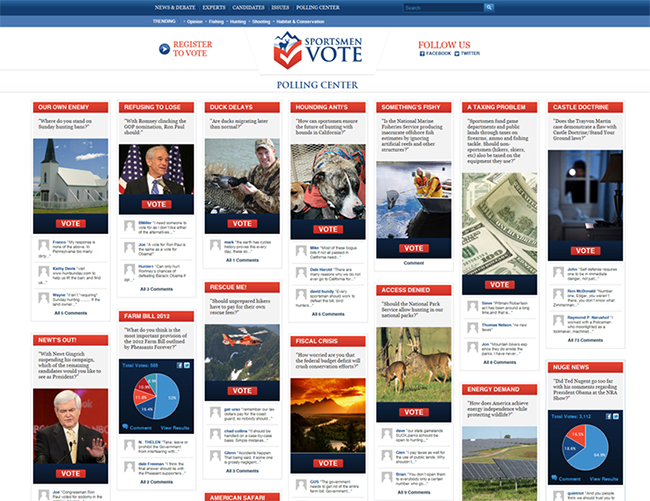
Giving stakeholders an easy way to join the conversation keeps them engaged and an active part of the community. We have built polling ecosystems for several clients that can span a portfolio of brand sites to access their opinions across a number of relevant issues, while giving them a platform to collect and contextualize the trends of the community through data visualizations.
For Intermedia Outdoors Network, a leading publisher of magazines for hunters, fisherman and outdoor enthusiasts, we created SportsmenVote with a Pinterest-type of format offering various issues in the form of questions that have “yes” or “no” or multiple choice answers. The results can be displayed in real-time, and a comment section is built in for those who want to expound more on the topic. The results provide an ongoing reason for the community to return to the site and engage in the dialogue, with content ready to be shared in a social “snackable” format.
Showcase Your Most Important Assets –Users
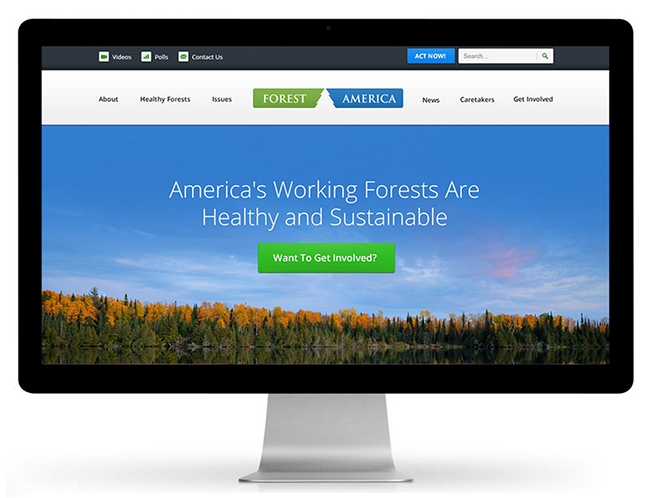
Showcasing stakeholders in their own element can be a powerful way of growing a community. The Forest Landowners Association represents families who harvest wood products from privately-owned forests that they manage. Sustainability is a key component of their effort to preserve these private forests. To help build a community of like-minded landowners with a common interest in these issues, we built a platform called Forest America. It serves as a news repository and a recruitment tool for advocacy purposes, complete with impactful videos and a simple way for families to submit their profiles.
Don’t Be Boring. Engaging Concepts & Content to Educate the Market
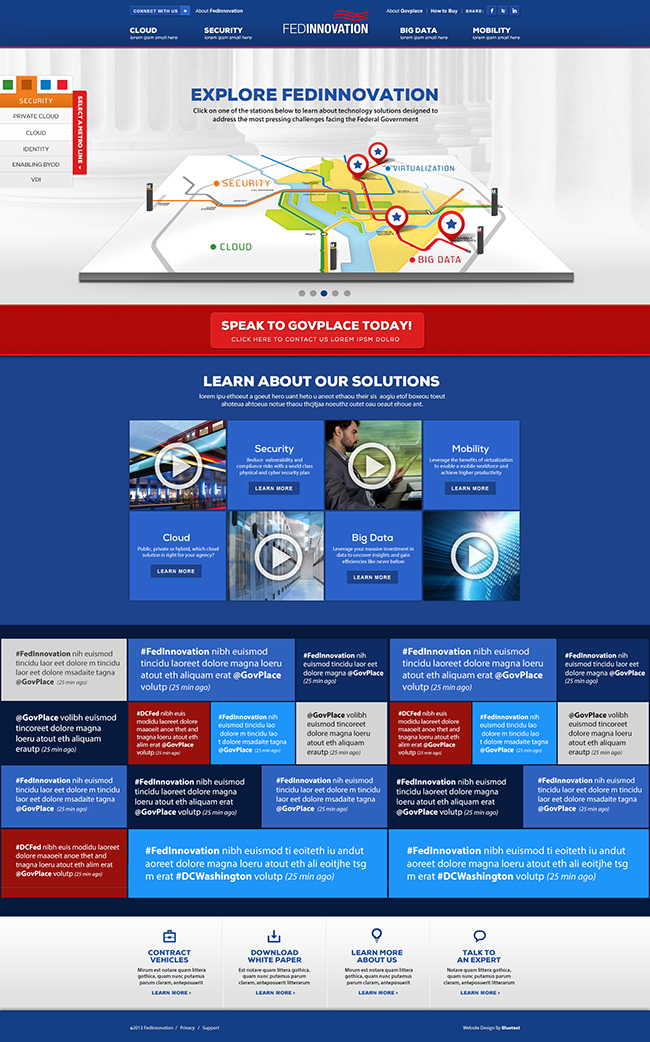
Govplace turned to Bluetext to develop FedInnovation, a destination designed to help government agency executives get the latest information on current technology challenges and solutions for big data, cloud, security, mobility and storage. Developed in conjunction with leading technology providers including Dell, Intel Security and VMWare, it includes exclusive content, videos, blogs, and real-time social feeds. From this platform, Govplace will drive blog posts, webinars, and other marketing programs to ensure its target audience understands the value that it, working with the leading IT providers to the Federal Government, can deliver.
Get Game
We are not talking about the next Grand Theft Auto or Call of Duty. But think about your audience and determine whether a game would engage them. Games can also throw off a lot of “social shrapnel” to drive content and interest. For Lucent Government Solutions (LGS) we designed a “Words with Friends” meets Scrabble experience to help recruit new engineers and drive awareness for the solutions they are delivering into the market.

Join the Cause – Everyone Wants to Take Action
Building a digital platform to showcase a community won’t be of much help if it’s not easy for new members to participate. We recommend offering opportunities to participate directly on the site, either through submitting your own story, taking a poll, seeking information and insight from other members of the community, or using an advocacy tool to weigh in with policy makers. What is essential is having well placed calls-to-action throughout the site so that visitors do not have to search for ways to participate. New Twitter tools like Tweet Builder increase a brand’s reach to its social properties by connecting with influencers whose posts then tie back into the digital platform. This social engagement extends the brand far beyond a single website to a wide variety of social sites.
The consumerization of b2b marketing is not about trying to fit a square peg in a round hole; instead, it represents the fact that forward-thinking businesses and organizations across every market recognize a fundamental shift in how business customers are accessing content and information, and what types of marketing initiatives will impact their buying decisions.
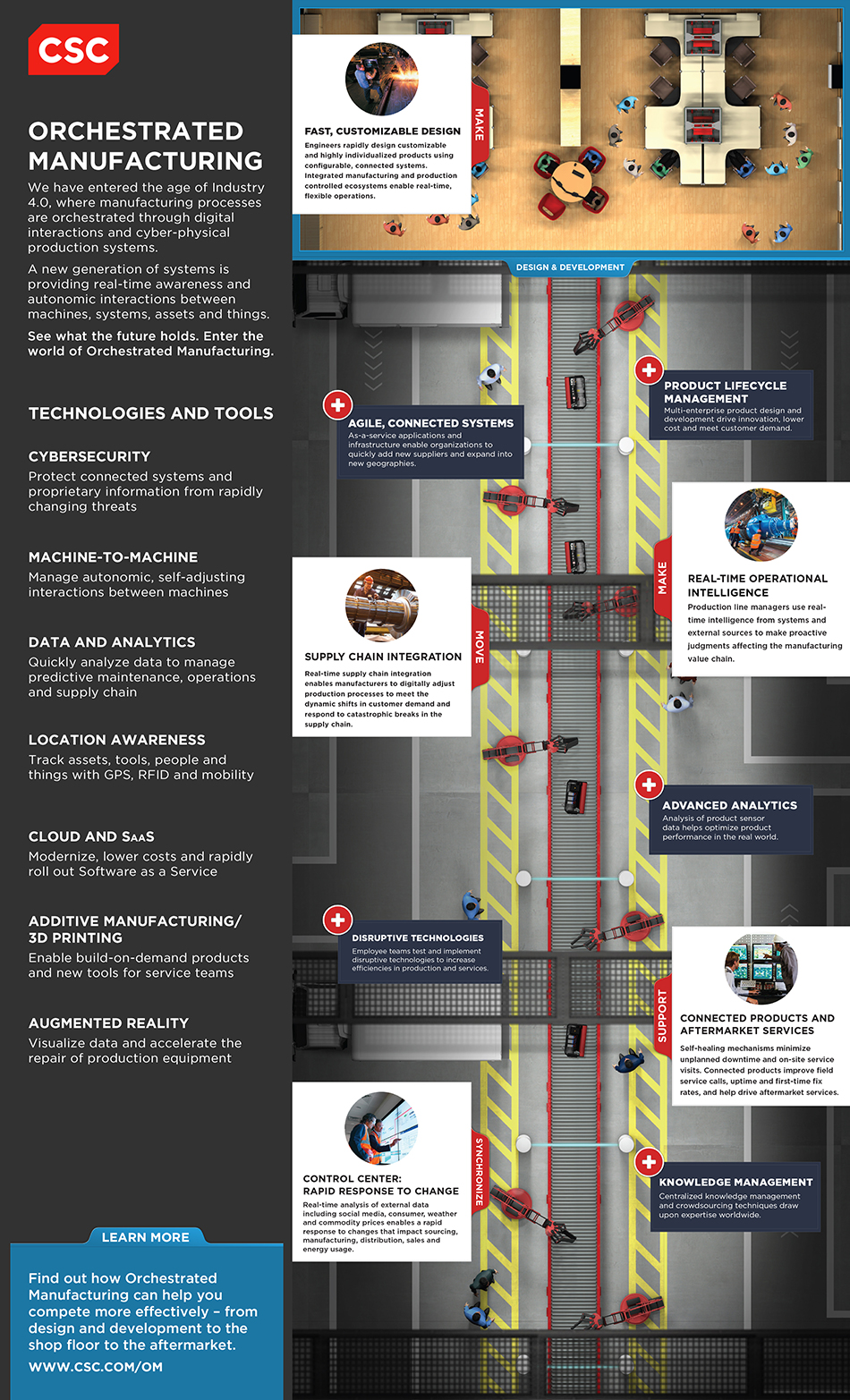
CSC turned to Bluetext to design and launch an industry-specific landing page around its approach to targeting the requirements of the manufacturing industry. CSC’s vision is called Orchestrated Manufacturing, and it represents an age where manufacturing processes are orchestrated through digital interactions and cyber-physical production systems. CSC is working with clients to implement advanced solutions that leverage a new generation of systems is providing real-time awareness and autonomic interactions between machines, systems, assets and things.
Bluetext worked with CSC’s digital brand marketing team, as well as their Manufacturing industry marketing team, to design a landing page unlike anything CSC has ever launched inside of its corporate domain. It includes a modern design with one long, scrolling page to showcase the vision and its practical application to the market, and then lead visitors to download key content and interact with CSC.
At Bluetext, we find that many large companies with diverse industry focuses and solution offerings sometimes make it hard for target audiences to find exactly what they are looking for. The idea behind Orchestrated Manufacturing is for CSC to tell its story in a unique way with an online and offline strategy to drive a consistent visual message into the market. The landing page is complemented with two videos that can be used by sales teams to succinctly tell the story, as well as a highly produced poster for sharing at events.
Please check it out at www.csc.com/om. We would love to hear about how you are designing landing pages targeting unique audience groups and what strategies you are finding work best.
The landowners of America’s working private forests had a large challenge: Few people outside the forest landowners community understood how private forests were different from Federal and state-owned forests, how their landowners were managing the lands in a way that was sustainable, and how as a result our private forests are healthy and growing. Instead, the image was often based on mis-impressions and confusion. The landowners asked Bluetext to develop a new organization, together with a name and logo and a website that could serve as the repository for information about our private forests, the landowners who serve as caretakers while harvesting wood sustain-ably, and the issues they were are facing.
Bluetext proposed that this new organization be called Forest America, and designed a logo that would convey the important connection between our forest landowners and the conservation that they bring to America’s forests.
Bluetext designed a comprehensive website that is responsive for all devices and that uses wide banners and paralax images to give a strong sense of the value and beauty of privately owned forests. The site makes has calls-to-action to get involved throughout its pages as part of the strategy to recruit members and advocates for Forest America.
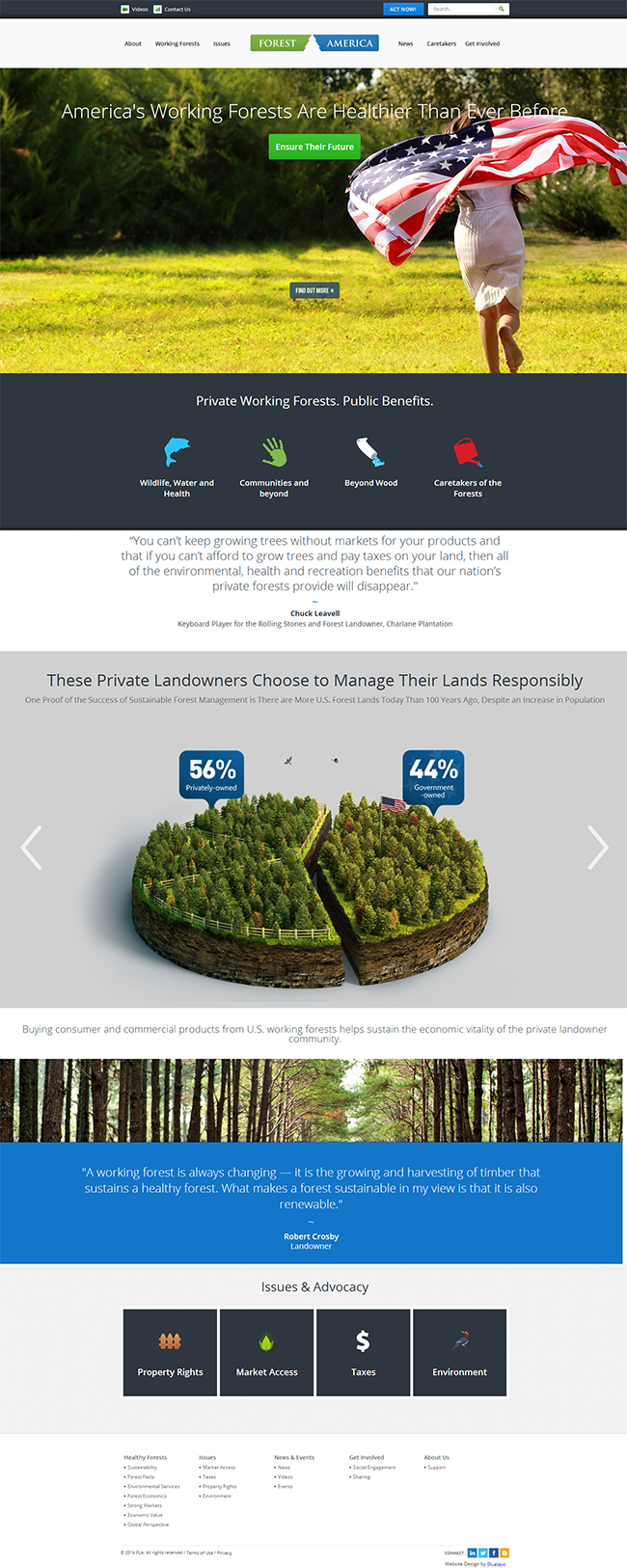
Bluetext also designed a multi-image infographic with key industry facts that is embedded in a sliding graphic that is accessed on the lower part of the homepage. Additional graphical elements include large banner images with text and compelling photography throughout. Forest America includes social engagement links, and in its next phase will embed polling functions and advocacy tools that will not only make it an effective tool with policy makers but also generate its own content that can be pushed out through its various channels.
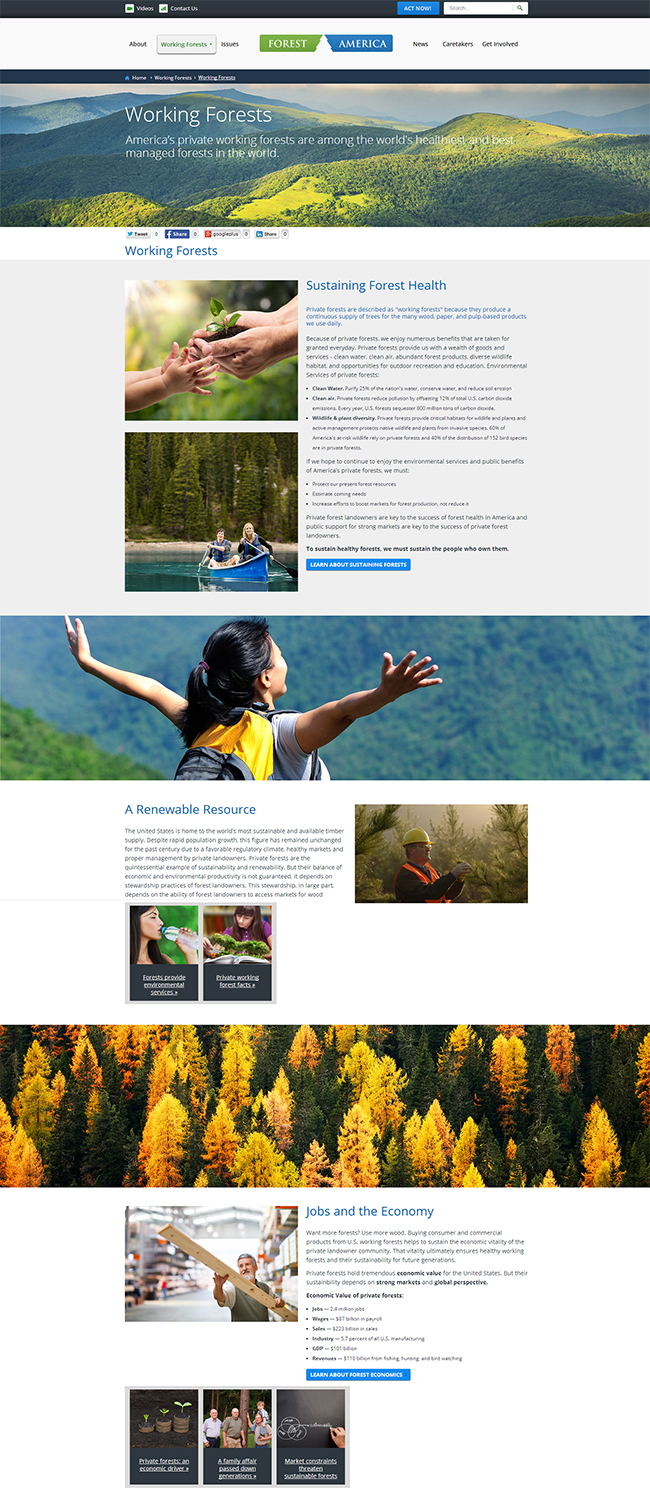
Forest America has all of the design features that deliver a site that can help the organization achieve its advocacy and recruitment mission with both state-of-the-art functionality and stunning creative assets.
The landowners of America?? working private forests had a large challenge: Few people outside the forest landowners community understood how private forests were different from Federal and state-owned forests, how their landowners were managing the lands in a way that was sustainable, and how as a result our private forests are healthy and growing. Instead, the image was often based on mis-impressions and confusion. The landowners asked Bluetext to develop a new organization, together with a name and logo and a website that could serve as the repository for information about our private forests, the landowners who serve as caretakers while harvesting wood sustain-ably, and the issues they were are facing.
Bluetext proposed that this new organization be called Forest America, and designed a logo that would convey the important connection between our forest landowners and the conservation that they bring to America?? forests.
Bluetext designed a comprehensive website that is responsive for all devices and that uses wide banners and paralax images to give a strong sense of the value and beauty of privately owned forests. ?The site makes has calls-to-action to get involved throughout its pages as part of the strategy to recruit members and advocates for Forest America.
Bluetext also designed a multi-image infographic with key industry facts that is embedded in a sliding graphic that is accessed on the lower part of the homepage. Additional graphical elements include large banner images with text and compelling photography throughout. ?Forest America includes social engagement links, and in its next phase will embed polling functions and advocacy tools that will not only make it an effective tool with policy makers but also generate its own content that can be pushed out through its various channels.
Forest America has all of the design features that deliver a site that can help the organization achieve its advocacy and recruitment mission with both state-of-the-art functionality and stunning creative assets.
At Bluetext, we help many companies and organizations tell their brand stories through a family of imagery that delivers the message, attitude, and tonality for which marketing leaders are hungering. Our clients want a platform for their brand that they can own, because as many markets become commodotized, this kind of differentiation allows them to stand out and represent their brand’s value.
Here are some recent samples:
Leveraging CSC’s brand mark, Bluetext was able to create these representative solution areas.

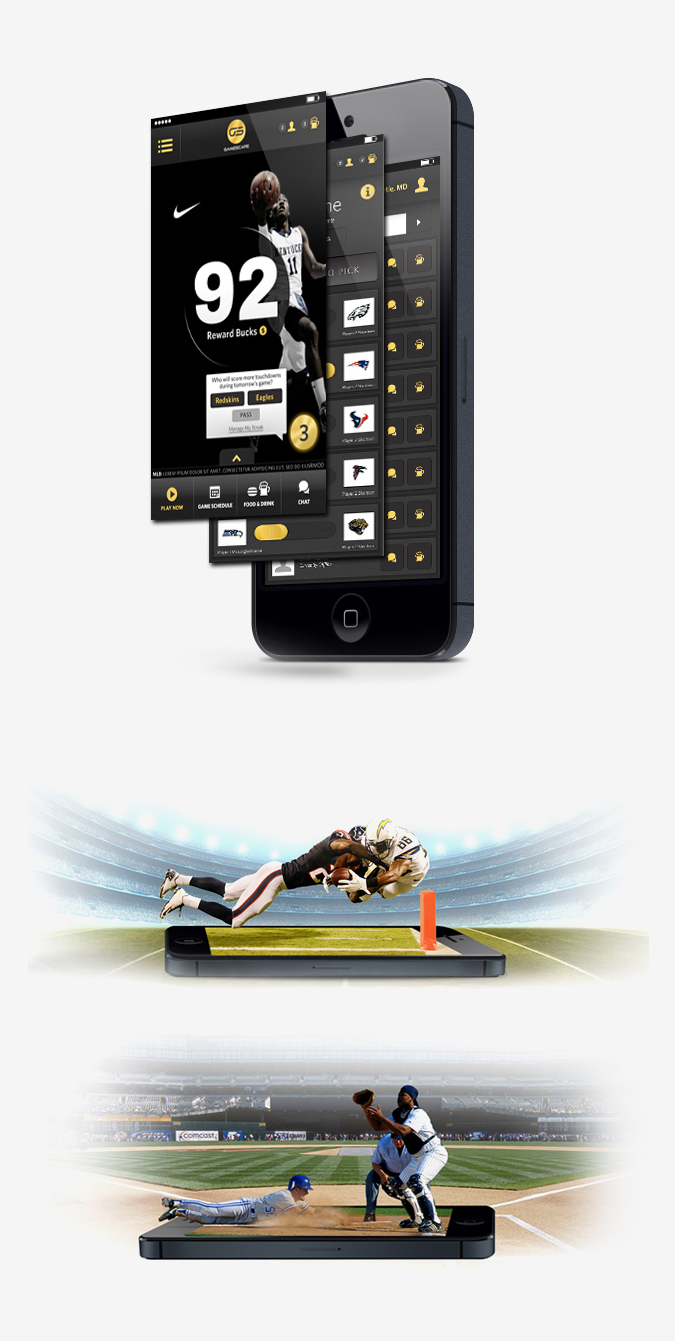
Gamescape produces eye-popping marketing retention programs leveraging gamification, social media, and a fire hose of sports data to deliver a completely brandable fun new experience for local and national bar and restaurant establishments across the country
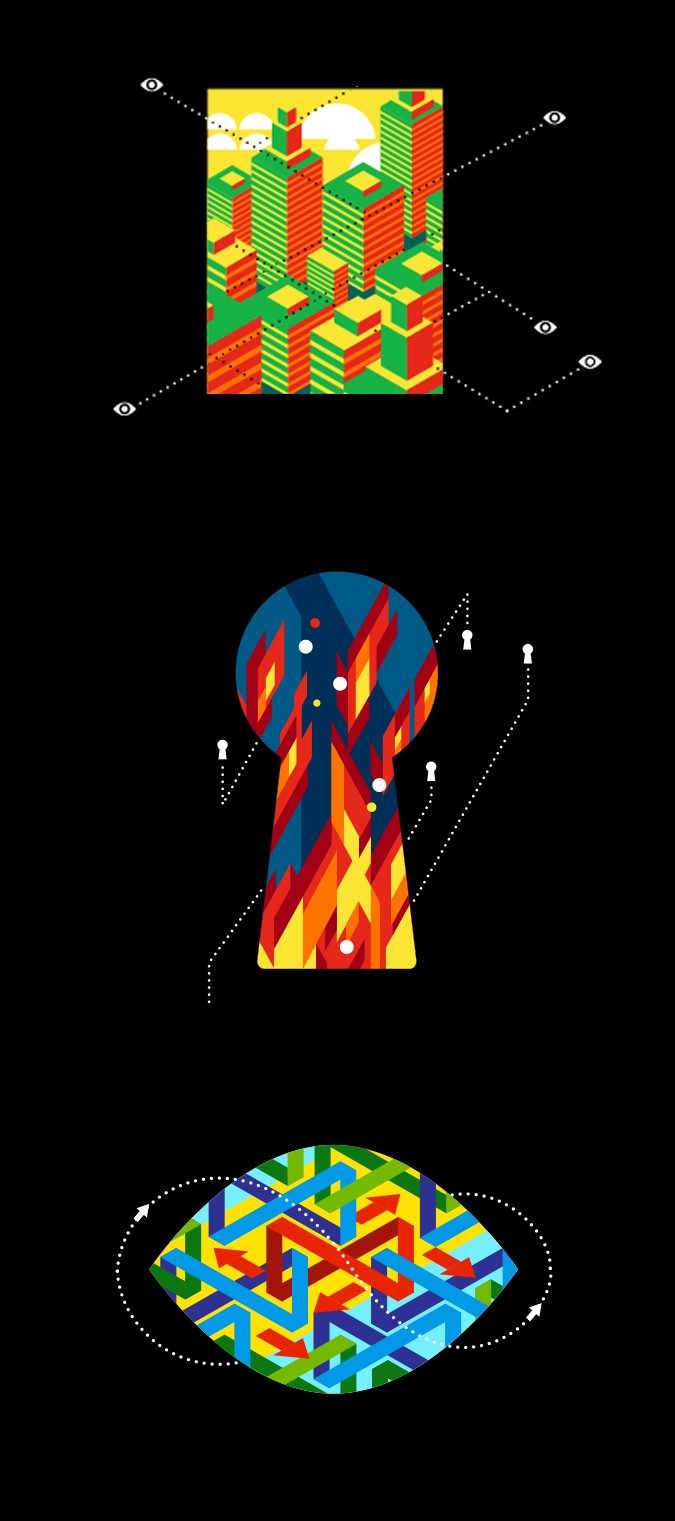
Iron Bow retained Bluetext to bring its solution areas to life in a fresh new and inviting way. Iron Bow wanted to be portrayed as approachable.

Bluetext designed a series of illustrations consistent with a new brand attitude architecture. The four dimension illustration series was used throughout hundreds of assets for Sourcefire with both a white and black base design system, following research that the black and white option would be advantageous for Sourcefire marketing.
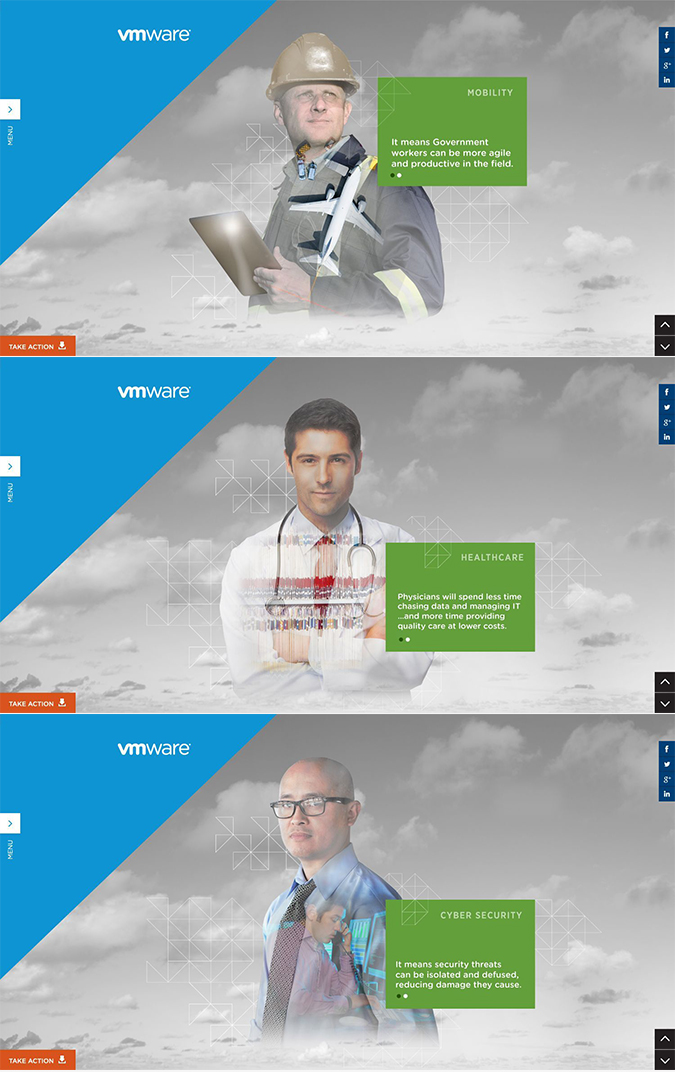
VMWare retained Bluetext to bring its value proposition to life in a fresh new and inviting way.
Bowman needed to convey their multi discipline multi vertical end to end solutions in a visually compelling way

L-3 Communications, in partnership with Harris Corporation, hired Bluetext to help them pursue the Air Force’s $1B Satellite Control Network (AFSCN) Modifications, Maintenance & Operations (CAMMO) Contract. Air Force AFSCN is a critical operational national security resource used for the global deployment and operation of National Security Space (NSS) Systems used primarily by the DOD and NASA to protect vital US interest worldwide.
L-3 is currently a subcontractor under the existing contract and as such is already vertically and horizontally integrated within Air Force teams inside of these facilities and in fact are the only team with current experience on all consolidated CAMMO elements and as such could provide a low risk, seamless transition.
Bluetext worked with the L-3/Harris Capture teams to develop a campaign strategy that would position them as a Prime by highlighting the many advantages they bring to the table. The overarching campaign theme we developed is:
“The Power of Partnership, From Vision to Reality”
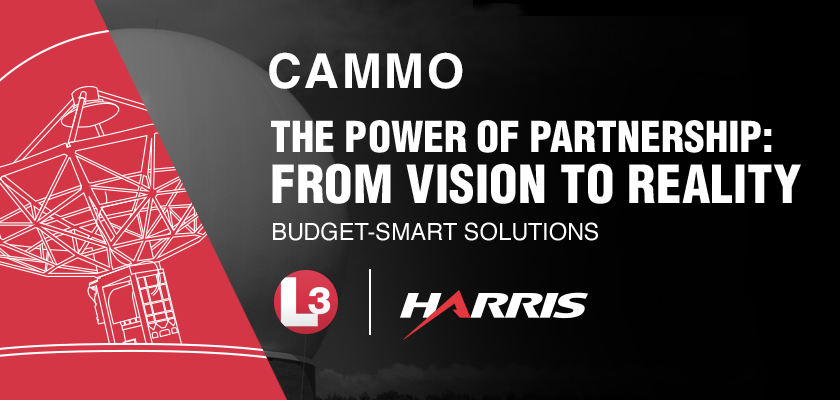
The creative strategy of this project began with the core concept of the ad, “from vision to reality.” The left side of the ad is a wireframe representing the vision with the right side representing its reality. After the wireframe of the satellite was created, it was overlaid on top of the red diagonal to create a striking visual element to draw attention to the campaign. We incorporated a large area of blackness to emulate space that would further support the strong type of the advertisement.
The first series of ads were placed in a high visibility areas inside of Colorado Springs Airport, a key travel hub for Air Force brass. The media plan for the campaign also includes online, print and OOH media placed strategically to maximize reach and frequency throughout the entire contract RFP and award life-cycle.